

Delay Dispatch Above 27°C: Protect Wine When Shipping in UK Heat
Heat can permanently ruin wine before it ever reaches your glass, and there is no way to undo the damage once it happens. If temperatures along the route climb past 27°C for any length of time, the single best move is to delay the shipment or pay for expedited, temperature-controlled delivery. Wine Spectator backs this caution, thermal packaging tests confirm insulation only buys time rather than immunity, and some wineries build seasonal shipping holds into their policies for exactly this reason.
TL;DR:
- Shipping wine in temperatures above 27°C (80°F) risks irreversible damage, especially if exposure exceeds 30°C (86°F) or lasts more than 19 hours without insulation.
- Physical signs of heat damage include pushed corks, sticky residues, bubbling labels, and cloudiness, which appear before taste is affected.
- Insulated liners and dense pulp shippers significantly delay internal temperature rise, but longer routes or delays in dwell time increase the risk of damage.
- The safest approach involves timely dispatch early in the week, choosing morning deliveries, and requesting temperature-controlled or hold shipments during heatwaves.
- Buying from producers that coordinate heat-aware dispatching, and avoiding single bottles on longer journeys, reduces the chance of receiving hot or damaged wine.
How heat damages wine: chemistry, physical effects and why it’s often permanent
Wine is a living chemical mixture, and heat speeds up every reaction inside the bottle. Once temperatures climb, oxidation accelerates, esters break down, and the fresh fruit character that took a grower a whole season to build starts collapsing into something flat and stewed. Winemakers call this “cooking,” and the term is not an exaggeration. A wine that has cooked cannot be uncooked; there is no cellar, no decanting, no clever trick that restores lost aromatics.
The physical symptoms usually show up before you even taste the wine. Heat expands the liquid inside the bottle, and that pressure has to go somewhere.
- Corks get pushed upward, sometimes visibly protruding above the bottle neck.
- Wine seeps around the cork, leaving a sticky residue on the capsule or label.
- Sparkling and lightly fizzy wines can force corks out entirely during transit.
- Labels peel or bubble from moisture escaping around a compromised seal.
- Sediment in older reds can get agitated and re-dissolve unevenly, muddying colour and texture.
Pro Tip: If a bottle arrives with a sticky cork or a label that looks like it’s been through a kettle, don’t wait to open it. Heat-damaged wine rarely gets worse with time, but it also never gets better.
The chemistry is the part most shoppers never see coming. WineFolly points out that sustained exposure above roughly 27 to 30°C is where the risk curve steepens sharply, turning a fine bottle into something closer to boiled fruit juice within days rather than years. That is the uncomfortable truth behind “shipping wine in heat”: the damage is not cosmetic, it’s structural, and it happens far faster than most buyers assume.
How hot is too hot for wine in transit?
A wine cellar sits happily between 10°C and 16°C, and that range is the benchmark against which every shipping scenario should be judged. Trouble tends to begin once sustained temperatures pass roughly 27°C (80°F), and the risk of genuine, irreversible “cooking” rises sharply above 30°C (86°F), according to industry guidance on wine shipping windows. Above that point, damage doesn’t creep in gradually. It accelerates.
Cumulative exposure matters as much as peak temperature. A parcel sitting in a delivery van for two hours is a different problem to one dwelling in a regional depot over a hot weekend. Vehicle interiors and package cages left in direct sun are the real culprits: truck interiors can reach 54 to 66°C (130 to 150°F) on a warm day, according to the same shipping guidance, which is hot enough to compromise a bottle in hours, not days.
| Scenario | Typical duration | Cumulative heat risk |
|---|---|---|
| Same-day courier, cool morning dispatch | Under a few hours | Low |
| Next-day expedited, moderate summer weather | 12 to 24 hours | Low to moderate |
| Standard ground transit, multi-depot routing | 2 to 4 days | Moderate to high |
| Ground transit with weekend warehouse dwell | A hot weekend | High |
| Parcel left on a sunlit porch after delivery | 1 to several hours in direct sun | High |
The lesson is straightforward: it’s rarely the transit itself that ruins wine. It’s the dwell time in between, sitting in a van, a depot, or on a doorstep, that pushes cumulative exposure past the safe threshold.
Practical dos and don’ts for shipping wine in hot weather
Protecting wine in transit comes down to three levers: timing, packaging, and service level. Get any one of them wrong and the other two are just damage control.
Timing and routing
- Ship early in the week. Industry guidance consistently recommends dispatching Monday to Wednesday so a parcel never sits in a depot over a weekend, when heat exposure compounds unattended, a point wine shipping specialists make repeatedly.
- Choose morning drop-off where possible, so the earliest leg of the journey happens before the day’s heat peaks.
- Track the forecast along the route, not just at the destination, and delay dispatch if a heatwave is forecast anywhere en route.
- Request signature-required delivery with no porch or doorstep leave, so bottles never bake unattended after arrival.
- Use tracked services with narrow delivery windows rather than all-day slots that leave a van idling in traffic for hours.
Packaging that actually earns its keep
Not all insulation is equal, and this is where a lot of shipments go wrong. Thin foam liners look reassuring but do very little once ambient temperatures climb. Frozen gel packs feel like a solution but lose their cooling effect within hours on longer routes, leaving the rest of the journey unprotected.
- Passive thermal liners (EcoLiner-style insulated box liners) are the most cost-effective upgrade for last-mile exposure. Laboratory testing found an insulated liner delayed internal bottle temperature reaching 30°C from around 19 hours in unlined packaging to roughly 46 hours, according to IPC’s 48-hour thermal protection study. That’s the difference between a bottle surviving a hot weekend and one that doesn’t.
- Dense moulded pulp shippers outperform thin foam because their thickness and structure slow heat transfer more consistently, a point packaging specialists also stress.
- Gel packs help on short routes but should never be relied on alone for anything beyond 24 hours; they buy time, not permanent protection.
Pro Tip: Passive liners are brilliant value for short, predictable routes, but they are not a substitute for temperature-controlled logistics on genuinely long or scorching journeys. Match the packaging to the route, not the other way round.
Service choices worth paying for
For anything beyond an everyday bottle, expedited or fully temperature-controlled shipping is worth the extra cost. Many producers, including wineries running direct-to-consumer clubs, will also offer a temperature hold during heatwaves if you simply ask, pausing dispatch until conditions along the route cool down.
What not to rely on
- Don’t assume a single frozen gel pack will protect a bottle for a multi-day ground shipment.
- Don’t accept thin, single-layer foam as adequate insulation for anything travelling more than a few hours.
- Don’t leave a delivered parcel on a sunlit porch, in a car boot, or inside a hot hallway “for later.” Bring it in immediately.
- Don’t ship valuable or aged bottles on a standard ground service during a heatwave, even if the price is tempting.
What to do if your wine arrives hot or damaged
Check the parcel the moment it arrives, before you even bring it fully indoors. Feel the box for warmth, look at the corners for moisture staining, and inspect each bottle’s capsule and cork for the tell-tale signs of heat stress.
- A cork pushed slightly above the bottle neck, or visible above the foil.
- Sticky residue around the cork or on the capsule, suggesting wine has seeped past the seal.
- A label that has lifted, bubbled, or discoloured from heat and moisture.
- Wine that looks unusually cloudy or has sediment disturbed in a way that seems inconsistent with its age.
If any of these signs are present, don’t pour the whole bottle down the sink in frustration. Taste a small amount first. Heat-damaged wine typically tastes flat, jammy, or “stewed,” with fresh fruit character replaced by something closer to cooked fruit or caramel, a pattern Wine Spectator has documented in bottles left in hot cars. That flavour signature is your evidence.
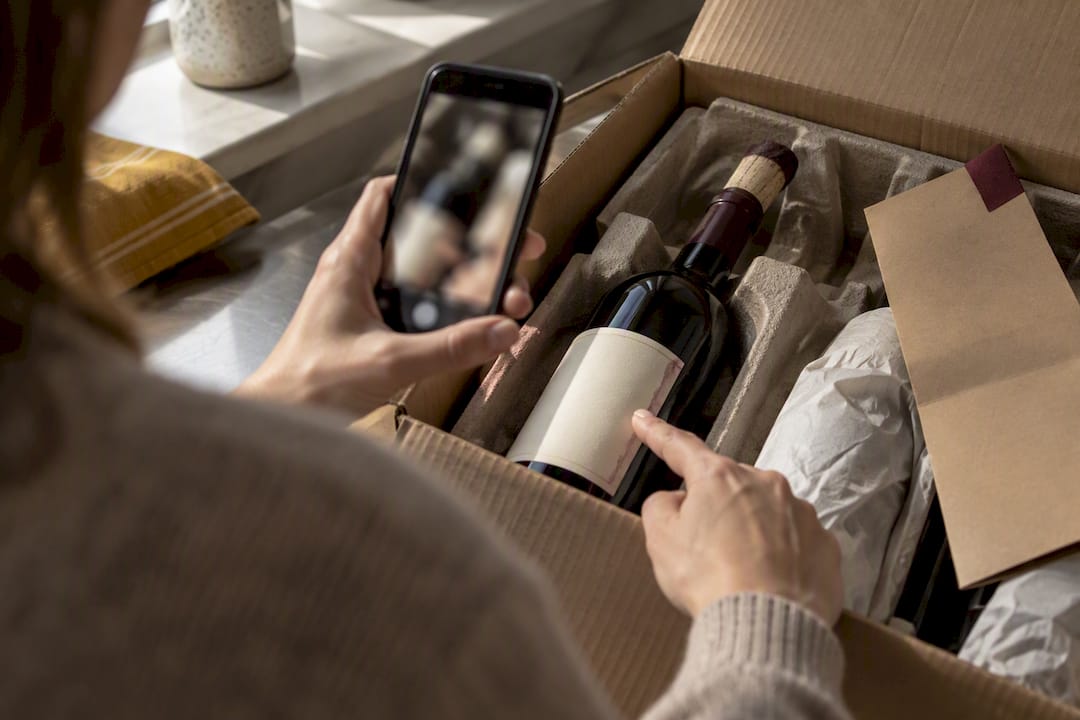
Photograph everything before you open anything: the box, the packaging inside, the cork position, and the label condition. Note the delivery date and, if you have any way of checking, the weather along the route that week. This documentation is exactly what a seller or carrier will ask for when you file a claim, and vague verbal complaints rarely get the same response as a dated photo record.
Res Fortes on shipping wine responsibly in warm weather
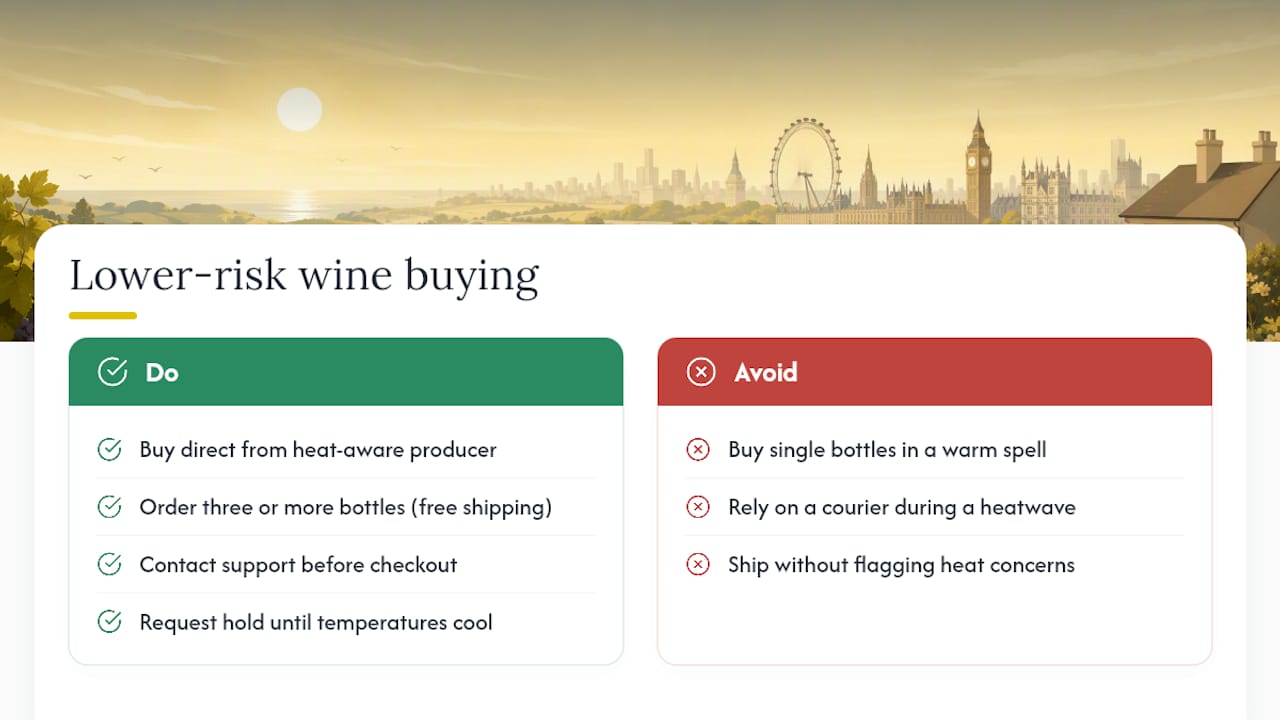
Some producers in southern France build seasonal awareness into their shipping approach and offer free shipping in certain regions on larger orders, encouraging fuller, better-protected shipments rather than single bottles during hot periods.
Ask any producer, before you buy, how they pack for heat and what happens if conditions turn against a shipment. A winery that has thought this through will have an answer ready, not a shrug.
If you’re ordering during a heatwave, or simply want reassurance before a valuable case goes out, Support teams at some wineries may be contacted directly to discuss delivery timing or special handling during hot weather, offering an easy way to avoid shipping problems in heat.
Why most heat warnings arrive too late to matter
Most advice on shipping wine in heat reads like a checklist handed out after the damage is already done: keep it cool, avoid the sun, check on arrival. All true, all fairly useless once a parcel is already sitting in a depot at 40°C. The advice that actually changes outcomes is the boring, unglamorous part: timing the dispatch day and choosing the right service level before the box ever leaves the warehouse.
The conventional wisdom oversells packaging as a fix. Treating any packaging as bulletproof is where most shipments go wrong, especially on multi-day ground routes through a heatwave.
If there’s one thing worth prioritising above all else, it’s this: match the shipping method to the value of the bottle and the weather forecast, not to the cheapest option on the checkout page. A £15 bottle surviving a rough ride is an inconvenience. A cellared, old-vine red arriving cooked is not.
— Moritz
A lower-risk way to buy wine this summer
Res Fortes offers a straightforward alternative to gambling on a courier during a heatwave: buy directly from a producer that builds heat awareness into its own dispatch decisions. 
Every order benefits from free shipping across the UK and France on three bottles or more, which naturally encourages fuller, better-protected shipments rather than single bottles rattling around a box built for a case. If you’re planning a purchase during a warm spell, get in touch with Res Fortes’ support team before checkout to ask about timing your delivery or requesting a hold until conditions cool. Browse the current range of wines, from the citrus-bright Rosé to the flagship old-vine Grenache, or consider joining the Elite Membership programme for exclusive releases delivered on a schedule the winery manages with the season in mind. Either way, the next step is simple: place your order and flag any heat concerns directly with the team before it ships.
Sources
For readers who want to verify the thresholds and packaging data cited above, Wine Spectator’s guidance on summer shipping and its report on a bottle ruined in a hot car are worth reading in full. The IPC thermal packaging test details the 19 to 46 hour improvement from insulated liners, while WineFolly’s heat damage guide and Napa Mail Center’s shipping window advice cover consumer handling and seasonal timing.
- Should you ship wine in the heat of summer?
- 48-hour Thermal Protection for Wine Shipment to Maintain Below 30°C
- Best time of year to ship wine without risk
- How to prevent wine heat damage | Wine Folly
FAQ
Is it safe to ship wine when it’s too hot outside?
It’s risky once sustained temperatures along the route pass roughly 27°C (80°F), and genuinely unsafe above 30°C (86°F), according to industry shipping guidance. The safer move during a heatwave is to delay dispatch, request a temperature hold from the seller, or pay for expedited, insulated shipping.
How long can wine survive in heat before it’s damaged?
There’s no fixed safe duration, because damage depends on both temperature and time combined. Laboratory testing found unlined packaging let internal bottle temperature reach 30°C in around 19 hours, while an insulated liner extended that to roughly 46 hours, per IPC’s thermal protection testing, so even “protected” bottles have a limited window.
Can I post a bottle of wine to a friend in summer?
You can, but it’s worth choosing a fast, tracked service and avoiding weekend dwell time in transit. Shipping Monday to Wednesday and requesting no unattended porch delivery cuts most of the risk that comes with parcels sitting in hot vans or depots over a long weekend.
Is wine still fine if it gets hot during delivery?
Sometimes, if the exposure was brief and mild, but any bottle with a pushed cork, sticky residue, or a flat, stewed taste has likely suffered permanent damage. Once wine has “cooked,” as Wine Spectator describes it, no amount of cellaring afterwards will restore the lost freshness.
Does Res Fortes offer any protection against heat damage during shipping?
Res Fortes builds seasonal awareness into its dispatch decisions and offers free shipping in the UK and France on three bottles or more, encouraging fuller, better-insulated shipments. Contact Res Fortes’ support team directly if you’d like to request a temperature hold or discuss delivery timing before ordering during a heatwave.