

Pyrenees Wines: 5 Checks UK Buyers Need Before Ordering
Pyrenees wines are a cool-climate Australian style, grown around Avoca in Victoria, prized for savoury, peppery Shiraz, structured Cabernet Sauvignon, and traditional-method sparkling. The region holds official Geographical Indication status, and its elevation and diurnal swing give reds real ageing potential. When buying, check the vintage and the vineyard source before you check the price.
TL;DR:
- Pyrenees wines are best enjoyed by considering vintage variation, with the potential to age five to ten years, especially for top Shiraz and Cabernet.
- Check the label for clear provenance, vintage year, and specific vineyard or estate indicators before purchasing from UK retailers.
- Wines from cooler southern sites are ideal for sparkling and white varieties, while inland valleys produce their signature structured and age-worthy reds.
- A dry growing season of only 220mm of rainfall increases the importance of irrigation and influences vintage quality and flavor concentration.
- Producers in the region emphasize small-scale, site-specific winemaking, with many family-run estates enhancing the wines’ distinctiveness.
What is the Pyrenees wine region, and what gives it that character?
The Pyrenees is a Geographical Indication in western Victoria, centred on the town of Avoca, roughly two and a half hours from Melbourne. It takes its name from the local ranges, not the European mountains, and it is genuinely distinct wine country shaped by the Great Dividing Range, not by anything French.
Vineyard sites here climb from around 171 metres to 788 metres above sea level, and that spread matters more than most buyers realise. Higher blocks ripen slower and cooler, holding onto acidity that gives the wines their backbone. Growing-season rainfall sits at only around 220mm, light enough that many vineyards rely on irrigation to get fruit through summer.
What really defines the Pyrenees is the swing between day and night temperatures during spring and early summer. That diurnal range keeps acid levels bright while flavour compounds develop slowly, which is a large part of why the region’s Shiraz carries genuine cellaring potential rather than fading fast.
A few grounding facts worth knowing before you shop:
- Winegrowing here dates back to the 1800s), with a modern revival from the 1960s onward and formal GI recognition arriving in 2000.
- Soils are largely grey-brown loams and sands, often amended with gypsum and lime to manage vine vigour.
- The GI is not homogeneous: cooler southern sites suit sparkling and white grapes, while warmer inland valleys produce the bolder Shiraz and Cabernet the region is best known for.
Shiraz, Cabernet, sparkling and white: what’s actually in the glass
Shiraz is the wine that put the Pyrenees on the map, and it has a signature you’ll recognise blind: dark plum and blackberry fruit wrapped around white pepper, dried herb, and a savoury, almost meaty edge. It’s a world away from the jammier styles you’ll find in warmer Australian regions, and that restraint is exactly why serious drinkers seek it out.
Cabernet Sauvignon runs a close second, built on firmer tannin and a mid-palate richness that leans toward cassis and dark cherry, often lifted by a streak of mint or eucalypt that’s typical of cooler-climate Australian Cabernet generally. Both varieties benefit from the region’s mineral-edged soils, which the gypsum and lime amendments help shape into wines with real tension rather than flab.
Sparkling wine is the quieter success story. Cooler southern sites within the GI, picked early for natural acidity, go into traditional-method fizz, meaning the second fermentation happens in the bottle, exactly as in Champagne. A label stating “traditional method” is your assurance the wine went through that slower, more labour-intensive process rather than a bulk tank shortcut.
Whites and other varieties play a smaller but genuine role. Sauvignon Blanc and Viognier from the cooler pockets bring aromatic lift, while Chardonnay from the right site can show real texture. Reach for these when you want something lighter for warm weather, or when you’re pairing rather than making the wine the centrepiece.
Statistic Callout: Growing-season rainfall of just around 220mm is one of the lowest figures among Victoria’s premium red-wine regions, a key reason irrigation planning shapes so much of the region’s viticulture.
- Shiraz: peppery, savoury, dark-fruited, built to age.
- Cabernet Sauvignon: structured tannin, cassis fruit, mint or eucalypt lift.
- Sparkling: traditional-method, from the coolest southern sites.
- Whites (Sauvignon Blanc, Chardonnay, Viognier): aromatic, best suited to earlier drinking.
Reading a Pyrenees vintage: what to drink now and what to cellar
A young Pyrenees Shiraz often shows tight pepper and dark fruit on release, with tannin that can feel a little firm. That firmness isn’t a flaw. It’s the mineral tension from the region’s loam and gypsum-amended soils doing exactly what it’s meant to, and it tends to soften into something more layered after a few years in bottle.
Premium Shiraz and Cabernet from the Pyrenees generally reward mid-term cellaring, often five to ten years for top examples, more than many buyers expect from an Australian red at this price point. If you’re drinking one young, decant it for thirty to sixty minutes to let that tight fruit open up.
Because growing-season rainfall is so limited, vintage variation matters more here than in wetter regions. A dry, warm year concentrates flavour and can push tannin harder, while a cooler season keeps things brighter and more elegant. Checking the vintage on the label isn’t a formality. It genuinely changes what’s in the bottle.
Pro Tip: If a Pyrenees Shiraz tastes closed or tightly wound in its first two or three years, don’t judge it on that bottle alone. Buy two if you can, drink one now, and hold the other for a genuinely different experience later.
How to buy Pyrenees wines from the UK: a practical checklist
Buying well from this region comes down to three things: reading the label properly, choosing a reliable channel, and understanding what crosses the border with your order.
- Check the label for real provenance markers. Look for the Pyrenees GI stated clearly, along with terms like “estate grown” or “single vineyard,” which point to fruit from a specific, traceable site rather than a broad regional blend.
- Note the vintage before the price. Given the rainfall variation across seasons, the year on the label tells you more about what’s in the glass than the tasting notes on the back.
- Choose your retail channel deliberately. Specialist online wine merchants and independent importers are the most consistent route for UK buyers, since availability from Pyrenees producers varies by vintage and stock moves quickly for the better-rated wines. Auctions and resellers can work for rarer bottles, but always verify storage history first.
- Confirm shipping and duty before you order. UK import duty and VAT typically apply to wine shipped from outside the EU, so factor that into the landed cost rather than just the shelf price quoted by an overseas seller.
- Drink within sensible limits. If you’re planning to explore several bottles across a tasting session, the UK’s low-risk drinking guidance is worth keeping in mind alongside the tasting notes.
A note from Res Fortes: kindred terroir, different foothills
Res Fortes crafts its wines from the Côtes du Roussillon, at the foothills of the French Pyrenees, a mountain range that shares only its name with Victoria’s Avoca-centred GI. The comparison is worth making anyway, because both regions lean on elevation and diurnal swing to build structure into their reds, even though the grapes and the hands behind them differ entirely.
Where Victoria’s Pyrenees builds its reputation on Shiraz and Cabernet, Res Fortes works old-vine Grenache and Syrah, alongside a citrus-driven Rosé and a Chardonnay labelled Chaotic for its layered, unruly character. The flagship, The Brave, showcases what old-vine Grenache can do when given minimal intervention and patient winemaking.
- Full range spans reds, whites, rosé and sparkling-adjacent styles drawn from Roussillon’s own elevated terroir.
- Res Fortes wines have earned recognition from several notable drinks publications and reviewers.
- UK readers can explore the range by the bottle, in curated mixed cases, or through the Elite Member subscription for early access to limited releases.
For more on how elevation and microclimate shape this southern French style, the role of weather and climate in Roussillon winemaking is worth a closer read.
From goldfields to GI: the story behind Pyrenees winemaking
Vines first went into the ground around Avoca in the 1800s, part of the broader wave of Victorian goldfields-era plantings that spread through the state as diggers and settlers looked for a second livelihood once the gold ran thin. Many of those early vineyards didn’t survive the economic and phylloxera pressures of the following decades, and the region fell largely quiet for the best part of a century.
Revival came in the 1960s, when a new generation of growers, drawn by the cool nights and elevated blocks around Avoca and Redbank, began replanting with a clearer sense of what the site could do. Shiraz and Cabernet Sauvignon quickly proved themselves the standout performers, rewarding the slower ripening that the altitude and rainfall pattern imposed.
Formal recognition followed in 2000, when the Pyrenees was registered as a Geographical Indication, cementing decades of quiet, patient work into a defined and protected wine region. That status matters practically: it means a bottle labelled Pyrenees has to come from grapes grown within the mapped boundary, giving buyers a genuine guarantee of origin rather than a marketing flourish.
The region has stayed relatively small and unhurried by industry standards, and that’s arguably its greatest strength. Growers here have never chased volume, and the wines still show the fingerprints of individual sites rather than a house style stamped across the whole GI.
The producers building the region’s reputation
More than twenty cellar doors operate across the Pyrenees, a striking number for a region of this size, and it points to a wine culture built on personal visits and direct relationships rather than mass distribution.
James Halliday’s five-red-star ratings, awarded to several Pyrenees producers, have done real work in shaping how the region is perceived nationally. Tourism material for the area consistently points to Halliday’s assessments as evidence of the reds’ quality, particularly their reputation as “full-blooded and richly textured,” a description that lines up closely with the peppery, structured Shiraz style the region is known for.
What ties these producers together isn’t a shared winemaking philosophy so much as a shared commitment to small-scale, site-specific work. Many operate as family businesses with vineyards planted decades ago, often working the same blocks their parents or grandparents established during the 1960s revival. That continuity shows in the wines: there’s a consistency of style across vintages that comes from familiarity with a single patch of ground rather than a formula applied broadly.
For visitors, the cellar-door experience is as much a part of the appeal as the wine itself. Tasting a Shiraz on the veranda where it was grown, with the grower talking you through the vintage, gives you context no shelf label ever could.
What to pair with Pyrenees wines
Pyrenees Shiraz, with its pepper and dark fruit, was practically built for slow-cooked lamb, particularly a shoulder roasted with rosemary and garlic until it falls apart. The wine’s savoury edge meets the meat’s richness without either side overpowering the other, and the tannin cuts cleanly through the fat.

Cabernet Sauvignon from the region wants something with more structure on the plate: a grilled ribeye, or a hard aged cheddar, where the mint-tinged fruit and firm tannin have something substantial to work against. Venison, if you can find it, is another natural match, its gamey depth mirroring the wine’s own savoury character.
The traditional-method sparkling wines are far more versatile than most drinkers assume. They work beautifully with oysters or a simple charcuterie board, but they’re equally at home alongside fried chicken or tempura, where the bubbles and acidity cut through the oil.
For the whites, Sauvignon Blanc and Viognier from cooler Pyrenees sites suit lighter fare: grilled fish, goat’s cheese, or a herb-heavy salad. Keep the reds for the main event and the whites for the opening course, and you’ll get the most out of both.
How Pyrenees wines compare with other Australian regions
Set a Pyrenees Shiraz next to one from the Barossa Valley and the difference is immediate. Barossa fruit tends toward richer, riper, more generous flavours built for earlier drinking, while Pyrenees Shiraz holds back, offering restraint and pepper rather than jam. Neither is better; they’re simply built for different moods.

Against Coonawarra, famous for its terra rossa soil and structured Cabernet, the Pyrenees version tends to show a touch more warmth in the fruit and a slightly softer edge, a product of its inland Victorian setting compared with Coonawarra’s cooler, more maritime influence.
The closer comparison, stylistically, is with the Grampians and Heathcote, both Victorian regions that also lean on cool nights and elevation for peppery, structured Shiraz. What sets the Pyrenees apart within that trio is its particularly wide diurnal range and its notably dry growing season, a combination that pushes the wines toward firmer tannin and longer cellaring potential than some of its Victorian neighbours.
For buyers, that comparison is genuinely useful shorthand: if a Barossa Shiraz feels too rich, or a straightforward Cabernet feels too soft, the Pyrenees is where to look for something with more backbone and a longer life ahead of it.
Why this region deserves a permanent spot in your cellar
Pyrenees wines reward patience in a way a lot of Australian reds don’t, and that’s the whole case for seeking them out. Buy a bottle of the region’s Shiraz and a southern-site sparkling side by side, and you’ll taste the full range this small GI is capable of. Pour the Shiraz alongside slow-roasted lamb, and the pepper and tannin will do work no simpler pairing manages.
— Moritz
Try a kindred terroir: Res Fortes from the French Pyrenees foothills
If Pyrenees Shiraz has you drawn to wines shaped by elevation, cool nights, and mineral-driven soil, Res Fortes offers a genuinely comparable experience from the other side of the world, grown at the foothills of the French Pyrenees rather than Victoria’s Avoca. Where the Australian region leans on Shiraz and Cabernet, Res Fortes centres on old-vine Grenache and Syrah, crafted with minimal intervention to let the Roussillon terroir speak for itself.
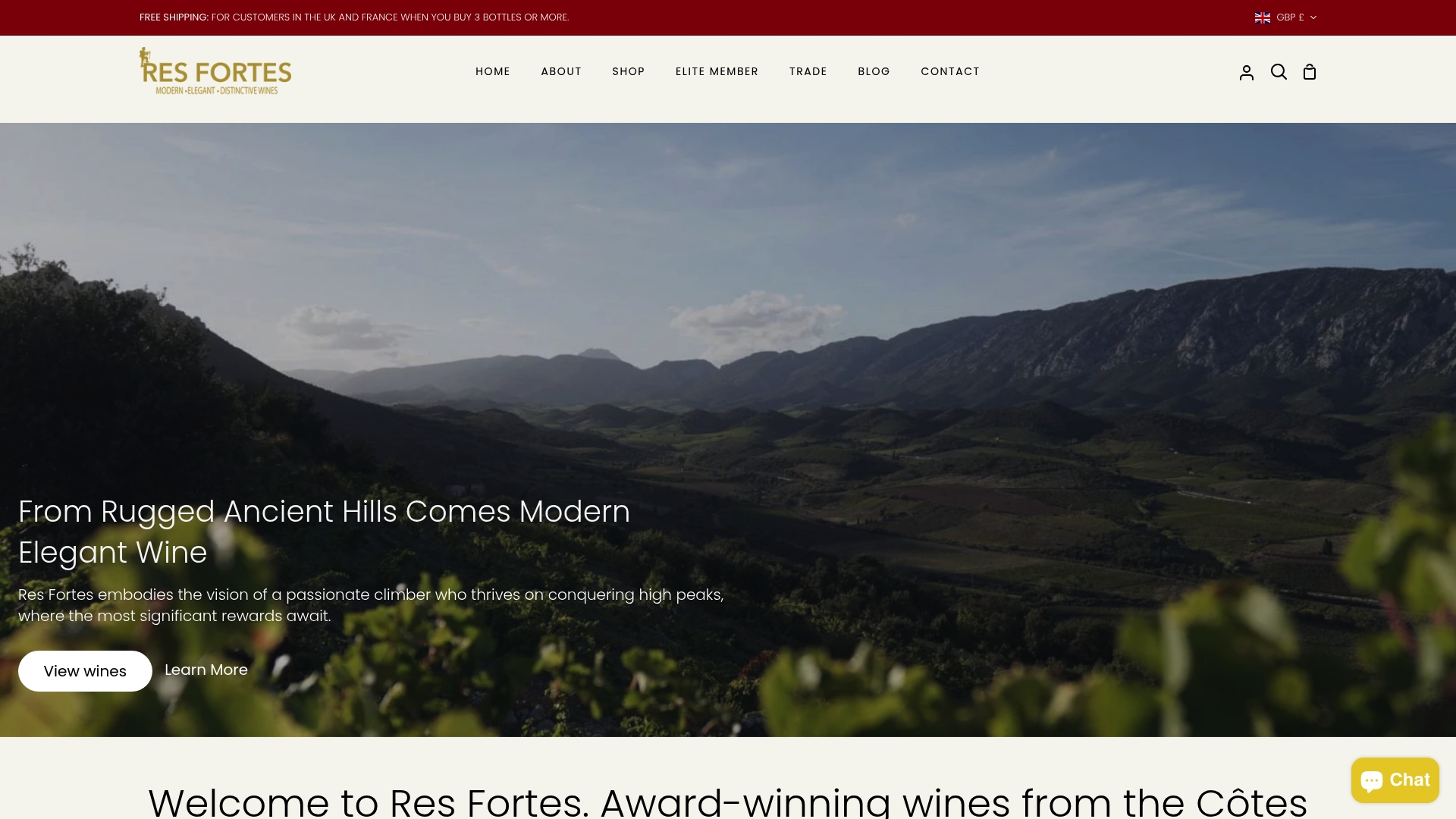
The full collection of wines spans the citrus-laced Rosé, the layered Chaotic Chardonnay, the Grenache-led GMS, the estate Syrah known as Traveller, and the flagship old-vine Grenache, The Brave. UK and France orders of three bottles or more ship free, and checkout is available in either GBP or EUR, whichever suits you.
For readers who’d rather not choose bottle by bottle, the Elite Membership subscription gives first access to limited releases before they reach general sale. Browse the range, pick a case that suits your palate, and see how a different set of foothills interprets the same idea of terroir-driven wine.
Sources
- Pyrenees | Wine Australia
- Pyrenees region profile | Wine‑Searcher
- Wineries in Victoria - Visit the Pyrenees Today
- Gov
FAQ
Where is the Pyrenees wine region?
The Pyrenees is a Geographical Indication in western Victoria, Australia, centred on the town of Avoca, roughly two and a half hours’ drive from Melbourne. It takes its name from the local ranges rather than the European mountains of the same name.
What is the Pyrenees wine region famous for?
It’s best known for savoury, peppery Shiraz and structured Cabernet Sauvignon, alongside traditional-method sparkling wine from its cooler southern sites. The region’s elevation, ranging from around 171 to 788 metres, and its wide diurnal temperature swing give the reds notable ageing potential.
What makes Blue Pyrenees wines unique?
Blue Pyrenees is one of the region’s established producers, known for structured red blends and traditional-method sparkling built on the same cool-climate, high-elevation sites that define the GI. Its wines reflect the broader Pyrenees signature of firm tannin and savoury fruit rather than a house style unique to that one estate.
Is Australia’s Pyrenees region related to France’s Pyrenees mountains?
No. The Australian GI shares only its name with the French mountain range, and the two have entirely separate winemaking histories, grape focuses, and climates. Res Fortes, by contrast, is genuinely grown at the foothills of the French Pyrenees in the Côtes du Roussillon.
How much does Res Fortes wine cost?
Current pricing for Res Fortes bottles, mixed cases, and the Elite Membership subscription is available directly on the wines collection page, since prices vary by product and release.