

Most white wine deserves a home between 6°C and 13°C, with the precise mark set by style: light, crisp bottles want 7–10°C, while fuller-bodied or oaked whites open up between 10°C and 13°C. Sparkling wine sits coldest, at 6–10°C. The rule of thumb, endorsed widely by Decanter: pull the bottle from the fridge 10 to 15 minutes before pouring, or plunge it into an ice bucket for a faster fix. This same logic applies across many white wine ranges.
TL;DR:
- Serving fuller-bodied and oaked white wines at 12–13°C enhances their texture and flavor, while lighter styles like Sauvignon Blanc should be closer to 7–10°C.
- Most domestic refrigerators run too cold, often at 2–5°C, so white wines need about 20 minutes out of the fridge to reach proper serving temperature.
- Quickly chilling wines in an ice-water bath with salt or wrapping bottles in a damp towel accelerates cooling without diluting or damaging the wine.
- Warming a too-cold wine in the glass or decanter can unlock aromatics, but serving whites too warm can make alcohol seem unbalanced and boozy.
- Using a probe thermometer or the sip-and-wait test helps ensure white wines are served at their optimal temperatures for flavor expression.
White wine temperatures at a glance
A fridge full of half-remembered advice helps nobody. What follows is the reference chart worth pinning to the inside of a kitchen cupboard.
| Style | Ideal temperature | Effect at this range |
|---|---|---|
| Sparkling & Champagne | 6–10°C | Preserves bead and citrus lift; too warm and bubbles turn flabby |
| Light & crisp (Sauvignon Blanc, Pinot Grigio, Albariño) | 7–10°C | Keeps acidity taut and refreshing |
| Aromatic (Riesling, Gewürztraminer) | 8–10°C | Retains floral perfume without exaggerating sweetness |
| Medium/full-bodied & oaked (Chardonnay, Viognier) | 10–13°C | Unlocks texture, weight, and vanilla or toast notes from oak |
| Sweet/dessert whites | 6–8°C | Balances sugar with brightness rather than cloying richness |
If a table is running long and guests are lingering over each glass, nudge your pour a degree or two warmer than the chart suggests. Wine warms in the glass regardless, so slower drinkers benefit from starting slightly closer to the top of the range. One more thing worth remembering: your domestic fridge runs at 2–5°C, colder than almost every number above, which is exactly why a straight-from-the-fridge pour so often disappoints.
Why does temperature change how wine tastes?
Temperature is not a formality. It is the single biggest lever you have over how a glass of white wine actually performs, because aromatic compounds are volatile and volatility is governed by heat.
Chill a wine down and those aromatic molecules stay locked to the liquid rather than lifting into the air above the glass, which is why an ice-cold Chardonnay can taste strangely muted, almost like drinking through a blanket. Warm it up and the opposite happens: aromatics release more freely, acidity feels softer on the tongue, and alcohol becomes more perceptible. Push a wine too far into the warm zone and that alcohol perception tips into something clumsy. Twelve percent ABV starts to taste hot and unbalanced, sometimes described as “boozy,” even though nothing about the wine itself has changed except its temperature.
Consider the same bottle of Sauvignon Blanc at two extremes. At a fridge-cold 4°C, it tastes sharp, almost austere, all acid and little else. Warmed to a genuine serving temperature of around 12°C, suddenly gooseberry, elderflower, and a faint grassy note appear that were simply not detectable a few degrees colder. Nothing in the bottle changed. Only the temperature did.
This is precisely why judges at competitions such as the Decanter World Wine Awards take temperature control seriously during tastings, and why sommeliers and expert tasters consistently argue that mature or complex whites need to be served cool rather than icy, so their layered aromas actually get the chance to show themselves. A young, zippy white can handle a colder pour because there is less complexity to lose. An older or more textured white cannot.
What temperature should each white wine style be served at?
Getting the exact target right matters more than most drinkers assume, because a two or three degree miss can hide the very qualities that made you buy the bottle in the first place.
- Sparkling wine and Champagne: 6–10°C. Simple, youthful fizz is happiest at the colder end; vintage or complex sparkling wines edge toward 9–10°C so their secondary aromas, that biscuit or brioche character from lees ageing, get room to show.
- Light and crisp whites (Sauvignon Blanc, Pinot Grigio, Albariño): 7–10°C. These wines are built around acidity and freshness, so a firmly cool pour keeps them lively rather than flat.
- Aromatic whites (Riesling, Gewürztraminer): 8–10°C. Serve any colder and you lose the perfume that defines these grapes; any warmer and residual sugar can start to feel heavy rather than balanced.
- Medium to full-bodied and oaked whites (Chardonnay, Viognier): 10–13°C. This is where the unoaked vs oaked chardonnay distinction becomes obvious. An unoaked Chardonnay’s crisp apple and citrus character survives a slightly cooler pour, but an oaked style needs the warmer end of this band to release its texture, its weight, and the toasted, buttery notes that oak contact builds in. Serve an oaked Chardonnay too cold and it tastes tight and shut down; give it 12–13°C and the same wine opens into something rounder and more generous.
- Sweet and dessert whites: 6–8°C. The cold keeps sugar in check, so the wine tastes balanced rather than syrupy.
- Skin-contact and orange wines: treat these closer to the fuller-bodied band rather than chilling them hard. Their tannin and texture, more akin to a light red than a crisp white, get lost if served too cold.
For multi-course dinners, pull fuller-bodied whites from the fridge earlier than lighter ones. A Viognier destined for the main course deserves a longer rest out of the cold than the Albariño poured with starters. Rosé serving temperature follows a very similar logic to light whites, sitting comfortably in that 7–10°C zone, so if you are running a rosé alongside white wine service, treat them the same way.
How do you chill or warm white wine quickly?
A bottle at the wrong temperature is not a crisis. It is a fifteen-minute fix, provided you use the right method rather than hoping the fridge sorts it out in time.
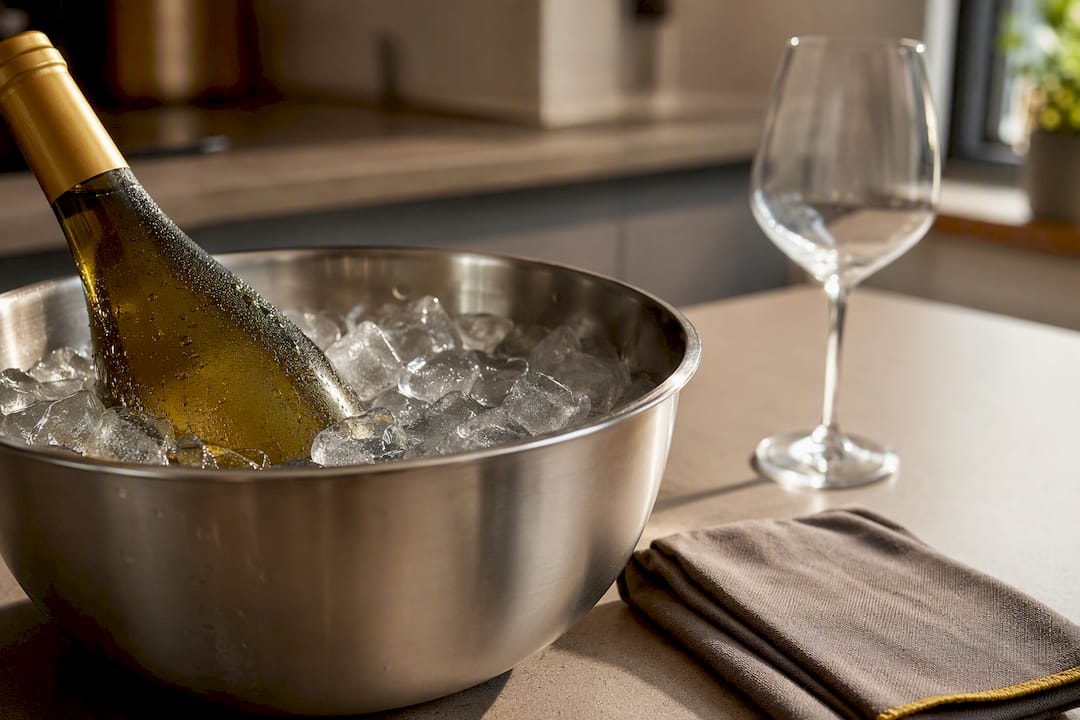
- Ice-water bath. Fill a bucket or large bowl with equal parts ice and water, not ice alone, since liquid contact transfers heat away far more effectively than ice sitting dry against glass. Add a handful of table salt to lower the freezing point and speed things up further. Submerge the bottle to the neck, give it a rotation every few minutes for even cooling, and expect a drop of roughly 6–8°C in about 15 minutes.
- Freezer shortcut. Twenty to thirty minutes in the freezer will chill a bottle fast, but set a timer. Forgotten bottles have a habit of freezing solid, expanding, and cracking, which turns a quick fix into a kitchen clean-up.
- Damp towel and freezer. Wrap the bottle in a wet tea towel before it goes in the freezer. The damp fabric conducts cold faster than bare glass, cutting the wait to roughly 20 minutes.
- Warming a too-cold glass. Cup the bowl in your hands and swirl gently, or decant into a room-temperature jug for a few minutes. Never use a microwave. Uneven heating can cook the wine’s delicate aromatics in seconds and there is no undoing it.
Pro Tip: If you are worried about watering down a chilled white with ice cubes, keep a set of frozen stainless steel chilling cubes in the freezer. Drop two into the glass and you get the temperature drop without any dilution at all.
How do you measure white wine temperature accurately?
Guesswork is the enemy here, but you do not need laboratory equipment to get it right.
- Use a probe thermometer. Insert it into the open bottle after pouring the first glass; a cheap kitchen probe thermometer gives you an exact reading in seconds and removes all doubt.
- Try the sip-and-wait test if you have no thermometer. Pour a small sample straight from the fridge, wait five minutes, then taste again. If the aromatics have opened up noticeably, you are close to the ideal serving mark.
- Remember the 20-minute rule. As a general guideline, whites stored in a standard kitchen fridge need roughly 20 minutes out of the cold before they climb into their proper serving range, though lighter styles can sometimes need less and fuller styles occasionally need more.
- Adjust for room-temperature storage. A bottle kept at 20°C on a counter, rather than in the fridge, will need considerably longer in an ice bath or freezer to reach target, so build in extra time if you skipped the fridge altogether.
Is your fridge the same as your wine cooler?
No, and confusing the two is one of the most common mistakes among enthusiasts building a small collection. A domestic fridge is built for keeping food safe, which means it runs colder and drier than any wine actually wants for long-term storage.
For storing whites over weeks or months rather than serving them tonight, aim for a steady 10–12°C. This range protects the cork, keeps the wine chemically stable, and avoids the temperature swings that accelerate ageing in the wrong direction. If you own a dual-zone wine cooler, set one zone to 7–9°C for bottles you plan to drink within the next day or two, and the other to 10–12°C for anything you are cellaring for later.
Planning a dinner a week out? Keep the bottle in the cooler’s cellaring zone until the morning of the event, then either move it to the fridge for a few hours or go straight to an ice bath shortly before service. Treating your everyday fridge as a long-term wine store is the surest way to dull a good bottle before you ever get to taste it properly.
What does Res Fortes recommend for serving its whites?
Some white wines are built to reward a specific serving temperature rather than a generic cold pour.
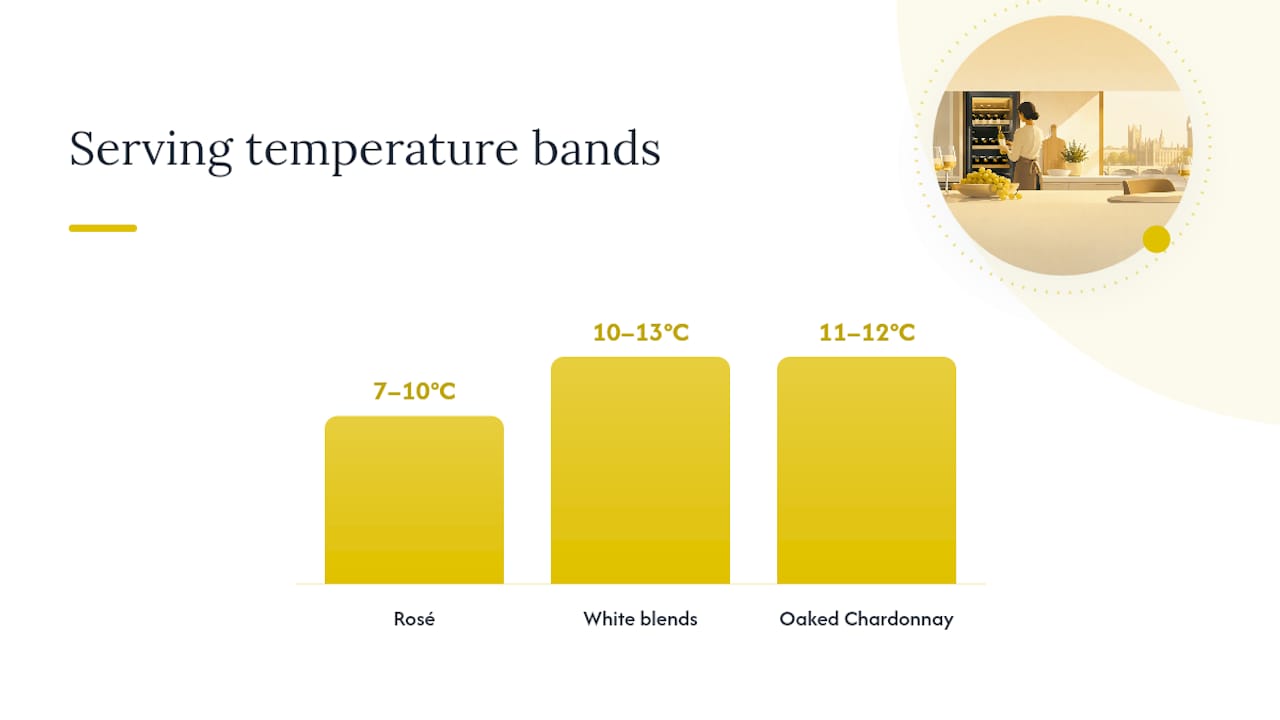
Some Chardonnay wines carry texture and citrus-laced complexity, benefiting from the warmer end of the oaked-white band, around 11–12°C, to show their full character. Similarly, certain white blends benefit from being served in the 10–13°C territory, where their weight and layered fruit can unfold fully. Rosé wines often perform best chilled to 7–10°C for maximum freshness.
Pro Tip: If a Res Fortes white tastes flat or closed straight from the fridge, give it ten minutes in the glass before deciding. Cold-suppressed aromatics often need that short window to surface properly.
Why most people get white wine temperature backwards
The conventional wisdom on this subject is not wrong, exactly, but it is incomplete. Most guidance stops at “serve white wine chilled” and leaves the reader to guess what “chilled” means, which is how so many decent bottles end up tasting thin and characterless straight from a 3°C fridge.
What the evidence here actually supports is a more useful principle: treat cold as your safety margin, not your target. A wine served a little too cold can warm up in the glass within minutes and correct itself. A wine served too warm, particularly with alcohol already reading as hot and boozy, is much harder to fix at the table. That asymmetry is why erring cooler at a party, where wine sits out and warms regardless, makes practical sense even though it is not the theoretically ideal pour.
If there is one habit worth adopting above all others, it is the ten-minute pause. Pull the bottle, pour nothing yet, let it sit. That single pause does more for flavour than any amount of debate over the exact degree.
— Moritz
Try the temperatures for yourself
Reading a chart is one thing; tasting the difference for yourself is another entirely. Res Fortes exists for exactly that moment, small-batch, minimal-intervention whites and a rosé built with enough structure and character that getting the temperature right genuinely changes what you taste in the glass.

Browse the current collection of Res Fortes wines to find a Chaotic Chardonnay or white blend worth practising these techniques on, or explore the curated mixed cases if you would rather taste several styles side by side. For regular access to new releases and limited runs, the Elite Membership programme delivers wines suited to exactly this kind of considered, temperature-aware drinking. Visit the Elite Membership subscription page to see what is currently available and start your first case.
Where this guide’s figures come from
- Decanter supplied the core temperature bands by style and freezer-chilling timings.
- Wine Enthusiast provided expert commentary on aromatics and mature white service.
- The Wine Society clarified the distinction between storage and serving temperature.
Sources
- White wine temperature: How cold should it be? | Decanter
- Your cheat sheet to serving wine | Wine Enthusiast
- Does serving temperature matter for wine? | The Wine Society
FAQ
What temperature should white wine be served at?
White wine is generally best served between 6°C and 13°C, with light and crisp styles nearer 7–10°C and fuller, oaked whites nearer 10–13°C. Sparkling wines sit coldest, at 6–10°C. The exact target depends on the grape and style, so check a reference chart if you are unsure which end of the range suits your bottle.
What is the 20-minute rule for wine?
The 20-minute rule refers to the rough time a bottle needs out of a standard kitchen fridge before it warms into its proper serving range, since domestic fridges typically run at 2–5°C, far colder than most whites want. Lighter styles sometimes need slightly less time and fuller-bodied whites occasionally need a touch more.
Should white wine always go in the fridge?
Yes, for short-term chilling before serving, but a fridge is not ideal for long-term storage. If you are keeping a bottle for weeks rather than days, a wine cooler set to around 10–12°C protects the cork and flavour far better than a food fridge.
Is it worse to serve white wine too cold or too warm?
Too warm is generally the bigger problem, because heat exaggerates alcohol and can make a wine taste hot or clumsy in a way that is hard to reverse quickly. Too cold simply mutes aromatics temporarily, and the wine will often correct itself within minutes as it warms naturally in the glass.
Does the serving temperature differ for oaked versus unoaked Chardonnay?
Yes. Unoaked Chardonnay, with its brighter citrus and apple character, performs well nearer the cooler end of the medium-bodied range, around 10–11°C. Oaked Chardonnay needs the warmer end, closer to 12–13°C, to release its texture and toasted, buttery notes fully.