
An awards list is a curated collection of prestigious competitions recognised worldwide for benchmarking outstanding wine quality and style. For enthusiasts, these lists cut through the noise of thousands of global releases and point directly to bottles worth seeking out. The International Wine Challenge, Wynn Signature Chinese Wine Awards, Sommeliers Choice Awards, and The Global wine Masters competition each represent a distinct standard of excellence. Understanding what each award measures, and how to read the scores behind the medals, transforms a list of accolades into a genuine buying guide.
1. The leading international wine excellence awards compared
Not all wine awards carry equal weight, and the differences between them shape how you should use each one.
-
International Wine Challenge (IWC): The IWC is one of the world’s largest and most respected blind-tasting competitions. Judges assess wines anonymously across all major categories, awarding medals on a points-based system that ranges from Commended through to Gold. Its breadth makes it the most useful general reference for enthusiasts shopping across regions and styles.
-
Wynn Signature Chinese Wine Awards: This competition has grown rapidly in scope and credibility. In 2026, it assessed 800 wines from 180 wineries, doubling its Gold medal count to 74 compared to 35 in 2025. That growth signals rising standards within Chinese winemaking rather than grade inflation, and the competition now stands as a serious regional benchmark.
-
Sommeliers Choice Awards: Judged by and for on-trade professionals in the USA, this competition evaluates wines specifically for restaurant viability, service suitability, and value at the glass. Its scores carry particular weight when you are choosing wine in a restaurant context or building a cellar with hospitality in mind.
-
The Global Wine Masters Competitions are a highly respected series of blind-tasting competitions launched in 2013 by The Drinks Business. Unlike traditional wine shows that categorize entries by country or region of origin, this series takes a unique approach by evaluating wines strictly by grape variety or style (such as Pinot Noir, Sparkling, or Orange wine) and price bracket.
The key distinction across these competitions is scope versus specialisation. Broad events like the IWC serve as general quality filters, while focused competitions like Mondial des Pinots or Sommeliers Choice Awards serve specific buying contexts. Using both types together gives you a fuller picture than relying on any single list.
2. How scoring systems and medal tiers reflect wine quality

Medals are the headline, but the point score behind them is the real story.
The IWC uses a standard point system: Gold medals require 95 to 100 points, Silver falls between 90 and 94, Bronze between 85 and 89, and Commended between 80 and 84. A wine sitting at 95 points and one at 99 points both carry Gold medals, but the gap between them is significant. Reading the actual score, not just the medal colour, is the single most useful habit you can develop as an award-literate enthusiast.
Point scores are more precise indicators than medal labels alone. Some top-tier benchmarks require 98 or above for world-class status, meaning a standard Gold at 95 points, while genuinely excellent, represents a different category of achievement. When a competition publishes full scores alongside medals, always check the number.
- Check the full score, not just the medal. A Bronze at 89 points from a rigorous competition often outperforms an unscored recommendation from a less demanding source.
- Compare within categories. A 93-point Rosé from Provence and a 93-point Shiraz from McLaren Vale are both Silver-level wines, but the score only means something when compared to other wines in the same category and competition.
- Note the competition’s Gold threshold. Some competitions set Gold at 90 points; others require 95. Knowing the threshold tells you how demanding the standard actually is.
- Look for Trophy and Champion designations. Above Gold, many competitions award Trophy or Champion status to the single best wine in a category. These are the wines worth prioritising when budget allows.
The IWC’s 2026 results reflect a clear democratisation of quality, with emerging regions including England, Australia, and Japan winning top awards alongside classic French and Italian producers. This matters for buyers because it confirms that outstanding wine no longer requires a famous postcode.
Pro Tip: When browsing a wine excellence awards list, filter first by score rather than medal colour. A 94-point Silver from a demanding competition is frequently a better buy than a 95-point Gold from a less rigorous one.
3. Awards that spotlight emerging wines and new talent
The most forward-looking competitions do more than reward established names. They actively signal where the next generation of quality is coming from.
The Wynn Signature Chinese Wine Awards illustrate this well. Beyond its medal tiers, the competition presents special awards including Best Young Winemaker, awarded in 2026 to Li Guojun of Sacred Snow Mountain Winery. Recognising individual winemakers rather than just bottles encourages enthusiasts to follow careers and track stylistic evolution across vintages, which is a far richer way to build a collection than chasing medals alone.
“Highlighting emerging winemakers via awards supports industry evolution and inspires consumers to explore fresh styles.” The competitions that invest in this kind of recognition are the ones worth watching most closely.
The IWC takes a different approach to emerging excellence through its Planet Earth Awards, which honour sustainability practices including organic, biodynamic, and Fairtrade production among Gold medal winners. This matters because sustainable viticulture is no longer a niche concern. It is increasingly the marker of producers thinking seriously about long-term quality, and the Planet Earth Awards make those producers visible within the broader results.
- Competitions recognising sustainability signal producers investing in soil health and long-term terroir expression, qualities that correlate with wine character and longevity.
- Special awards for young winemakers give enthusiasts a reason to revisit a producer across multiple vintages rather than treating awards as a one-time purchase trigger.
- Regional competitions like the Wynn Signature Chinese Wine Awards are expanding the map of where serious wine comes from, which directly benefits enthusiasts willing to explore beyond France, Italy, and Spain.
Understanding wine character becomes more rewarding when you can trace it back to the production philosophy that an award has specifically recognised.
4. How to use a wine excellence awards list for smarter buying
A well-constructed wine excellence rankings list is only useful if you know how to apply it. The table below compares the four major competitions by the criteria that matter most to buyers.
| Competition | Scope | Scoring | Speciality | Best used for |
|---|---|---|---|---|
| International Wine Challenge | Global, all categories | 80 to 100 points | General excellence | Broad discovery across regions and styles |
| Wynn Signature Chinese Wine Awards | China-focused | Medal tiers plus special awards | Regional and emerging talent | Exploring Chinese wine and new producers |
| Sommeliers Choice Awards | USA on-trade | Points plus service rating | Restaurant and hospitality | Restaurant wine selection and by-the-glass choices |
| The global Masters | International | Great Gold, Gold, Silver | Single variety | Targeted, Rose, Grenache Noir, Chardonnay |
The practical steps for using any of these lists follow a consistent pattern. Start by identifying which competition aligns with your current interest, whether that is a specific grape variety, a regional exploration, or a restaurant purchase. Then read the score in context, checking what threshold the competition sets for each medal level. Finally, cross-reference the winner with your budget and availability, because award-winning wines frequently offer outstanding value rather than luxury pricing.
Awards serve as trusted expert endorsements, enabling consumers and buyers to navigate the vast global wine market with confidence. That function is most powerful when you treat awards as a starting point for research rather than a final verdict. Personal taste, occasion, and food pairing all shape whether a 96-point Gold actually suits your glass tonight.
Pro Tip: In a restaurant, ask your sommelier whether any wines on the list carry Sommeliers Choice Awards recognition. Those wines have been specifically evaluated for on-trade service quality, which means they are more likely to perform well by the glass and pair reliably with food.
Understanding wine balance is the complementary skill to reading awards. A high score confirms quality; your palate confirms fit.
Key takeaways
The most effective way to use a wine excellence awards list is to read point scores alongside medal colours, match the competition’s speciality to your buying context, and treat emerging-region winners as the highest-value discoveries on any list.
| Point | Details |
|---|---|
| Read scores, not just medals | A 94-point Silver often represents better value than a borderline 95-point Gold. |
| Match competition to context | Use Sommeliers Choice for restaurant buying; use IWC for broad regional discovery. |
| Follow emerging regions | IWC 2026 confirms England, Australia, and Japan now compete at the highest level. |
| Track winemakers, not just bottles | Awards like Best Young Winemaker at Wynn Signature signal careers worth following across vintages. |
| Sustainability signals quality intent | IWC Planet Earth Awards identify producers whose practices correlate with long-term terroir expression. |
Why the awards map is more useful than any single medal
I have spent years watching enthusiasts fixate on the gold sticker on a bottle and ignore the number printed beside it. The medal is marketing. The score is the information. Once you start reading competitions as systems rather than endorsements, the entire awards map becomes a research tool rather than a shopping shortcut.
The shift I find most significant right now is not the rise of any single region. It is the fact that emerging regions are gaining prestigious awards consistently enough that you can no longer treat a Burgundy or Barossa address as a proxy for quality. That assumption has always been imprecise. The 2026 competition results make it indefensible.
What I tell anyone building a collection is this: use the IWC for breadth, use Mondial des Pinots when you are buying Pinot specifically, and use the Wynn Signature Chinese Wine Awards if you want to be ahead of the curve on a region that is producing genuinely exciting wine right now. The Sommeliers Choice Awards belong in a different category entirely. They are not about cellar building. They are about knowing what will perform in a glass at a dinner table, which is its own valuable skill.
The one thing I would caution against is treating any single competition as the definitive authority. The best buyers I know cross-reference at least two competitions before committing to a case. That discipline, combined with reading what wine accolades really mean for buyers, separates the collectors who build genuinely interesting cellars from those who simply own expensive bottles.
— Moritz
Discover award-winning wines from Res Fortes
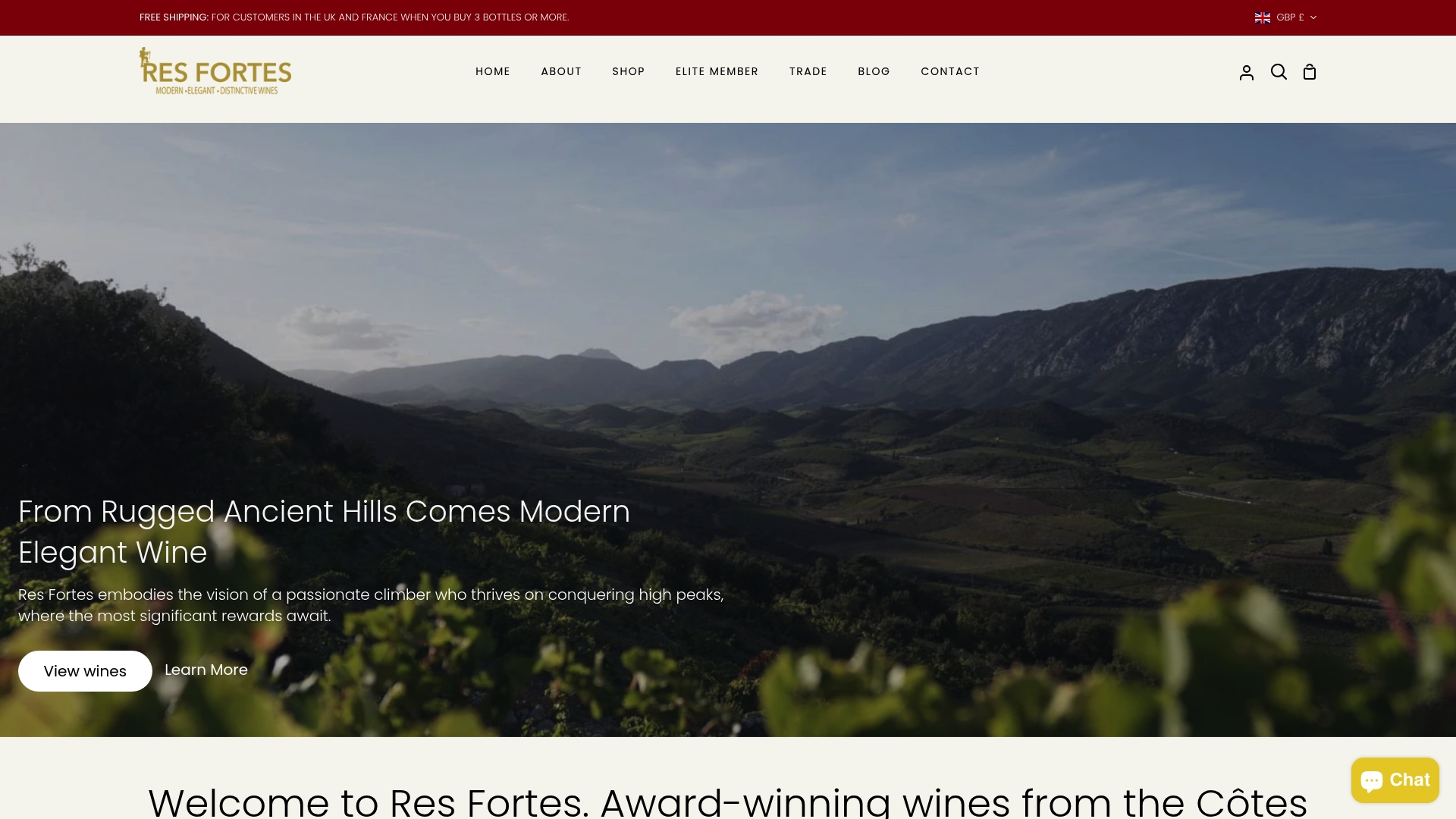
Res Fortes produces wines from the Côtes du Roussillon that have earned recognition from the drinks business, Wine Enthusiast, Fine Vintage, and top Vivino reviewers. The range includes old-vine Grenache, estate Syrah, and expressive white blends, all crafted with minimal intervention at the foothills of the Pyrenees. If you are a trade professional sourcing wines validated by top international standards, the professional wine trade page offers curated selections with free shipping in the UK and France on three bottles or more. For individual enthusiasts, the full Resfortes wine range is available with checkout in GBP or EUR.
Recommended
- The role of old vines in wine quality explained – Res Fortes
- French wine gift ideas: thoughtful picks for every taste – Res Fortes
- Wine tasting guide for confident beginners – Res Fortes
- Understanding wine character: what’s really in your glass – Res Fortes
FAQ
What is a wine excellence awards list?
A wine excellence awards list is a curated reference of prestigious competitions, such as the International Wine Challenge, Sommeliers Choice Awards, and The Globals Masters, that benchmark outstanding wine quality through blind tasting and expert judging. Enthusiasts use these lists to identify top-rated wines across regions, styles, and price points.
How do Gold, Silver, and Bronze medals differ in wine competitions?
The IWC awards Gold for wines scoring 95 to 100 points, Silver for 90 to 94, Bronze for 85 to 89, and Commended for 80 to 84. The point score within each tier matters as much as the medal colour, since a 99-point Gold and a 95-point Gold represent meaningfully different levels of achievement.
Which wine competition is best for finding value wines?
The International Wine Challenge consistently surfaces affordable wines winning top accolades, including a £25 McLaren Vale Shiraz crowned world’s best in 2026. Checking IWC results by category and score rather than price is one of the most reliable ways to find outstanding value.
Are wine awards useful for restaurant wine selection?
The Sommeliers Choice Awards are judged specifically for on-trade viability and service quality, making them the most directly relevant competition for restaurant buying. Wines recognised by this competition have been evaluated for how well they perform by the glass and alongside food.
How do I find wines from emerging regions using award lists?
Filter IWC results by country or region to identify Gold and Trophy winners from England, Japan, China, or other emerging producers. The Wynn Signature Chinese Wine Awards provide the most detailed view of Chinese wine quality, with 800 wines assessed across nearly 180 wineries in 2026 alone.