
Most wine drinkers assume that soil is everything. Find chalky limestone or iron-rich clay, plant your vines, and great wine follows almost automatically. The reality is far more nuanced. Vineyard selection is the process of choosing which parcels and plantings to establish or include, based on how terroir and human viticultural choices will perform together over the long term. It is a discipline that blends science, instinct, and genuine commitment to place, and understanding it changes how you read every bottle you open.
Key Takeaways
| Point | Details |
|---|---|
| Vineyard selection is multi-layered | It combines physical site, microclimate, and human management for wine quality. |
| Terroir merges nature and nurture | Great wines result from matching land strengths with skilled decisions. |
| Sustainability matters for longevity | Smart selection means balancing today’s excellence with future vineyard health. |
| No single best site | Adaptability and continuous stewardship often trump chasing a mythical perfect parcel. |
What is vineyard selection?
Vineyard selection is not simply picking a pretty hillside and hoping for the best. At its core, it means choosing vineyard parcels and plantings based on the relationship between the physical site and the human goals you want to achieve there. The process involves evaluating a site’s natural gifts and asking whether your management approach can work in harmony with them to produce wines of a specific character and quality.
The concept of terroir sits at the heart of this discipline. Terroir is not simply a French word for soil. It is an integrated interaction between physical and biological conditions, including climate, soil composition, topography, hydrology, and the human decisions that interpret and shape them. When experienced viticulturists talk about terroir, they mean everything from the angle of a slope to the timing of the first autumn frost, from rootstock choice to pruning philosophy.
Understanding what vineyard selection actually involves helps explain why two wines made from the same grape variety, grown just a few kilometres apart, can taste entirely different. The following factors summarise what selection must account for:
- Climate: average temperatures, diurnal variation, sunshine hours, and rainfall patterns
- Soil type and depth: composition, mineral content, water retention, and rooting potential
- Topography: elevation, slope gradient, and aspect relative to the sun
- Drainage: natural drainage capacity and the risk of waterlogging
- Human management: pruning systems, irrigation choices, harvest timing, and vine training methods
“Terroir is not a single variable but a living system. The vineyard that performs brilliantly under one grower’s hand may underperform spectacularly under another’s. Site and stewardship are inseparable.”
Exploring vineyard sites and wine quality in greater depth reveals just how powerfully location shapes the final wine. And if you are curious about how producers leverage single parcels to achieve distinctive expressions, the world of single vineyard wines offers fascinating insights into this precision approach.
Key factors in vineyard site selection
Understanding vineyard selection begins with the site itself. When experts assess a potential location, they bring together a detailed checklist of physical attributes that will ultimately determine what the vines can achieve and what the winemaker has to work with at harvest.
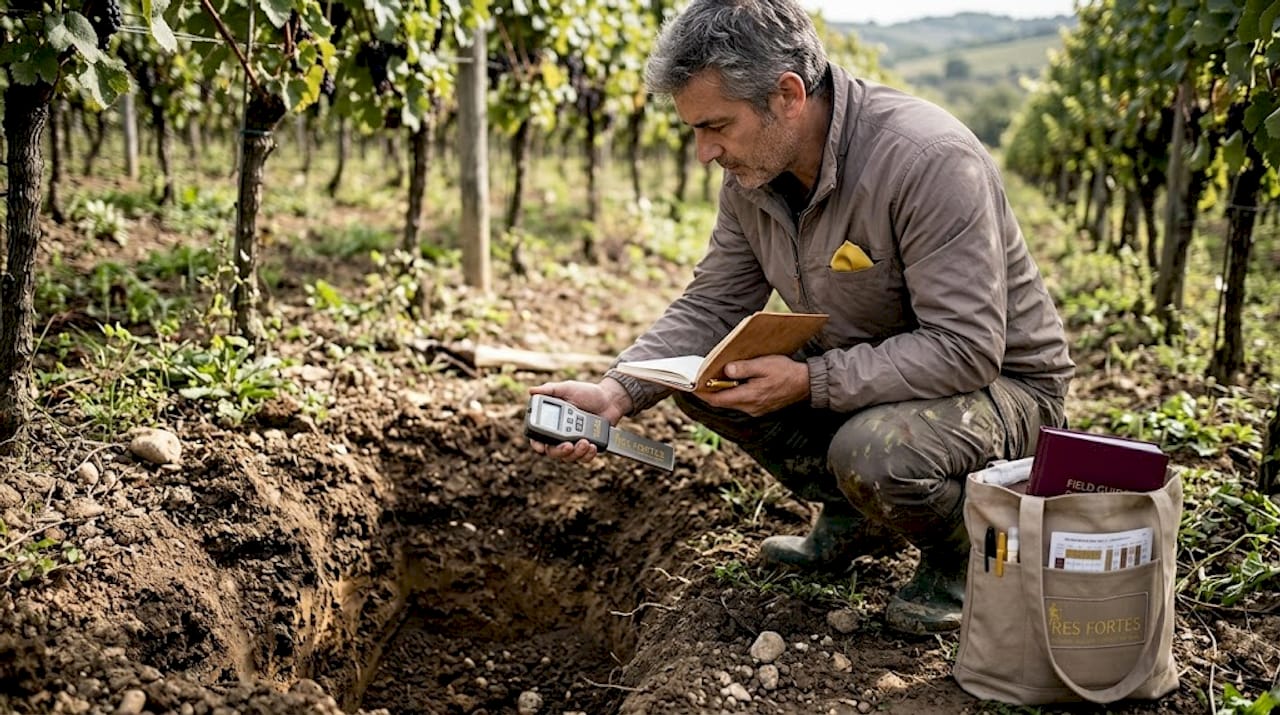
Site evaluation includes drainage, slope and aspect, prevailing climate, frost risk, and root zone qualities. Each of these factors interacts with the others in ways that are rarely straightforward. Good drainage, for example, encourages vines to develop deep root systems, which in turn improves their resilience in drought years. A south-facing slope in the northern hemisphere captures more sunlight and accumulates heat, extending the ripening season and producing richer, fuller fruit expression.
Frost risk is one of the most underestimated factors in site selection, particularly for early-budding varieties. One critical recommendation is to avoid planting vines at the base of slopes where cold air pools overnight. Cold air, being denser than warm air, sinks to the lowest point of a valley or depression. Vines planted there face significantly higher frost exposure during the fragile weeks of bud-break, when a single night below zero can eliminate an entire vintage. Mid-slope positions provide natural frost drainage and are consistently preferred for quality-focused viticulture.
Here is a summary of how key physical factors influence wine potential:
| Site factor | Ideal conditions for quality | Impact on vines and wine |
|---|---|---|
| Soil drainage | Free-draining, moderate moisture retention | Encourages deep rooting, stress-based complexity |
| Elevation | Varies by region; higher often means cooler nights | Preserves acidity, extends ripening |
| Slope aspect | South or south-west facing (northern hemisphere) | Maximises sun exposure and heat accumulation |
| Frost risk | Mid-slope, away from cold-air pooling zones | Protects buds during critical spring growth |
| Root zone depth | Deep, uncompacted subsoil | Allows deep water and mineral access |
Pro Tip: Before visiting a potential vineyard site, study overnight temperature data across different seasons, not just average annual temperatures. Frost risk patterns and diurnal temperature swings tell you far more about a site’s suitability than headline climate statistics ever will.
The vineyards and sustainability approach adopted at Res Fortes reflects precisely this level of careful site reading, where every physical characteristic of the Pyrenean foothills informs what is planted, where, and how.
Terroir in action: How site and human choices meet
Having covered the physical elements, it is time to understand the powerful influence of human expertise. The most gifted viticulturists do not simply react to what a site gives them. They make active decisions that shape how the site’s natural potential is expressed in the wine.
Terroir combines environmental factors with human viticultural decisions such as pruning philosophy, training systems, irrigation management, and harvest timing. These choices are never made in isolation. A grower farming in a drought-prone region might adopt a gobelet, or bush-vine, training system to minimise water demand and maximise shade around the fruit. A grower contending with heavy spring rainfall and fungal disease pressure might opt for a higher training system that improves airflow and reduces humidity around the canopy.
Here is how the interaction between site and human management typically unfolds in practice:
- Rootstock selection: Growers choose rootstocks partly based on soil chemistry and water availability. In the garrigue soils of the Côtes du Roussillon, for example, rootstocks suited to low fertility and calcareous conditions help old vines achieve the balance between vigour and stress that drives complexity.
- Training and pruning systems: A site with strong prevailing winds may require lower vine training to protect growing shoots. A site with cold-air frost risk may benefit from higher training to keep fruit away from ground-level temperature extremes.
- Harvest timing decisions: The character of a site, specifically its rate of sugar accumulation versus acid retention, directly shapes when a viticulturist will choose to pick. A hot, fast-ripening site demands earlier decisions to preserve freshness, while a cooler, slower-ripening site rewards patience.
- Cover cropping and soil management: Human decisions about what grows between the vine rows affect soil biology, moisture competition, and erosion. In sustainable vineyards, deliberate cover cropping builds organic matter and supports the microbial life that makes terroir expression richer and more precise.
“The best vineyard selection decisions are made not once, at planting, but continuously, season after season, as the grower learns what the site is actually saying.”
Pro Tip: When tasting wines from regions you are exploring, ask whether the producer works with old vines. Old vines, having spent decades establishing deep root systems, often produce wines with remarkable site transparency precisely because they access a broader range of the soil profile’s character than younger vines can reach.
Understanding how wine tastes and terroir nuances interact in regions like the Côtes du Roussillon brings this principle to life. The rugged, sun-drenched landscape at the foothills of the Pyrenees creates precisely the kind of challenging environment where thoughtful human stewardship transforms site potential into something genuinely singular.
Vineyard selection for premium and sustainable wines
For those pursuing wines of distinction and conscience, vineyard selection becomes a tool for both excellence and long-term stewardship. Premium wine production is not simply about finding a glamorous location. It requires a rigorous assessment of whether a site can sustain both the quality you aspire to and the ecological health that will allow you to farm it well for generations.
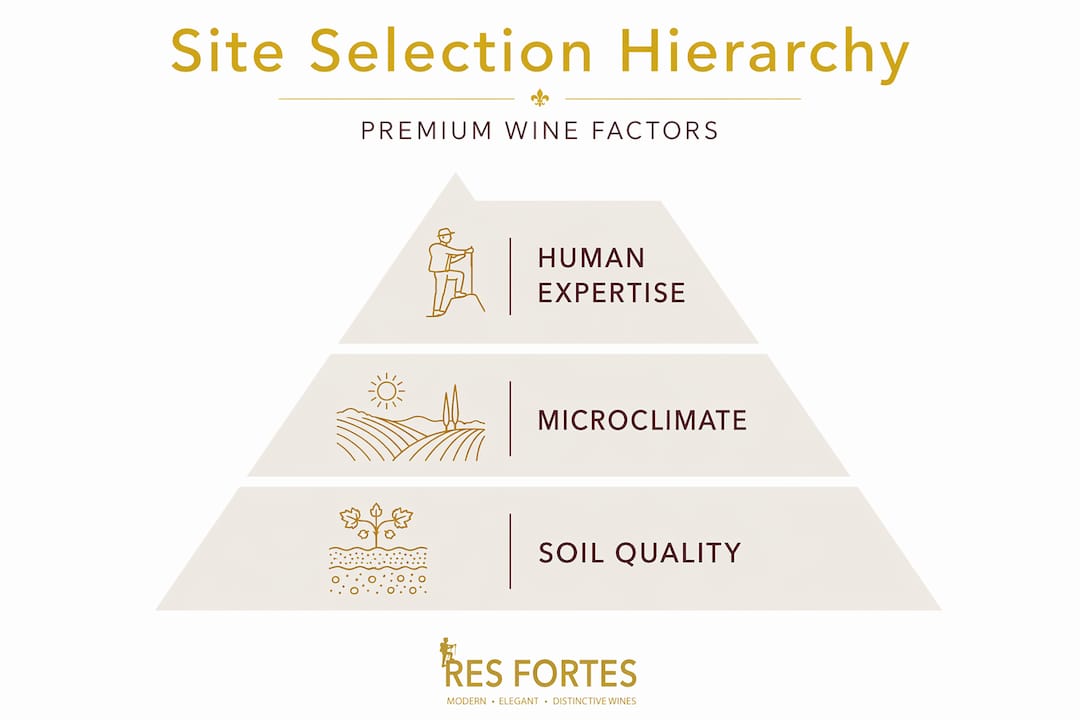
Even within broadly suitable regions, unsuitable soils can exist and undermine long-term viability. A parcel with compacted subsoil, poor drainage, or excessive water retention may look beautiful on the surface but produce wines that lack definition and eventually degrade the land. Serious vineyard selection demands that you look beneath the obvious and assess what the site can deliver over a twenty or thirty-year horizon, not just in the next few vintages.
Sustainability considerations that inform modern vineyard selection include:
- Water management: Is natural rainfall sufficient, or does irrigation introduce dependency and cost? Does the site’s drainage profile prevent excessive irrigation run-off?
- Soil health: Does the site support biodiversity? Are there existing organic matter levels that can be maintained or improved without heavy chemical inputs?
- Erosion risk: Steep slopes offer excellent drainage and sun exposure but can suffer serious erosion without careful cover cropping and soil management practices.
- Local ecosystem integration: Does the vineyard site exist within or adjacent to natural habitats? Can farming practices support rather than diminish local biodiversity?
A comparison between traditional and forward-looking approaches to vineyard selection illustrates why the long view matters:
| Approach | Primary focus | Typical pitfall |
|---|---|---|
| Traditional selection | Soil type, sun exposure, variety suitability | Ignores micro-variations, waterlogging zones, and erosion risk |
| Forward-looking selection | Site suitability plus ecological and economic viability | Requires more investment in site assessment upfront |
| Sustainable premium focus | Excellence, long-term soil health, biodiversity | Demands ongoing adaptation and higher management skill |
Benchmarking vineyard selection against both current wine goals and future stewardship is what separates producers who build lasting reputations from those who achieve short-term results at the expense of their land. Discovering how vineyard sustainability strategies can be implemented practically, and experiencing what they deliver in the glass through a wine like a premium rosé, makes this principle tangible rather than theoretical.
Pro Tip: When evaluating any wine claiming sustainability credentials, look for transparency about specific vineyard practices, not just vague marketing language. Producers who genuinely invest in sustainable vineyard selection will describe their soil management, water practices, and ecosystem approach in concrete terms.
Our perspective: Why true vineyard selection is more than a checklist
The temptation in viticulture, as in many skilled disciplines, is to reduce complex decisions to a formula. Identify the right soil type, secure a south-facing slope, choose well-adapted varieties, follow the approved management protocols, and great wine will presumably follow. In practice, the vineyards that produce the most memorable wines almost always tell a messier, more interesting story than any checklist can capture.
There is no such thing as a perfect site. There are only sites that, in the hands of people who understand them deeply and farm them with genuine care, produce wines of extraordinary character. The Côtes du Roussillon is a striking example of this truth. Its schist, granite, and limestone soils, its fierce tramontane winds, its scorching summers and frost-touched winters, none of these would produce compelling wines through formula alone. They demand ongoing dialogue between farmer and land, between what the site offers and what the winemaker’s vision calls for.
What strikes us most, working in this landscape, is that the vineyards that disappoint are rarely those with obvious physical flaws. They are usually the ones where someone stopped paying attention, where selection decisions made at planting were never revisited, where the quirks of a particular parcel were never properly understood and therefore never honestly addressed. Real mastery in vineyard selection is not a one-time act. It is a continuous process of observation, adaptation, and humility.
For enthusiasts seeking to deepen their own understanding, the most productive approach is to track how vineyard decisions shape the final wine across multiple vintages. Taste the same producer’s wine across several years, read their notes on what the season delivered, and begin to develop a feel for how site characteristics express themselves differently depending on the climate each year. This is how your palate develops real literacy, not just familiarity.
Exploring what makes French boutique wineries unique often comes down to exactly this quality of attention. Boutique producers are rarely insulated from the consequences of their vineyard decisions by volume. Every parcel matters, and that accountability tends to produce more honest, more interesting wines.
Discover vineyard expression with Res Fortes wines
If you are keen to experience what carefully chosen vineyard sites deliver in the glass, here is your next step.
At Res Fortes, vineyard selection is not a marketing concept. It is the foundation of everything we produce in the Côtes du Roussillon, where old vines, ancient soils, and the relentless energy of the Pyrenean landscape are interpreted through minimal-intervention winemaking. Explore the full Res Fortes wines range to discover how site selection shapes wines from the refreshing citrus-laced Rosé to the old-vine Grenache intensity of The Brave. Learn more about our commitment to the land through our Vineyards & Sustainability pages, or if you are a buyer or hospitality professional, find out how we work with the wine trade. Free shipping applies across the UK and France on three bottles or more.
Frequently asked questions
Does vineyard selection really affect wine taste?
Yes, vineyard selection determines the grapes’ growing environment and directly influences wine flavour and character, shaping everything from acidity and structure to aromatic complexity and ageing potential.
What is the role of terroir in vineyard selection?
Terroir integrates physical and human factors, meaning soil, microclimate, topography, and viticultural decisions all guide how a vineyard site is selected and managed for a specific wine style.
Why do premium wines focus on vineyard selection?
Premium wines are built on the unique qualities of carefully chosen sites, and benchmarking site suitability for both grape excellence and long-term ecological viability is what separates truly outstanding wines from merely competent ones.
Can a vineyard have different quality zones within the same site?
Absolutely. Even broadly suitable vineyards can contain areas with poor soil or drainage that create micro-zones of lower quality, which is why experienced viticulturists map and assess parcels in fine detail rather than treating a vineyard as a uniform block.
Is vineyard selection only important in France?
Not at all. Vineyard selection is fundamental wherever vines are grown, because the interaction between site characteristics and human management determines wine quality and character in every wine-producing region across the world.