
There is a certain mythology around old vines. Walk into any wine shop and you will see bottles labelled “Vieilles Vignes” or “Old Vine” sitting at a premium, carrying an almost sacred implication of superior quality. But the role of old vines is considerably more nuanced than the marketing suggests. Age alone does not transform a grape into something extraordinary. What it does do, under the right conditions, is create a set of biological and viticultural circumstances that can produce wine of remarkable depth, consistency, and terroir expression. This article cuts through the romance to explain what science and experience actually tell us.
Key takeaways
| Point | Details |
|---|---|
| A formal definition now exists | The OIV officially defines old vines as 35 years or older, adopted in October 2024 as an international benchmark. |
| Deeper roots change everything | Old vine root systems can reach extraordinary depths, improving drought resilience and concentrating flavour in the fruit. |
| Age is a variable, not a guarantee | Vine age works alongside site quality, vineyard management, and winemaking to produce quality wine. |
| Conservation has real value | Old vineyards support biodiversity, preserve heritage varieties, and reduce the need for new plantings. |
| Labels require scrutiny | No universal labelling law governs the term “old vines,” so certification programmes are the most reliable guide for consumers. |
What actually counts as an old vine?
This question has divided wine producers, critics, and regulators for decades. The term “Vieilles Vignes” on a French label carries no legal minimum age requirement. A producer could, in theory, print it on a bottle from a 20-year-old vineyard without breaking any rules.
That changed meaningfully in October 2024 when the OIV officially defined an old grapevine as one that is at least 35 years old, with 85% of vines in a block required to meet that threshold for an “old vineyard” designation under the new standard (OIV-VITI 703-2024). This represents the most authoritative international benchmark to date.
Regional conventions still vary widely. Barossa Valley in Australia enforces a tiered classification of its own, distinguishing between “old,” “survivor,” and “ancestor” vines at 35, 70, and 100 years respectively. South Africa’s Old Vine Project certifies vineyards of 35 years or older with a heritage seal, most visibly on Chenin Blanc bottlings. These programmes give consumers a meaningful framework where labels alone cannot.
Verifying vine age is not straightforward. Unlike trees, grapevines cannot be aged by counting growth rings because they are lianas whose older wood structures disintegrate over time. Age verification requires a combination of pruning cut analysis, genetic research, and historical records. It is meticulous work, which is part of why the Global Old Vine Registry now catalogues over 10,000 vineyards across 42 countries as of March 2026, spanning 1,144 grape varieties and 40,900 hectares of documented plantings.
Key things to understand about old vine definitions:
- There is no single global labelling law, meaning “old vine” on a bottle is a claim, not a regulated fact
- The OIV’s 2024 resolution sets a credible benchmark but adoption across markets will take time
- Regional certification programmes like Barossa’s charter and South Africa’s Old Vine Project offer the most consumer-facing accountability
- Historical documentation and genetic analysis are increasingly being used alongside physical inspection to confirm vine age
How old vines behave differently
The biological reality of an old vine is where the story gets genuinely interesting. Over decades, a vine’s root system descends far deeper than most people realise. Root systems can reach between 32 and 65 feet below the surface, tapping into mineral reserves and groundwater that younger vines simply cannot access. This creates a degree of consistency across vintages that no amount of canopy management can replicate in a young vineyard.
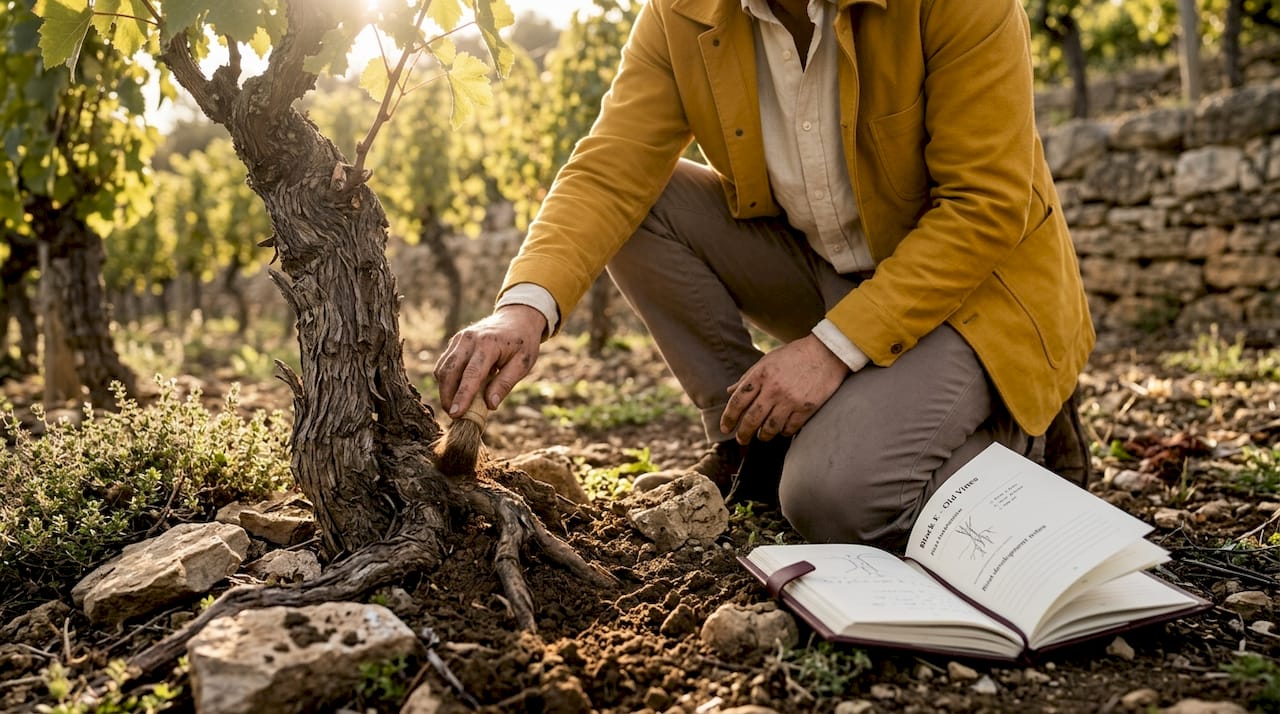
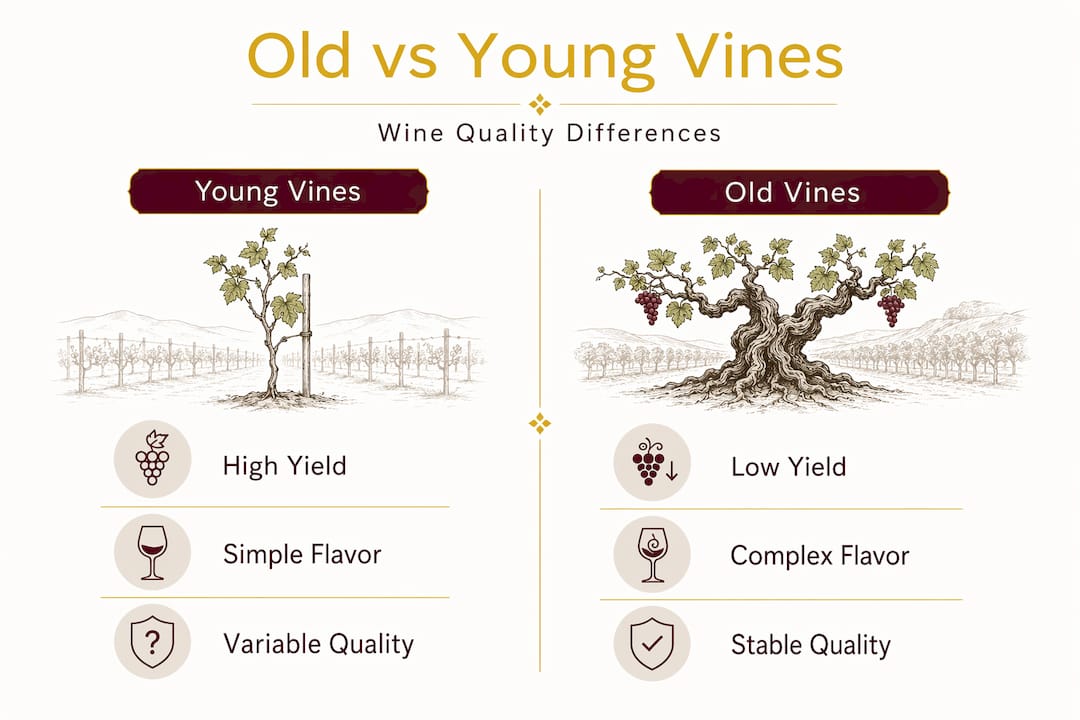
That stability matters for two reasons. First, older vines are far more resilient during drought and heat stress, drawing on deep water reserves when the topsoil dries out. Second, because the vine has established its equilibrium with the soil over many decades, it self-regulates yield naturally. Old vines produce yields nearly four times lower than 15-year-old vines. Fewer clusters mean each berry receives a greater share of the vine’s resources, concentrating sugars, acids, phenolics, and aromatic compounds.
There is solid research supporting the aromatic argument too. Studies by Dr. Vicente Ferreira on old Garnacha vines demonstrate that old vine grapes have higher aromatic complexity and phenolic intensity due to increased aroma precursors. This is not romanticised observation. It is a measurable chemical difference in the fruit.
Pro Tip: When comparing bottles from the same region and variety, look for an old vine from a drought year alongside its younger counterpart. The contrast in texture and concentration is often most dramatic under stress conditions, which is exactly where old vine root depth earns its keep.
One important caveat: vine age is one factor among many. A poorly managed old vineyard, or one planted on a mediocre site, will not automatically outperform a well-tended young vine on excellent terroir. The role of vine age in viticulture is best understood as a contributing variable rather than a standalone guarantee. Understanding how vine age interacts with other factors in the glass is explored further in Resfortes’ guide on wine character and complexity.
Old vines and what they do to wine flavour
The sensory differences between old vine and young vine wines are real, though they are not always what people expect. The headline is texture as much as flavour. Older vines tend to produce fruit with softer tannins and rounder mouthfeel, lending the finished wine a silkier structure that supports longer ageing potential.
| Characteristic | Young vine wine | Old vine wine |
|---|---|---|
| Yield | Higher, 4x or more | Lower, self-regulated |
| Flavour profile | Fruity, direct | Complex, layered, mineral |
| Tannin texture | Firm, grippy | Softer, more integrated |
| Vintage consistency | More variable | More stable across years |
| Terroir expression | Present but diluted | Vivid, concentrated |
| Ageing potential | Moderate | Extended |
The table above captures the general picture, but real examples bring it to life. Grenache vines over 130 years old, such as those found in southern France and parts of Spain, produce structured, deeply coloured wines where no single fruit note dominates. Instead, you get a sense of density and what sommeliers describe as “mineral tension,” where the wine feels anchored rather than exuberant.
Old vine roots also act as a buffer against vintage variation. Because they draw on deep, stable moisture reserves, the fruit achieves more consistent maturity year on year. Winemakers working with old vine blocks often report that their most difficult decisions involve how little to do, rather than how much, because the vineyard delivers balanced fruit without manipulation.
The benefits of old vines in terms of terroir expression are particularly striking. Younger vines tend to produce wines with expressive primary fruit that overshadows subtler site characteristics. As a vine ages, those site characteristics come through more clearly. A vineyard’s true character becomes readable in the wine in ways that shorter-tenured vines rarely achieve.
Why old vines matter beyond taste
Economic reality is the single biggest threat to old vines globally. Old vines are costly and labour-intensive, producing fewer grapes per plant and requiring more careful individual attention than high-yielding modern plantings. Without premium pricing or certification to justify that cost, many old vineyards are simply uprooted and replanted.
The old vines that have survived represent something important: a form of natural selection. A vineyard that has remained in place for 60, 80, or 100 years has done so because the site was worth it and the economics supported continued investment. Surviving old vines often correlate with superior site quality and economic models designed around low yields and premium returns.
Beyond economics, there are genuine sustainability arguments for preserving old vine plantings:
- Old vineyards support greater biodiversity than recently established sites, with established soil microbiomes that are not disrupted by replanting
- They reduce the need for new plantings, avoiding the carbon cost and ecological disruption associated with establishing a vineyard from scratch
- Heritage varieties found in old mixed plantings represent genetic diversity that could become critical as climate change alters what is viable in each region
Pro Tip: If you care about sustainable wine, look for producers who are actively conserving old vine blocks rather than simply marketing them. Ask about their replanting policy and whether they are members of programmes like the Global Old Vine Registry or regional equivalents. The most genuine expressions of old vine significance come from producers who understand the cost of keeping them alive.
The cultural weight of old vines should not be dismissed either. A vine planted before most living people were born carries a kind of continuity that connects a wine drinker directly to a specific history and place. That emotional connection is part of what draws people to these bottles and part of why old vine wines support sustainability by giving communities a tangible reason to preserve rather than replant.
How to seek out and assess old vine wines
Knowing the theory is one thing. Finding genuinely old vine wine requires a bit of practice and healthy scepticism.
- Look for certification marks rather than unregulated label claims. Barossa’s “Ancestor Vine” designation or South Africa’s Old Vine Project heritage seal offer more consumer assurance than “Vieilles Vignes” alone
- Prioritise regions with a culture of vine preservation. Southern France, Spain’s Priorat and Rioja, Australia’s Barossa, and the Cape Winelands in South Africa all have established communities around old vine viticulture
- Expect to pay a premium. Higher prices reflect lower yields and specialised vineyard management, not simply marketing. If an “old vine” wine is priced like an entry-level bottle, scrutinise the claim
- Understand what you are tasting for. Old vine wines reward patience. Try one immediately on opening, then return to the glass after 30 minutes. The way complexity evolves in the glass is often the clearest signal of genuine depth
Regions worth exploring if you are building your old vine knowledge include the Côtes du Roussillon in southern France, where ancient Grenache and Carignan plantings offer some of the most expressive old vine character available at reasonable prices. Comparing bottles from the same variety across vine ages, where producers offer both, is the fastest education available.
My take on what old vines actually deliver
I have tasted wines from old vines that were genuinely transformative and others that were merely expensive. The honest truth is that vine age is a context, not a conclusion.
What I have found most consistently is this: old vines deliver their best work when the site is exceptional and the producer understands restraint. The wines I return to year after year from old vine blocks share one quality. They do not shout. There is a quiet density, a sense that the wine knows exactly where it comes from, that no amount of winemaking technique can manufacture.
The biology backs this up. Deeper roots, lower yields, and greater aromatic complexity are all real and measurable. But I have also encountered old vine Grenache from overworked sites that was thin and tired, and young vine Syrah from brilliant terroir that sang with precision and depth. The variable nature of vine age means it should inform your choices without dominating them.
What gives me the most confidence when reaching for an old vine bottle is not the label but the producer’s philosophy. A winemaker who truly understands old vine significance tends to talk about their vineyard work in terms of listening and stepping back. That is the attitude that produces wine worth the premium. The romance around old vines is not baseless. But it is most meaningful when it is grounded in genuine site quality, honest husbandry, and the patience to let age do its work without interference.
— Moritz
Discover Resfortes’ old vine expressions
At Resfortes, old vines are not a marketing device. They are the foundation of some of the most expressive wines in the range, particularly the flagship The Brave, built around old vine Grenache from the rugged foothills of the Pyrenees in the Côtes du Roussillon. The full wine collection spans old vine whites, the Grenache-led GMS blend, and the premium Traveller Syrah. All are crafted with minimal intervention to let the vineyard speak clearly. For trade professionals looking to stock wines with genuine heritage credentials, the professional trade page offers curated selections and dedicated support. Resfortes also offers free shipping in the UK and France on three or more bottles.
FAQ
What is the official definition of an old vine?
The OIV adopted a resolution in October 2024 defining an old grapevine as 35 years or older, with at least 85% of vines in a block meeting that threshold for old vineyard status. This is the most authoritative international definition currently in use.
Do old vines always produce better wine?
No. Vine age is a contributing variable rather than a guarantee of quality. Site quality, vineyard management, and winemaking decisions all interact with vine age to determine the character and quality of the finished wine.
How can I tell if an old vine claim on a label is genuine?
Look for certified designations such as those from the Barossa Valley Old Vine Charter or South Africa’s Old Vine Project, which verify vine age independently. Unregulated terms like “Vieilles Vignes” carry no legal minimum age requirement in most markets.
Why do old vine wines typically cost more?
Old vines produce significantly lower yields than younger plantings and require more labour-intensive individual care. The combination of lower volume and higher production cost makes premium pricing a commercial necessity rather than a marketing choice.
Which regions are most notable for old vine wines?
The Barossa Valley in Australia, Priorat and Rioja in Spain, the Côtes du Roussillon in southern France, and the Cape Winelands in South Africa are all recognised for significant concentrations of old vine plantings and strong regional cultures around their preservation.