

Saint-Paul-de-Fenouillet is the small Agly-valley village that anchors Res Fortes’s wines, a place where old vines meet limestone and two winds that never quite stop blowing. Wine lovers planning a visit should know one thing above all: visits and cellar sales run by appointment only, so book ahead rather than turning up on spec. The mairie and regional tourism listings confirm the village is small, historic and genuinely worth the detour.
TL;DR:
- Visits and cellar sales at Res Fortes are strictly by appointment, so early booking is essential, especially during harvest season.
- The village’s climate is dominated by cold, dry Tramontane winds that help grapes retain acidity and reduce fungal pressure, supporting old-vine Grenache growth.
- The rocky limestone soils and persistent winds stress the vines, concentrating flavors in the grapes and shaping the wine’s structure and expression.
- Res Fortes’s wine range includes Grenache-led blends, white varietals, and a flagship red, all reflecting the unique terroir of the Agly valley.
- Autumn, particularly September and October, marks the harvest, offering the best conditions to experience the true working landscape and vibrant village atmosphere.
Village at a glance: geography, history and cultural highlights
Saint-Paul-de-Fenouillet sits in the Agly valley in the Pyrénées-Orientales, part of the Occitanie region, at an altitude of roughly 262 metres according to the village’s own municipal presentation. Wikipedia records its precise coordinates and administrative placement within the Perpignan arrondissone, a modest commune by population but an outsized one by landscape and history.
The village grew up around a strategic river crossing, its roots stretching back to Roman occupation of the valley, long before the Cathar-era castles that punctuate the surrounding hills were built. Its best-known landmark, the Chapitre, was once an ecclesiastical residence tied to the chapter of Narbonne cathedral, and its weathered stone still dominates the older quarter of the village.
A few things make Saint-Paul feel distinct from the tourist-heavy Roussillon coast an hour away:
- The Chapitre building anchors the historic centre and hints at the village’s ecclesiastical past.
- The surrounding landscape once sat within reach of Cathar refuges, giving the valley a layered, contested history.
- Occitan language and customs persist here more visibly than in larger Pyrénées-Orientales towns.
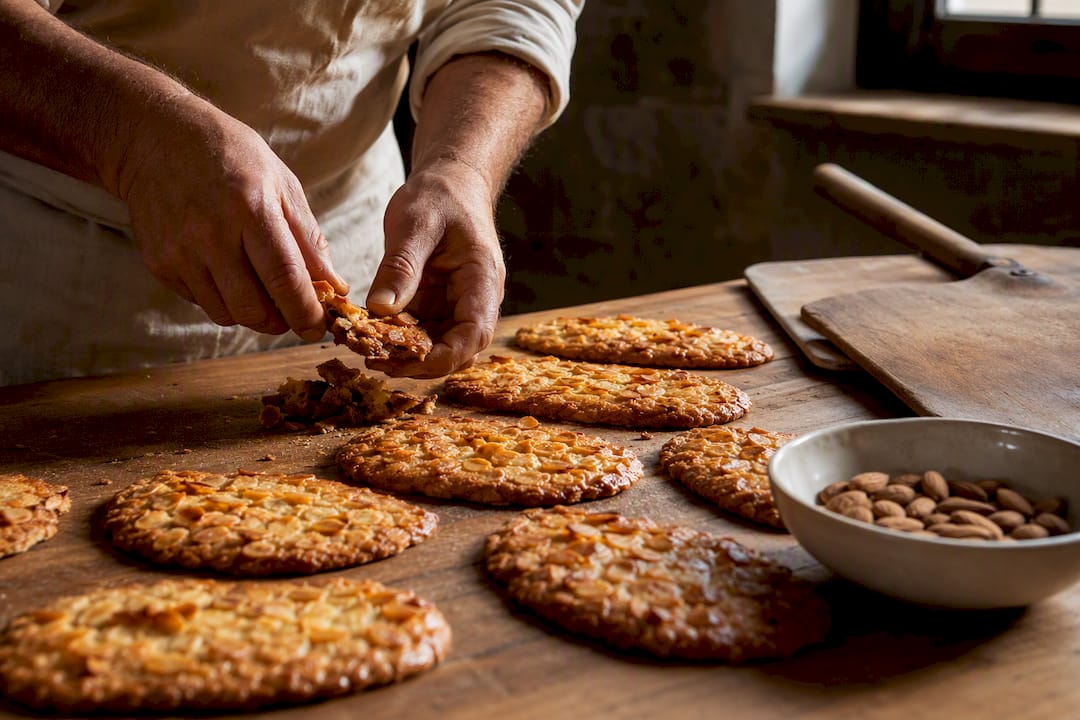
- The local speciality, an almond croquant, is a village-level culinary signature worth seeking out at any bakery.
Every one of these threads, the stone, the language, the almonds, feeds into why the village and its wine carry such a strong sense of place.
Why the terroir matters: climate, winds and soils that shape Res Fortes’s wines
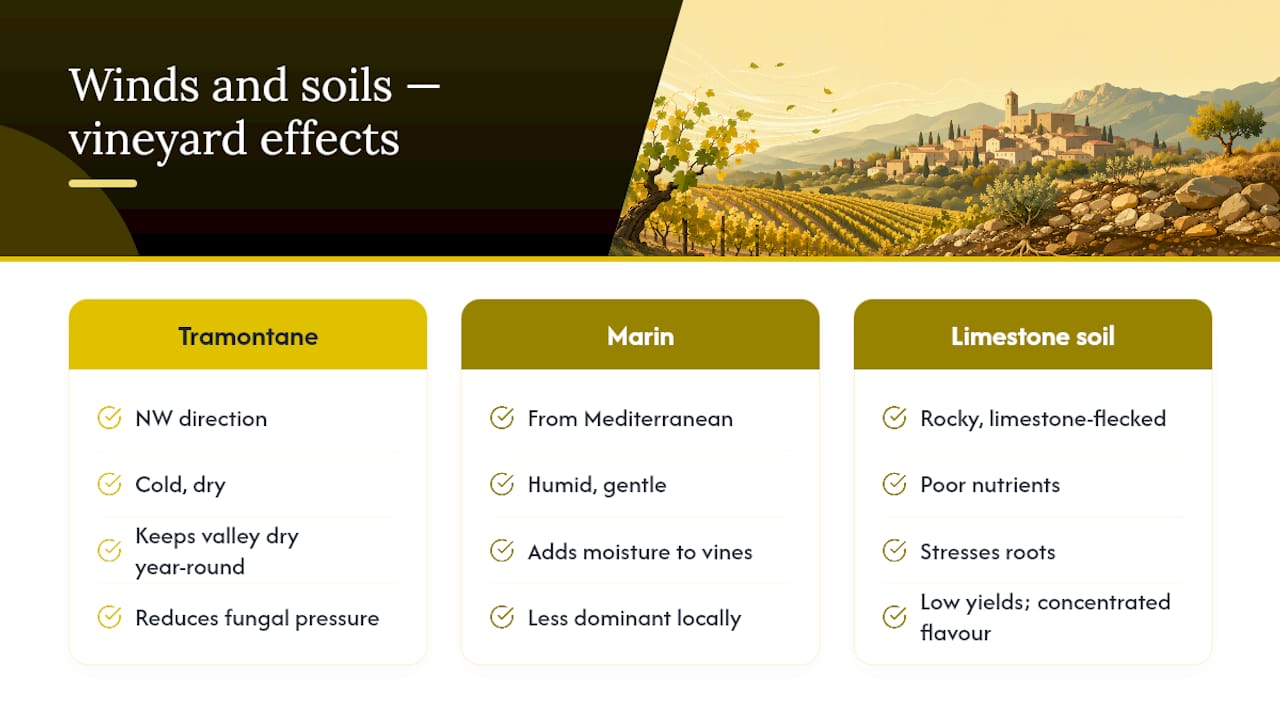
Two winds define this valley, and they matter as much to a winemaker as any soil map. The Tramontane blows cold and dry from the northwest, while the gentler Marin arrives humid from the Mediterranean. According to the mairie’s own climate notes, the Tramontane predominates, keeping the valley dry even through hot summers and mild winters.
That wind pattern is not just a curiosity for hikers packing a jacket. It helps grapes hold onto acidity while keeping fungal disease pressure low, one of the practical reasons old Grenache vines can survive here for decades without heavy intervention. Underneath those vines sits rocky, limestone-flecked ground, poor in nutrients and demanding on root systems, exactly the kind of stress that concentrates flavour rather than yield.
Pro Tip: If you taste Res Fortes’s Grenache-led blends before visiting the valley, taste them again after a walk through the vineyards. The wind and stone underfoot make the wine’s structure click into place in a way a tasting room alone rarely achieves.
The village’s own tourism listing describes Res Fortes as sitting within the wider Maury and Saint-Paul terroir, a zone long associated with old-vine Grenache. Res Fortes leans into organic, minimal-intervention practices on these exposed parcels, a deliberate response to ground that rewards patience over volume, favouring expression over high yields.
What to see and do in and around the village
A visit built around Res Fortes rewards a bit of exploring either side of the tasting appointment. The village itself takes under an hour to walk properly, but the wider valley pulls you further in.
- Walk up to the Chapitre. The building and its immediate surroundings give the clearest overview of the old town and the river below.
- Drive to Peyrepertuse or Quéribus. These Cathar-era castles perch on ridgelines within striking distance of the valley, offering a dramatic counterpoint to the vineyards below.
- Detour through the Gorges de Galamus. A narrow, cliff-cut road and gorge sit close by, popular with those combining a sport-nature outing with wine tourism.
- Pair a short hike with your tasting. Walking the terrain before or after a booked appointment sharpens your sense of how wind, stone and altitude translate into what is in the glass.
None of this needs a full day per stop. Most visitors treat the castles and gorge as a half-day loop either side of their Res Fortes appointment.
Practical visitor information: getting there, best time to go and tasting logistics
Perpignan is the reference point most travel guides use, sitting roughly 40 to 45 kilometres east of Saint-Paul-de-Fenouillet, with its own airport and TGV connections making it the sensible arrival point. From there, the drive up into the Agly valley takes around 45 minutes to an hour depending on the route through the hills.
A few practical notes worth pinning down before you travel:
- Best months: late spring (May–June) and early autumn (September–October) offer the mildest Tramontane and the clearest valley light for walking.
- What to pack: sturdy shoes for uneven vineyard tracks, and a windproof layer regardless of the season.
- Booking tastings: Res Fortes’s visits and cellar sales run by appointment only, so contact the estate a few weeks ahead where possible, longer during peak summer months.
- Group size: expect small, personalised tastings rather than a coach-tour format, which suits the scale of the village itself.
Res Fortes in context: wines, awards and visitor offer
Res Fortes’s range runs from the bright, citrus-driven Chaotic Chardonnay and a refreshing Rosé through to old-vine White blends, the Grenache-led GMS, the estate Syrah known as Traveller, and the flagship red, The Brave, built around old-vine Grenache. The winery has drawn recognition from the drinks business, Wine Enthusiast, Fine Vintage and leading Vivino reviewers, alongside coverage of its purchase of Domaine de l’Arpège near Maury, a move that signalled deeper local investment rather than a one-off vineyard deal.
Visits and cellar sales at Res Fortes run by appointment only, with tastings centred on the estate’s own terroir story rather than a standard commercial tour.
Customers ordering online can join the Elite Member programme for early access to limited releases, and enjoy free shipping on three bottles or more within the UK and France, with checkout available in GBP or EUR. That same appointment-only philosophy carries through to the cellar door: small, curated tastings focused on site, vine age and soil, matching the scale of the village that surrounds it.
Overview of the Res Fortes wine estate itself
Res Fortes was founded on the vision of a passionate climber who sought the same rewards in winemaking that he found scaling difficult routes: something earned rather than given. That climbing metaphor runs through the brand’s identity, from the name itself (Latin for “strong things”) to a philosophy built on selecting the toughest, most exposed vineyard parcels rather than the easiest ones.
The estate’s approach favours thoughtful vineyard selection over blanket sourcing, choosing old-vine Grenache parcels and organic practices that suit the rocky ground around Saint-Paul-de-Fenouillet and Maury. Minimal-intervention winemaking, letting fruit express the site rather than masking it in the cellar, sits at the centre of every wine in the range. The 2018 addition of Domaine de l’Arpège expanded that footprint near Maury, reinforcing Res Fortes’s commitment to this specific corner of the Agly valley rather than a generic Roussillon label.
That significance extends beyond the bottle. A winery choosing to build its identity around one demanding valley, rather than blending fruit from across the wider Languedoc-Roussillon, tells you something about intent. Res Fortes bets on purity and elegance over scale, and the flagship red, The Brave, is generally held up as the clearest expression of that bet: old-vine Grenache handled with a light touch, showing what the Tramontane and the limestone underneath it can produce when nobody rushes the process.
Cultural events and festivals in Saint-Paul-de-Fenouillet
Village life here follows the rhythm of the harvest and the calendar of Pyrénées-Orientales more broadly. Local fêtes and market days punctuate the year, drawing on the same Occitan traditions that shape the region’s language and music, with smaller village gatherings often built around seasonal produce, almonds among them.
Viticulture threads through much of this calendar even where it is not the headline. Harvest time in September and October brings a natural buzz to the valley, as smaller estates bring in fruit from the surrounding hillsides and the pace of the village visibly shifts. Wider Pyrénées-Orientales wine events, tastings, open-cellar weekends and regional fairs, draw visitors into the Agly valley during these months, and Saint-Paul often serves as a quieter base for exploring them, away from the busier Roussillon coastal towns.
For travellers timing a visit around Res Fortes, autumn offers the added appeal of seeing the valley mid-harvest, vines heavy with fruit, the Tramontane keeping the air crisp, and the village itself a little more animated than in the height of summer. Booking a tasting appointment during this window rewards patience with a genuine sense of the working landscape behind the label, rather than a purely ceremonial visit.
Local gastronomy beyond croquant
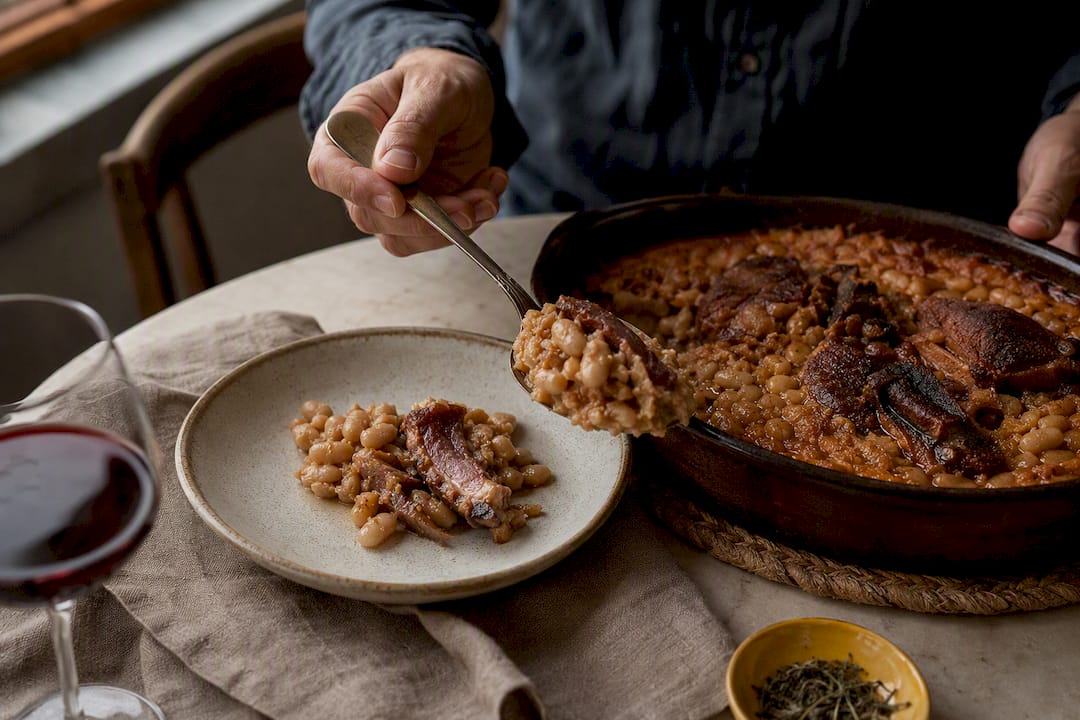
The almond croquant gets most of the attention, and rightly so, but the wider Fenouillèdes table has plenty else worth pairing with a glass of Res Fortes. Cassoulet, slow-cooked with duck or pork and white beans, is a regional staple that suits a structured red like The Brave, its old-vine Grenache holding up to the dish’s richness without being overpowered.
Lighter fare features too. Local charcuterie, cured hams and terrines from the foothill farms, pairs naturally with the GMS blend’s Grenache-forward fruit, while grilled Mediterranean vegetables and herb-crusted lamb, common across Pyrénées-Orientales tables, sit comfortably alongside the estate Syrah, Traveller, thanks to its savoury edge. On warmer days, the Rosé’s citrus lift makes an easy match for anchovies, olives and other coastal-influenced starters that drift inland from nearby Collioure.
For readers keen to build a proper pairing menu around a Res Fortes bottle, regional recipe and pairing resources offer a useful starting point, particularly for translating village-market ingredients into something that suits a specific wine in the range. Local food more generally does a lot of quiet work in shaping how travellers experience a destination, and the Fenouillèdes is no exception: the table here is as much a part of the terroir story as the vines themselves.
Demographic and economic profile of the village
Saint-Paul-de-Fenouillet is a modest commune by any measure, small enough that Wikipedia’s demographic entry captures its population and density in a single concise summary rather than pages of data. Like much of the Fenouillèdes, the village has seen its population settle at a level well below its historic peak, a pattern common across rural Pyrénées-Orientales as younger residents move toward Perpignan and the coast for work.
Viticulture remains a core economic thread even as the village’s fortunes have shifted over the decades. Smaller independent estates, Res Fortes among them, sustain part of the local economy alongside agriculture more broadly, almonds, olives and other hillside crops that suit the dry, wind-scoured terrain. Tourism adds a second, growing layer, with visitors drawn by the Cathar castles, the Gorges de Galamus and increasingly by wine tourism itself, appointment-only cellar visits included.
That combination, agriculture, small-scale winemaking and a modest but steady tourism trade, gives Saint-Paul a different economic texture to the resort towns along the coast. It is a working valley first, and a destination second, which is precisely what gives a visit here its particular character.
Traditional village life and artisanal crafts
Life in Saint-Paul-de-Fenouillet still moves at a pace shaped by the agricultural calendar rather than a tourist season. Bakeries producing the local almond croquant by hand remain a fixture, a craft passed down rather than industrialised, and the same can be said for smaller-scale winemaking practices that favour patience over speed.
Occitan language and custom persist here more than in larger regional towns, showing up in place names, local expressions and the occasional cultural gathering built around traditional music. Stonework and building traditions tied to the Chapitre and the older quarter of the village reflect centuries of adaptation to the local limestone, the same material that shapes the soils feeding Res Fortes’s vines just outside the village boundary.
Winemaking itself sits within this same craft tradition. Res Fortes’s emphasis on organic, minimal-intervention methods echoes a broader village instinct toward doing things by hand and doing them properly, rather than chasing scale for its own sake. Visitors who take the time to walk the older streets before or after a tasting tend to notice this thread running through the place, in the almond ovens, the stonework and the vine rows alike.
Author perspective: planning respectful wine tourism in small villages
Small villages like Saint-Paul-de-Fenouillet run on rhythms visitors rarely see from a coach window. Booking ahead, and hiring a local guide for the castles or gorge where useful, respects that rhythm rather than disrupting it. The best tastings happen when a visitor arrives unhurried, having already walked a vineyard row or two, ready to listen rather than simply sip.
— Moritz
How to taste and buy Res Fortes wines
Res Fortes is the practical route into this valley’s wines for anyone who cannot make the appointment-only cellar visit but still wants the bottle in hand. Rather than hunting for stockists, you can order directly from the estate: single bottles, curated mixed cases, or a subscription through the Elite Member programme for early access to limited releases.
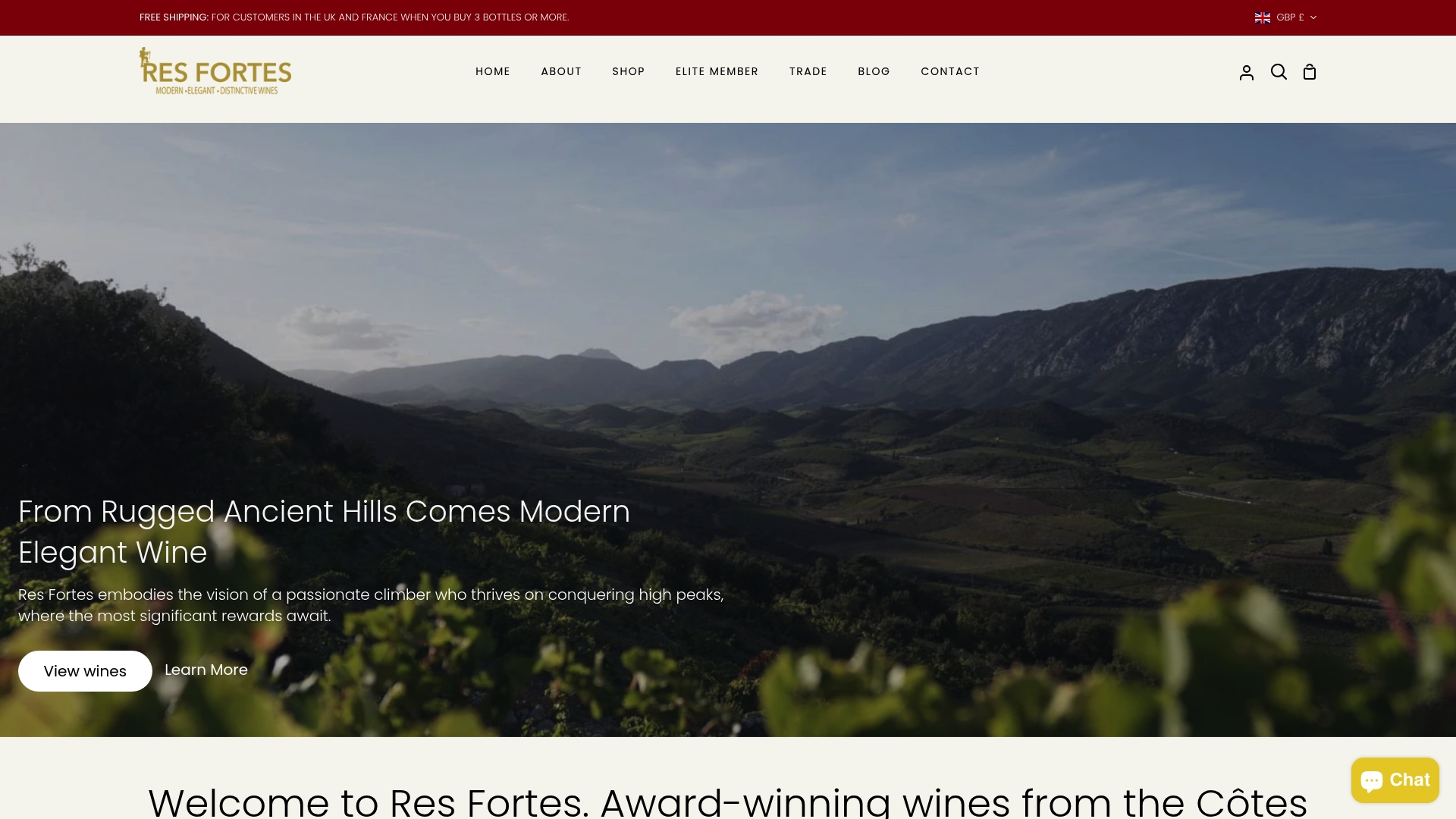
Orders of three bottles or more ship free within the UK and France, with checkout available in both GBP and EUR, so there is no currency guesswork at the till. If a cellar visit is what you are after, the estate’s appointment-only policy means reaching out ahead of your travel dates gives you the best chance of securing a slot, particularly around harvest season when demand for tastings tends to rise. Start by browsing the full range of Res Fortes wines to see what suits your table, whether that is The Brave for a cassoulet night or the Rosé for something lighter, and place your order or Elite Member enquiry from there.
Sources
- RES FORTES WINES (Saint‑Paul‑de‑Fenouillet) | Agly Fenouillèdes Tourisme
- Presentation of the village - Mairie de Saint‑Paul‑de‑Fenouillet
- Saint‑Paul‑de‑Fenouillet — Wikipedia
- Res Fortes winemaker buys Domaine de l’Arpège — The Drinks Business
FAQ
Is Saint-Paul-de-Fenouillet the village behind Res Fortes?
Yes, Saint-Paul-de-Fenouillet in the Agly valley, Pyrénées-Orientales, is the village where Res Fortes is based, and its terroir directly shapes the estate’s wines.
Can you visit Res Fortes without booking ahead?
No, visits and cellar sales at Res Fortes run by appointment only, so contact the estate in advance rather than arriving unannounced.
How far is Saint-Paul-de-Fenouillet from Perpignan?
The village sits roughly 40 to 45 kilometres from Perpignan, about 45 minutes to an hour by car.
What is the local speciality food in the village?
The almond croquant is the village’s signature bake, though the wider area also offers cassoulet, charcuterie and Mediterranean-style dishes worth pairing with Res Fortes wines.
What makes the local terroir distinctive?
The Tramontane and Marin winds keep the valley dry and disease-pressure low, while rocky limestone soils stress old vines into concentrated, expressive fruit, ideal conditions for the Grenache Res Fortes builds much of its range around.