

4 Checks to Verify Organic or Biodynamic Wine Before You Buy
Biodynamic wine is organic viticulture taken further: the same ban on synthetic chemicals, plus farm-specific preparations, composting rituals and a planting calendar tied to lunar cycles. Organic wine is the regulated baseline, a defined standard covering what can and cannot touch the vines and, since 2012, the cellar too. Both cut synthetic inputs substantially. Look for a certification logo or a transparent producer page before trusting either claim on a label.
TL;DR:
- Certified biodynamic wines are often more rigorously inspected with practices like compost preparations and biodiversity targets, but many producers farm biodynamically without certification due to high costs.
- Organic wine regulations in the EU now cover both vineyard practices and cellar processes, meaning labels with the EU organic leaf guarantee limited synthetic chemicals and regulated additives throughout production.
- Proven environmental benefits of organic and biodynamic farming include better soil health, increased biodiversity, and less chemical runoff, regardless of taste differences.
- Certification logos such as Demeter, Biodyvin, or the EU leaf provide reliable assurance, but transparency on vineyard and winemaking practices on producer websites can substitute when no logo exists.
- Price premiums for certified wines reflect the costs of certification and conversion, which can take years and lower yields, and do not necessarily indicate higher quality or distinct flavor profiles.
Organic vs biodynamic wine at a glance
Before wading into preparations and calendars, here is the shorthand version worth keeping in your head at the shop shelf.
- Organic wine bans synthetic pesticides, herbicides and fertilisers in the vineyard, and since 2012 has also regulated additives and sulphite limits in the cellar under the EU’s organic farming rules.
- Biodynamic wine starts from organic principles, then layers on composting preparations, cover crops and a lunar or astronomical planting calendar, typically certified by Demeter or Biodyvin.
- Natural wine is a looser, unregulated term. It usually implies low intervention but carries no legal definition, unlike organic and biodynamic labels, which are audited standards.
- Label cues worth trusting: the green EU leaf, the Demeter logo, and the Biodyvin seal.
- Cues that can mislead: “made with organic grapes” is not the same guarantee as “organic wine” (the latter covers vinification too), and “sustainable” is a marketing term with no third-party audit behind it in most cases.
If a bottle’s back label is vague, ask the retailer or check the producer’s own site. A serious grower will document its practices in detail rather than lean on a single buzzword.
What does organic wine actually mean?
Organic wine in the EU is defined by regulation, not sentiment. Since 2012, the rules cover both the vineyard and the winery, so the green EU leaf guarantees more than most drinkers assume. In the vines, synthetic pesticides, herbicides and chemical fertilisers are off-limits; growers instead lean on copper and sulphur treatments, cover crops and mechanical weeding.
The vinification side is where things get interesting. Before 2012, “organic wine” in Europe really meant “wine from organic grapes”, with no rules on what happened in the cellar. That changed with limits on additives and tighter sulphite thresholds, so the EU leaf now covers the whole process. This is why the distinction between “organic wine” and “wine made from organic grapes” still matters on some labels, particularly from producers certified under older or non-EU schemes. The second phrase says nothing about cellar practice, so it is worth checking which one actually appears on the bottle.
What does biodynamic wine actually mean?
Biodynamics traces back to Rudolf Steiner’s 1920s lectures on farming as a self-sustaining organism, where the vineyard, livestock and compost cycle feed each other rather than relying on outside inputs. It treats the vineyard less like a crop system and more like an ecosystem with its own internal logic.
The most talked-about tools are preparations 500 (fermented cow-horn manure) and 501 (ground quartz), applied in tiny quantities to the soil or vines. Practitioners in the trade describe these as biological triggers rather than fertilisers, intended to stimulate soil activity and support vine resilience rather than feed the plant directly. Sceptics remain unconvinced by the science behind lunar timing specifically, and that scepticism is fair. What is less disputed is the farm philosophy underneath it: composting, cover crops, and reduced reliance on bought-in inputs.
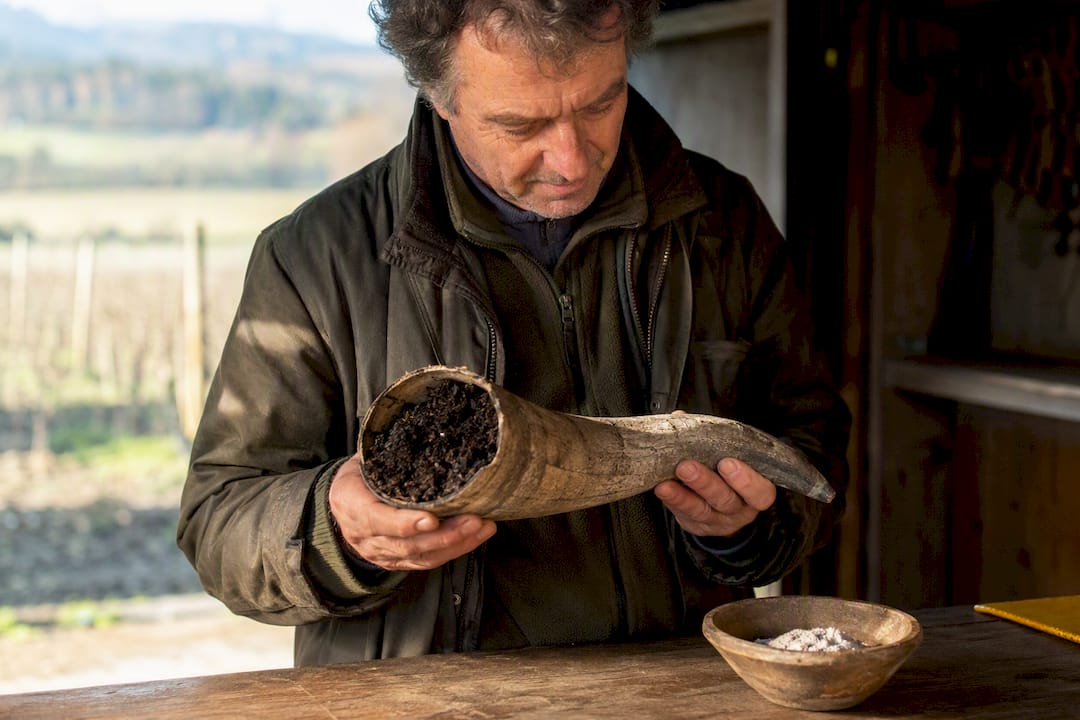
In the cellar, biodynamic producers typically favour native yeasts and lighter-touch winemaking. Many pursue certification through Demeter or Biodyvin, and it is worth noting that most biodynamic growers are already farming organically underneath it all, since biodynamics is an addition to that baseline, not a replacement for it.
How do you verify certification claims on a label?
Demeter and Biodyvin audit a different, stricter set of practices than EU organic certification, which is why the two logos exist separately rather than one subsuming the other. Demeter, the more globally recognised biodynamic certifier, requires annual inspection of preparations use, composting and farm biodiversity targets. Biodyvin, more common among European fine wine estates, applies a comparable but distinct set of standards. Both sit on top of, rather than replace, organic compliance.
Here’s the catch worth knowing: certification is expensive and paperwork-heavy, so plenty of small growers farm biodynamically or organically without ever applying for a logo. Absence of a Demeter stamp doesn’t mean absence of the practice, it often just means the winery decided the audit cost wasn’t worth it for their scale.
A short checklist before you buy:
- Check for the EU leaf, Demeter, or Biodyvin logo on the bottle itself.
- Visit the producer’s own site for a sustainability or vineyard page, not just marketing copy.
- Look for a stated sulphite policy, since this varies even within certified schemes.
- Ask the retailer directly if the label language feels vague or overly broad.
Does it taste different, and does it age differently?
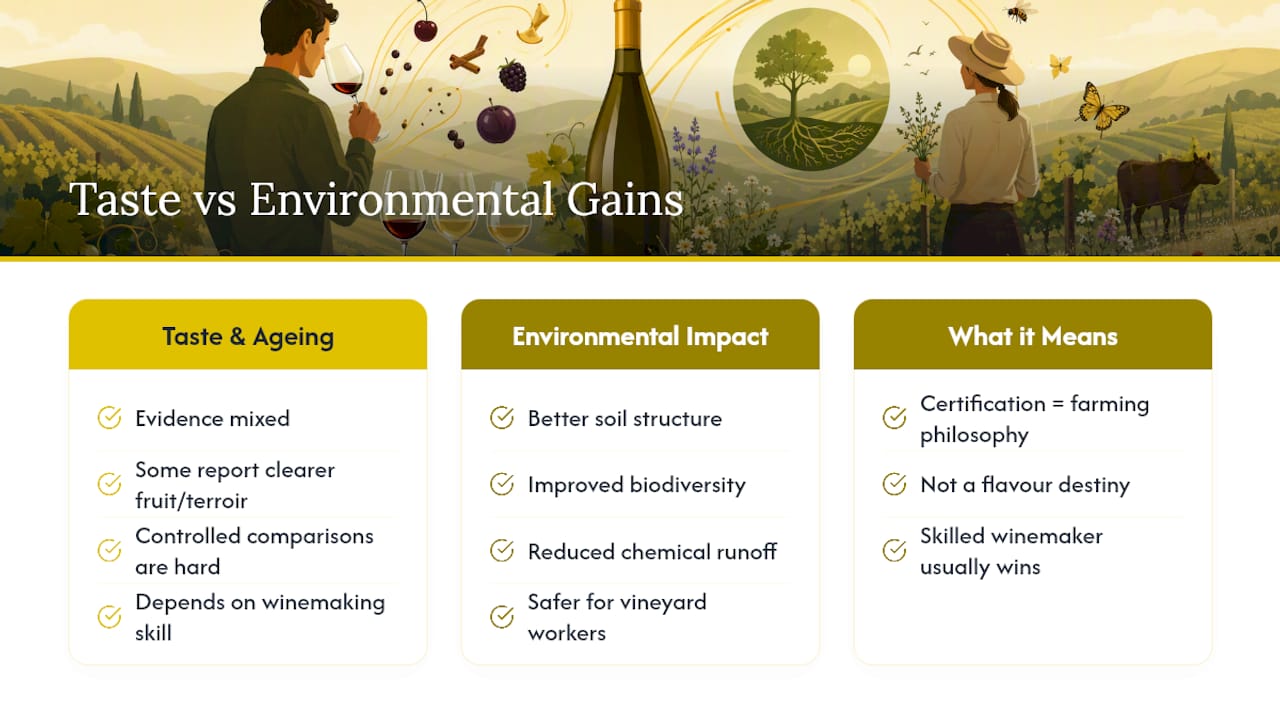
Some producers and critics report clearer fruit definition and stronger terroir expression from biodynamic vineyards, but the honest picture is mixed. Decanter’s own reporting is careful to note that controlled comparisons are hard to run, and that outcome in the glass depends heavily on winemaking skill regardless of certification. Wine Enthusiast’s coverage of biodynamic bottlings takes a similar line: the best examples showcase soil health and biodiversity work, but the certification alone is not the reason the wine tastes good.
Where the evidence is firmer is environmental impact. Organic and biodynamic vineyards generally show better soil structure, improved biodiversity, and reduced chemical runoff compared with conventionally farmed land, alongside better safety outcomes for vineyard workers handling fewer synthetic sprays. That is a measurable, repeatable gain across regions.
The takeaway for your palate: certification tells you about farming philosophy, not flavour destiny. A skilled winemaker on unremarkable land will usually still beat a certified vineyard handled carelessly.
What are the trade-offs and hidden costs?
Certification isn’t free, and it isn’t quick. Converting a vineyard to organic status typically takes several years, during which yields can dip as the soil rebalances without synthetic support. Organic vineyard area across the EU has increased substantially over the past decade, yet conventional viticulture still dominates, and supply often lags behind demand, which pushes prices upward for certified bottles.
Biodynamic scepticism tends to focus on the more esoteric elements, the lunar calendar in particular, where the underlying mechanism is harder to pin down scientifically than composting or cover cropping. It’s a fair line to draw: back the soil biology, question the astrology. Combine that with genuine certification costs, and it explains why several respected growers farm this way quietly, without ever paying for the logo.
How should you choose when shopping?
Run through a short mental checklist at the shelf or when browsing a wine club’s range:
- Is there a certification logo (EU leaf, Demeter, Biodyvin) on the label?
- Does the producer have a dedicated sustainability or vineyard page with specifics, not just adjectives?
- Is the sulphite policy stated anywhere, and does the cellar approach match the vineyard claims?
- Does the price premium feel justified by the transparency on offer?
Ask a retailer or wine club three things: which certification (if any) applies, whether the sulphite levels are disclosed, and whether the producer’s vineyard practices are documented anywhere public. A confident, specific answer is a good sign.
Pro Tip: Favour certified producers when you want a guaranteed standard with no further digging required, but don’t dismiss a small, uncertified grower who publishes real detail about composting, cover crops and picking dates. Transparency without a logo still counts for something.
Res Fortes as a working example of these principles
A winery farms its vineyards with careful site selection and minimal-intervention winemaking, following instincts behind both organic and biodynamic philosophies. Its vineyard and sustainability practices show what a transparent producer page should look like: specifics, not slogans.
Why the labels matter less than the questions you ask
Res Fortes believes the certification argument misses the more useful question: does the producer actually tell you what happens in the vineyard and cellar? Personally, I trust a detailed sustainability page over a bare logo, though I’d still choose certified when budgets allow, since audits catch things that goodwill alone doesn’t. Taste widely, compare notes, and let the glass argue its own case.
— Moritz
Explore wines built on that same philosophy
This winery offers an alternative to guessing from a vague back label: instead of a single logo standing in for the whole story, it documents vineyard selection and minimal-intervention winemaking directly, so buyers can judge the substance rather than the sticker.
A winery located in the Roussillon foothills benefits from rugged, old-vine sites, and the winemaking follows an approach of less interference, more terroir. This can be seen across a range of wines, from citrus-driven Rosé to flagship old-vine Grenache. If you want to see how these principles translate into an actual glass rather than a policy document, browse the wines and start with a bottle that matches what you’ve just read about vineyard practice and restraint in the cellar.
Sources
- Biodynamic vs organic - ask Decanter | Decanter
- What’s the difference between organic and biodynamic wine? | Wine Enthusiast
- Organic farming at a glance | European Commission
- Organic, biodynamic and sustainable wine, an overview | BKWine Magazine
FAQ
What are the downsides of organic wine?
Conversion takes years and can reduce yields, copper and sulphur treatments still carry environmental costs, and certified organic bottles usually cost more due to lower supply relative to demand.
What’s so special about biodynamic wine?
It treats the vineyard as a self-sustaining organism, using preparations like 500 and 501 to support soil biology and a planting calendar tied to lunar cycles, on top of organic farming practices.
Are organic wines actually better for you?
Organic wine avoids synthetic pesticide residues and often uses lower sulphite levels, but no strong evidence shows it is meaningfully healthier to drink than conventional wine in moderation.
What is biodynamic wine?
Biodynamic wine comes from vineyards farmed under Rudolf Steiner’s holistic principles, combining organic methods with compost preparations, cover crops and lunar timing, usually certified by Demeter or Biodyvin.
How can I tell if a producer is genuinely sustainable without certification?
Look for a detailed vineyard or sustainability page describing specific practices, since smaller growers often farm organically or biodynamically without paying for a formal audit like Demeter’s.