

Minimal Intervention Wine: 3 Questions for Buyers & Res Fortes Picks
Minimal intervention wine is a spectrum of vineyard and cellar choices that minimise additives and technical processing so the grape and site speak for themselves. It runs from lightly organic vineyards with a gentle cellar hand right through to wines fermented on wild yeast with no added sulphur at all. No single body regulates the term, which is why standards like organic certification and producers such as Res Fortes sit at different points along the same spectrum.
TL;DR:
- Minimal intervention wine prioritizes vineyard practices like avoiding synthetic sprays and hand-harvesting to enhance grape and site expression.
- Once in the cellar, winemakers prefer spontaneous fermentation, minimal SO₂, and no fining or filtration, resulting in wines with more variation and sediment.
- These wines are more sensitive to oxidation and microbial changes, so proper storage and consumption within a few years are recommended.
- Label claims like “minimal intervention” and “natural” are unregulated, so verify vineyard origin, sulfur use, and fining practices before purchasing.
- Regions such as France’s Loire Valley, Beaujolais, Georgia, and parts of California lead in minimal intervention wine production.
What does minimal intervention wine actually mean?
Minimal intervention describes choices made in the vineyard and the cellar that reduce artificial inputs and technical manipulation, letting the grape and its site express themselves rather than being corrected in a lab. Winemakers who use the phrase most credibly say it has to start in the vineyard, not with a light touch at bottling, according to Decanter’s interview with producers on the subject.
There is no legal definition, no governing seal, and no minimum threshold a wine must clear before a label can use the words. That looseness is precisely why the term gets misused. A wine can be labelled “minimal intervention” for skipping fining, while its vines were sprayed on a conventional schedule all season.
It differs from its neighbours in useful ways:
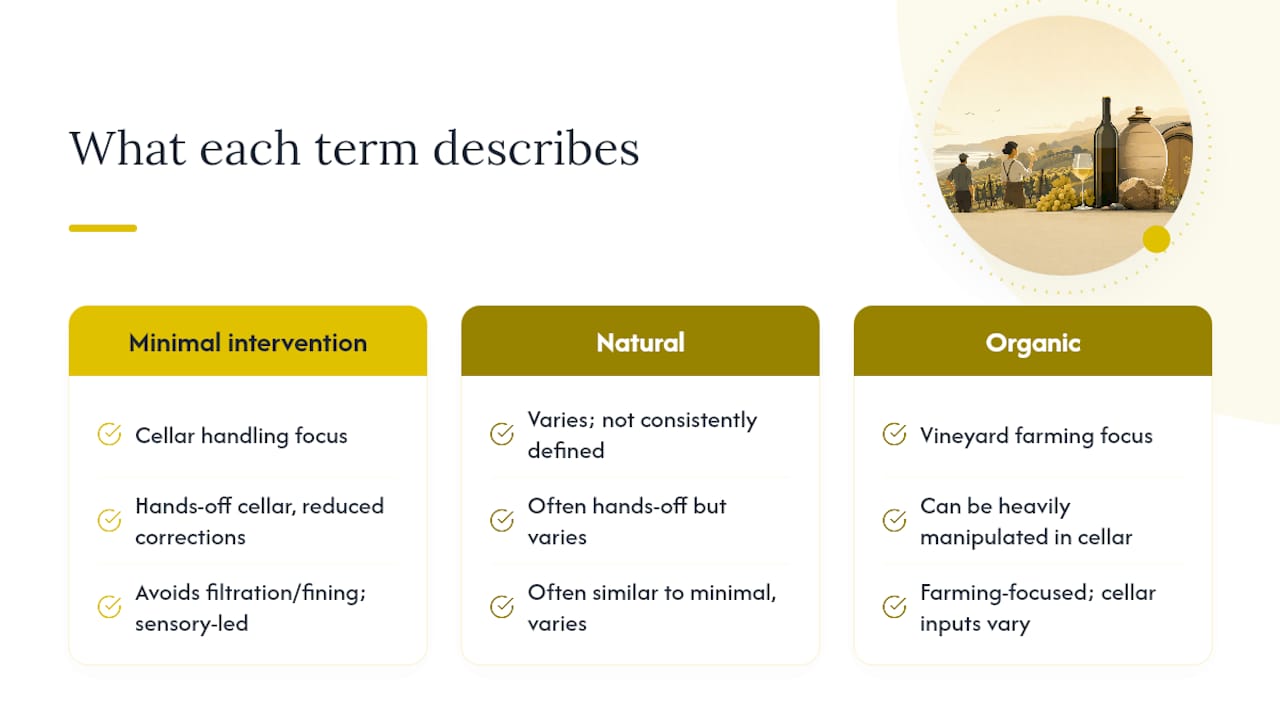
- Natural wine is the informal, unregulated movement most associated with zero added sulphur and wild fermentation, of which minimal intervention is a broader, more moderate cousin.
- Organic wine carries a certified standard governing vineyard chemistry, but says nothing about cellar additives, fining, or filtration.
- Biodynamic wine adds lunar-calendar and holistic-farming requirements on top of organic rules, again with cellar practice left open.
- Minimal intervention overlaps all three without requiring any of their paperwork.
Vineyard-first practices that make minimal intervention possible
Genuine minimal intervention is decided months before a single grape reaches the cellar. Site selection, plant health, and a living soil microbiome determine how much correction a wine will need later, and producers who understand this treat the vineyard as the real workshop, as Decanter’s reporting on the subject makes clear.
Common vineyard measures include:
- Reduced or eliminated synthetic sprays, relying on cover crops and natural predators for pest control.
- Hand-harvesting, which protects fruit integrity and allows selective picking that machines cannot replicate.
- Dry-farming or restrained irrigation, encouraging roots to search deeper and concentrating flavour.
- Fewer tractor passes, protecting soil structure and the fungal networks that feed the vine.
- Composting, sometimes using spent lees, which some producers return to the vineyard to boost soil fungal diversity, closing the loop between cellar and land.
Pro Tip: Ask any producer or retailer where the grapes were grown and who farmed them. A confident, specific answer, naming the plot, the farming method, and the harvest approach, tells you more than any back-label buzzword ever will.
Cellar techniques and what is purposely avoided
Once the fruit arrives, minimal intervention winemaking is largely defined by what does not happen. Spontaneous fermentation, using wild yeasts already present on the grape skins and in the cellar, replaces the reliable but flavour-flattening cultured strains most commercial wineries rely on. Academic research on the subject frames this as a form of co-production with the vineyard’s own microbiome rather than a purely mechanical process, according to a peer-reviewed study on low-intervention winemaking.
Typical restraint includes:
- Little or no added sulphur dioxide (SO₂), the preservative that stabilises most conventional wine.
- No fining or filtration, leaving proteins, yeast cells, and tannin particles in the finished bottle.
- Limited or neutral oak use, avoiding flavours that could mask the fruit and site character.
- No chaptalisation, the practice of adding sugar to boost alcohol in a thin vintage.
The visible result is wine that looks and behaves differently: haze in the glass, a fine layer of sediment at the bottom of the bottle, and noticeable variation between two bottles of the same label. Food & Wine’s explainer on natural wine notes that skipping fining and filtration is one of the clearest fingerprints of this style.
What to expect in the glass, and how to keep it stable
Minimal intervention wines tend to show earthy, sometimes funky aromatics, cider-like or barnyard notes that unsettle drinkers raised on polished supermarket bottles. Expect lifted, almost electric fruit character, occasional spritz in young reds or pét-nat styles, and a texture that feels more alive than smooth.
Low or absent SO₂, combined with skipping fining and filtration, makes these wines noticeably more sensitive to oxidation and microbial drift than conventionally stabilised bottles, a trade-off Food & Wine’s coverage of natural wine confirms directly.
In practice, that means: Bottle-to-bottle variation is normal, not a flaw, and many producers deliberately use less sulphur than legal maximums allow, according to Grape Guru’s glossary entry on natural wine. Store these bottles cool and dark, ideally below 14°C, keep them upright if there is heavy sediment, and drink most whites and lighter reds within a year or two of release rather than cellaring them for decades.
How to choose and buy minimal intervention wine
Not every phrase on a label deserves your trust. “Minimal intervention,” “low intervention,” and “natural” are unregulated marketing terms, and critics rightly point out they can describe a genuine philosophy or simply a nice-sounding sticker, as VinePair’s analysis of the term argues. Certified organic or biodynamic logos carry more legal weight, though they say nothing about cellar practice.
Before buying, ask (or look for the answer to) three questions:
- Where were the grapes grown, and by whom? A specific vineyard and farmer name beats a vague regional claim.
- How much sulphur was used, and when? Some producers state a figure on the back label or their website.
- Was the wine fined or filtered? Unfiltered wines will often say so proudly; it is a genuine technical claim, not filler.
Start with a pét-nat, a skin-contact orange wine, or a lighter Grenache-based red, and expect prices roughly in line with conventional artisanal bottles rather than a premium simply for the label. Res Fortes covers verification steps for organic and biodynamic claims in more depth for shoppers who want a fuller checklist.
How Res Fortes practises minimal intervention winemaking
One producer’s range reflects principles this article describes: thoughtful vineyard selection, sustainable farming, and a collaborative, minimal intervention approach in the cellar designed to preserve purity and a genuine sense of place. That philosophy runs through wines from citrus-laced Rosé to a flagship old-vine Grenache.
For readers who want to see the principles in practice rather than in theory:
- The vineyard and sustainability practices behind the range explain the site selection and farming choices at work.
- A dedicated piece on why some winemakers choose unfiltered wines unpacks the reasoning behind skipping fining and filtration.
- Awards and recognition from industry publications reflect an approach that treats restraint as a craft decision, not a shortcut.
How to taste and appreciate the unique flavours and textures
Tasting a minimal intervention wine rewards a slightly different approach than tasting a polished, conventional bottle. Start with the nose before you judge anything: expect a wider range of aromatics than usual, sometimes savoury or earthy notes alongside the fruit, occasionally a whiff of something reductive that can blow off with a few minutes of air. Give the glass a proper swirl and wait. That initial funk is often temporary, not a fault.
On the palate, texture matters as much as flavour. Unfiltered wines carry more tannin grip and a rounder, sometimes chalky mouthfeel because the fining process that would normally smooth them out never happened. Look for a sense of tension between fresh acidity and a slightly wilder fruit profile, less uniform than a mass-market bottle, but often more expressive of where the grapes actually grew.
Sediment is not a flaw. If a bottle has been standing upright for a day or two before opening, most of it will settle at the bottom, and you can pour carefully to leave it behind, or simply embrace a cloudier glass; many drinkers now consider it part of the experience.
Res Fortes’ own wine tasting guide for confident beginners covers the mechanics of swirling, sniffing, and structuring a tasting session, useful groundwork before tackling a style this variable.
Approach each bottle with curiosity rather than a fixed expectation of what “good” should taste like, and the format starts to make a lot more sense.
Common misconceptions and myths about minimal intervention wines
The biggest myth is that minimal intervention means minimal skill. In truth, reducing technical correction demands more winemaking judgement, not less. Sensory evaluation replaces laboratory testing in many low-intervention cellars, with winemakers tasting fermentations daily and tolerating temporary off-notes that resolve with patience and experience, an approach detailed in the academic study on low-intervention practice.
A second misconception treats “minimal intervention,” “natural,” and “organic” as interchangeable. They are not. A wine can be organically farmed and heavily manipulated in the cellar, or conventionally farmed with a hands-off cellar approach. The words describe different parts of the process, and only careful reading tells you which parts apply.
A third myth: that any haze or fizz signals spoilage. Sediment, slight cloudiness, and a gentle spritz in young reds or pét-nats are often simply the visible signature of skipping filtration and fining, not evidence something has gone wrong.
Finally, some drinkers assume minimal intervention wines are always cheaper because “less is done” to them. Farming without chemical shortcuts, hand-harvesting, and accepting lower yields for healthier fruit all cost more, not less. Price reflects labour and risk, not corner-cutting.
Notable producers and regions known for minimal intervention wines
France’s Loire Valley and Beaujolais have long been strongholds of the natural and low-intervention movement, home to producers who popularised carbonic-style reds and skin-contact whites decades before the wider trade caught on. Georgia’s qvevri tradition, ageing wine in buried clay vessels, predates the modern minimal intervention conversation by thousands of years and remains a reference point for spontaneous fermentation done with total conviction.
Closer to Res Fortes’ own ground, southern France’s Roussillon and neighbouring Languedoc have become fertile territory for the approach, thanks to old vines, low natural yields, and a Mediterranean climate that reduces disease pressure and, with it, the need for heavy spraying. Old-vine Grenache in particular tends to reward a lighter cellar hand: the fruit already carries concentration and structure, so there is less need to correct or reinforce it artificially.
Northern Italy, parts of Australia’s Adelaide Hills, and pockets of California’s Central Coast have all developed strong low-intervention scenes too, generally led by smaller, family-run estates rather than large cooperatives. What links these regions is less geography than mindset: producers willing to accept vintage variation as the price of authenticity, rather than smoothing every year into the same flavour profile.
How to pair minimal intervention wines with food
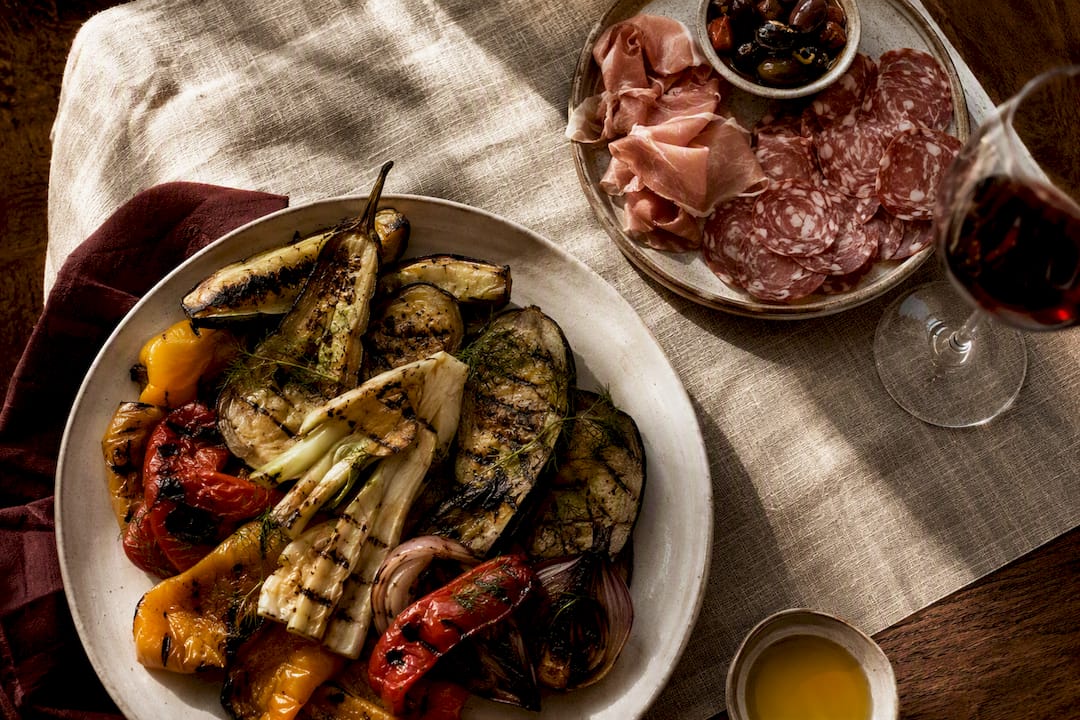
These wines tend to reward food pairing more generously than their polished counterparts, largely because their acidity, tannin, and savoury notes are built to cut through rather than sit quietly beside a dish. A lightly chilled, unfiltered red with real grip works beautifully alongside charcuterie, grilled vegetables, or anything with a touch of char, the tannin and acidity handling fat and smoke with ease.
Skin-contact whites and orange wines, with their tannic structure and dried-fruit complexity, suit richer dishes than most white wines can manage: think roasted chicken, mushroom risotto, or aged cheeses. Pét-nats, with their natural fizz and lower alcohol, make an easy match for fried food, seafood, or anything you would ordinarily reach for a crisp lager to accompany.
The wider principle worth remembering is that minimal intervention wines often carry more textural complexity than aromatic sweetness, so pairing by texture rather than by classic “red with meat, white with fish” logic tends to work better. A restaurant or bar exploring seasonal, ingredient-led menus is well suited to this kind of pairing thinking, and broader guidance on building thoughtful culinary experiences around wine can help translate that logic into a full meal, not just a single glass.
A balanced view on when this style is worth choosing
Critics are right that “minimal intervention” is loosely policed and sometimes used more for marketing than meaning. It also rewards patience over consistency, so it suits curious drinkers more than anyone wanting the same glass every time. Reducing intervention never removes the need for real winemaking skill; if anything, it demands more of it.
— Moritz
How Res Fortes brings minimal intervention to the Roussillon
One producer was built on the idea that the best rewards come from working with a challenging site rather than correcting against it, a philosophy that carries directly into how each wine in the range is made. The range includes citrus-bright Rosé, Grenache-led blends, Syrah, and flagship old-vine Grenache, reflecting thoughtful vineyard selection paired with a collaborative, minimal intervention hand in the cellar.
If the checklist earlier in this piece left you wanting a place to start, the Roussillon range gives you a genuine, traceable example rather than a label to take on trust. Trade buyers and importers wanting to stock or enquire about the range can find details on the Res Fortes trade page, while private customers can order single bottles or curated mixed cases directly, with free shipping across the UK and France on three bottles or more.
Sources
- What does minimal intervention really mean? | Decanter
- What exactly is natural wine? | Food & Wine
- ‘Nature in the glass’: Principles and practices in low‑intervention winemaking
- There’s no such thing as ‘low‑intervention’ wine — VinePair
FAQ
What is the 20 minute wine rule?
It refers to letting a wine, particularly a young or reductive minimal intervention bottle, sit and breathe for a while after opening, since early off-notes from spontaneous fermentation often soften with a little air.
Is drinking two glasses of wine a night considered alcoholism?
No single drinking pattern defines alcoholism on its own; that assessment depends on broader factors like dependency, frequency, and impact on daily life, so it is a question for a medical professional rather than a fixed glass count.
What is poor man’s champagne?
The nickname is usually applied to pét-nat, a lightly sparkling wine made using the ancestral method, bottled before fermentation finishes so its natural fizz develops in the bottle without the second fermentation Champagne requires.
What is microoxygenation in winemaking?
Microoxygenation is a controlled technique that introduces small, measured amounts of oxygen into wine during ageing to soften tannins and stabilise colour, the opposite of the hands-off, oxidation-tolerant approach favoured in minimal intervention cellars.