
Most wine lovers make one critical error before they even open the bottle. They serve red wine at room temperature, trusting an old piece of received wisdom that sounds right but isn’t. In 2026, the average British sitting room runs at 21°C or warmer. That’s well above the ideal range for almost every red wine, and it transforms a beautifully balanced bottle into something that tastes flat, boozy, and shapeless. Knowing how to serve red wine properly, from temperature control to decanting to glassware choice, is what separates a good drinking experience from a genuinely memorable one.
Key Takeaways
| Point | Details |
|---|---|
| Serve by wine body | Match red wine serving temperatures precisely to light, medium, or full-bodied styles for optimal flavour. |
| Use the 20-minute rule | Correct over-warm or over-chilled red wines by refrigerating or warming 20–30 minutes as needed before serving. |
| Decant thoughtfully | Apply decanting to aerate young tannic wines or separate sediment from mature reds without overexposing fragile aromas. |
| Pour with care | Follow professional best practices for pouring, including tasting first and managing sediment, to ensure excellent guest experience. |
| Discard outdated myths | Ignore ‘room temperature’ serving norms and aim to emulate historic cellar conditions for balanced red wine tasting. |
Understanding the essentials: temperature, glassware, and tools
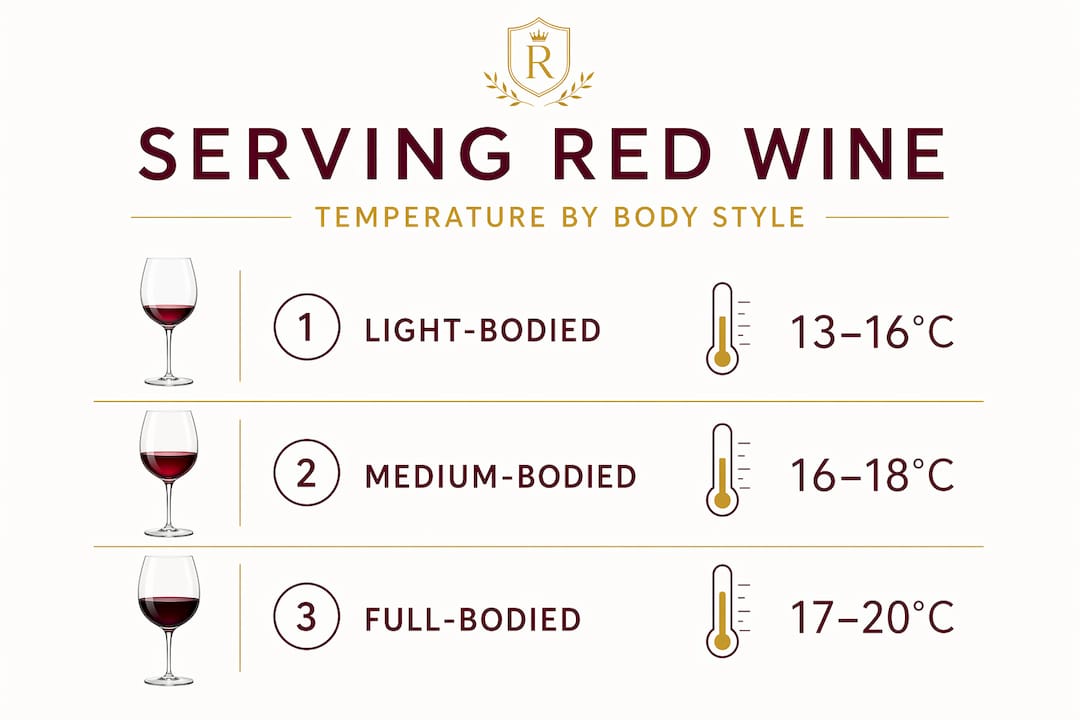
The first thing to accept is that serving temperature by wine body is not a single fixed number. Light-bodied reds, medium-bodied reds, and full-bodied reds each have a different ideal window, and wine serving temperatures should follow body type guidelines: light-bodied at 13–16°C, medium-bodied at 16–18°C, full-bodied at 17–20°C. Serving a Pinot Noir at 21°C is a different kind of mistake to serving a Syrah there, but both mistakes will cost you something in the glass.
Why temperature matters this much: alcohol volatilises more aggressively at higher temperatures, flooding the nose before the fruit and tannin can register. Chill the wine slightly, and those aromatics reorganise into something coherent.
Ideal serving temperatures at a glance
| Wine body | Wine style examples | Serving temperature |
|---|---|---|
| Light-bodied | Pinot Noir, Gamay | 13–16°C |
| Medium-bodied | Grenache, Merlot, Sangiovese | 16–18°C |
| Full-bodied | Syrah, Cabernet Sauvignon, Malbec | 17–20°C |
The professional serving temperature standards outlined by the Court of Master Sommeliers reinforce this banding, and it’s worth memorising as a baseline before you reach for any bottle.
Glassware is equally decisive. A Bordeaux glass, with its tall, angular bowl, channels air across fuller-bodied wines to soften tannin and concentrate dark fruit. A Burgundy glass, rounder and wider, coaxes the volatile esters out of lighter, more aromatic reds like old-vine Grenache. Using an all-purpose tumbler isn’t the end of the world, but it’s the acoustic equivalent of listening to a symphony through a phone speaker.
Essential tools to have ready:
- A digital wine thermometer (infrared or probe models both work well)
- An aeration decanter for younger, more structured reds
- A standard decanting decanter with a wide base for aged wines needing sediment separation
- A candle or narrow-beam torch for sediment detection during pouring
- A wine cooler or ice bucket for tableside temperature maintenance
Pro Tip: Don’t rely on touch alone to judge serving temperature. A bottle can feel cool to the hand and still be 3°C warmer than ideal. A thermometer removes the guesswork entirely.
Familiarise yourself with wine varieties by body style before you start matching wines to glasses and temperatures. Temperature control is not a one-off decision made at the start of the evening. It’s a running adjustment that continues throughout service.
Preparing your red wine: temperature adjustment and decanting techniques
The 20-minute rule is the most practical tool in your arsenal: refrigerate wine for 20–30 minutes if it’s too warm, or let it stand at room temperature for 20 minutes if it’s too cold. It’s not glamorous advice, but it works reliably without specialist equipment.
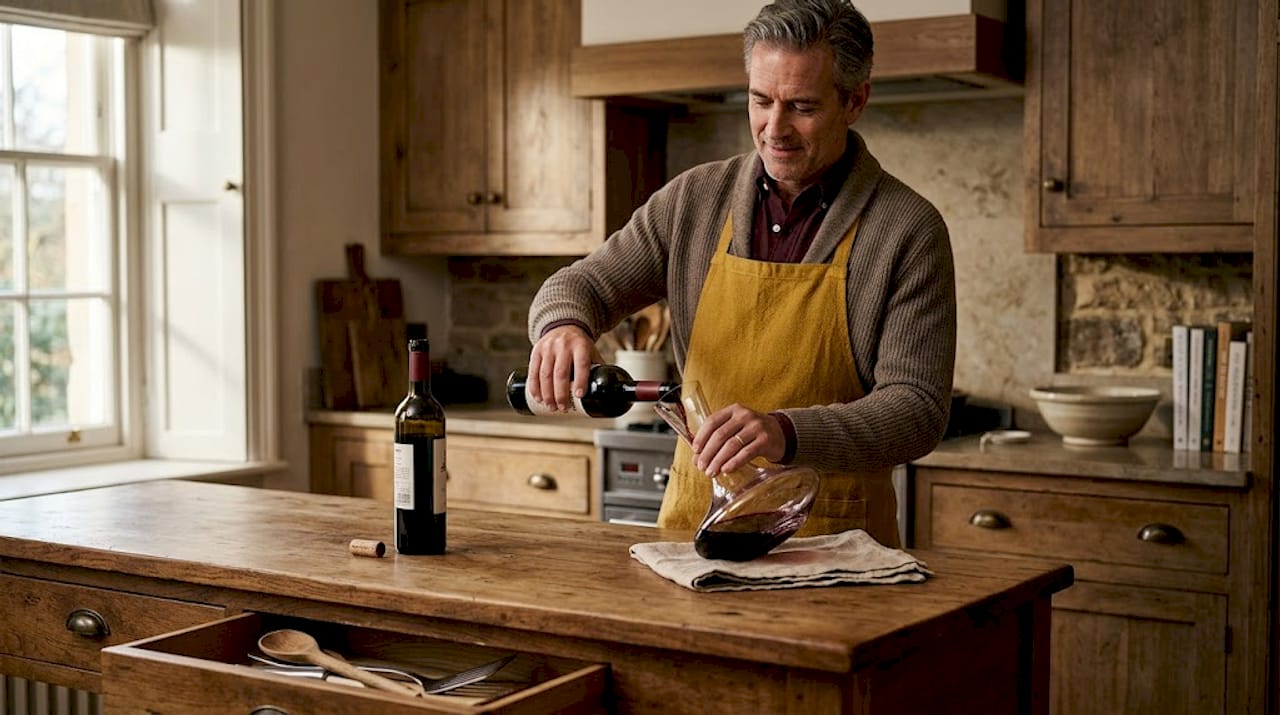
Decanting serves two entirely different purposes, and conflating them leads to errors. The first purpose is aeration: exposing young, tannic wine to air so that harsh tannins soften and fruit aromatics open. The second is sediment separation: carefully pouring an aged wine so that the sediment, which forms naturally over years in bottle, stays behind. These require different approaches and different timing.
Steps to decant red wine correctly
- Stand the bottle upright for several hours before opening, ideally overnight. This lets sediment settle to the bottom.
- Check the serving temperature with a thermometer before you begin. Don’t start decanting a wine that’s still too warm.
- Open the bottle gently without shaking. For aged wines, cut the capsule fully so you can see the neck clearly.
- For young reds, pour in a confident, splashing arc into the decanter to encourage aeration. This is sometimes called “splash decanting.”
- For aged reds, light a candle or torch beneath the neck of the bottle. Pour slowly and steadily, watching the light for the first sign of sediment moving toward the neck.
- Stop pouring the moment sediment appears. Leave the last 2–3 cm in the bottle rather than risk clouding the decanter.
- Check the decanting time against the wine’s age and structure before serving.
Decanting times by wine age
| Wine type | Purpose | Recommended time |
|---|---|---|
| Young, tannic red (under 8 years) | Aeration to soften tannins | 45–90 minutes |
| Mature red (8–20 years) | Sediment separation | 20–30 minutes |
| Very old red (20+ years) | Sediment removal only | Serve immediately after decanting |
The logic here is counterintuitive for many people. You might expect that older, rarer wines need the most aeration, but the opposite is true. Their aromatic complexity, built up over decades in bottle, is fragile. Overexposure to air strips those tertiary aromas (think truffle, tobacco, dried herbs) within minutes. Younger, bolder wines can handle more oxygen because their primary fruit is robust enough to survive it.
Pro Tip: Taste a small amount from the decanter every 15 to 20 minutes when aerating a young red. You’ll notice a real shift in texture and aroma as the wine opens. That tasting checkpoint tells you far more than a timer alone.
Decanting techniques for red wine are also shaped by the wine’s origin and style. A single-vineyard Syrah from the Côtes du Roussillon with dense, concentrated fruit may need longer aeration than a lighter blend from the same region.
Executing the perfect pour: glassware, pouring, and serving protocol
A well-prepared wine can still be let down by a careless pour. The Court of Master Sommeliers recommends serving 30–45 mL tasting portions first for approval, pouring with the label facing the guest, and approaching from the guest’s right side. These aren’t arbitrary formalities. They build trust and keep the guest in control of their own experience.
Key points for the perfect pour:
- Fill glasses to the widest point of the bowl, roughly one-third full. This leaves room for swirling and concentrates aromas.
- Pour slowly and with control, finishing with a slight twist of the wrist to prevent drips.
- Always present the label. It’s a small courtesy that communicates care.
- For aged wines being decanted tableside, keep one hand under the neck and pour in a thin, even stream. Rushing this step is the most common way sediment ends up in the glass.
- Offer a small tasting portion first, particularly for guests you haven’t served before. Their palate preferences should guide how you proceed.
- Avoid overfilling. A cramped, full glass cannot breathe, and swirling becomes impossible without spillage.
Glass shape genuinely influences how a wine presents itself. A Bordeaux-style bowl, with its taller profile, works well for pouring protocols and etiquette with Cabernet Sauvignon and Syrah, directing wine to the back of the palate where tannin integrates with food. A wider Burgundy bowl draws Grenache and Pinot Noir’s aromatic character upward, engaging the nose before the first sip.
Pro Tip: Hold the glass by the stem, not the bowl. Body heat transfers quickly through glass and warms wine noticeably over a long dinner. Guests who hold their bowl are often the first to complain the wine has gone warm.
Troubleshooting common mistakes and verifying serving success
Even experienced hosts make predictable errors. The most common is serving red wine too warm: modern ambient room temperature (above 20°C) causes red wines to taste flabby and alcoholic, losing the balance that makes them enjoyable. The fix is straightforward. Twenty minutes in the fridge returns a wine to its proper window without shocking it.
Common mistakes and their corrections:
- Wine tastes boozy and flat: Temperature is too high. Chill for 20 minutes and recheck.
- Wine tastes sharp and closed: Too cold, or insufficiently aerated. Warm gently or continue decanting.
- Sediment in the glass: Bottle wasn’t stood upright before opening, or pouring was too fast. Decant more carefully next time.
- Overdecanted aged wine: Aromas have stripped and the wine tastes thin. Serve immediately and avoid this with future bottles by limiting air exposure.
- Wine smells musty or of wet cardboard: This is cork taint (TCA contamination). The fault is in the bottle, not the service. Replace the bottle.
“Recognising the difference between a serving error and a wine fault is the single most important skill a host can develop. Many genuinely faulty bottles are blamed on poor service, and many poorly served wines are blamed on the producer.”
For verification, smell the wine before tasting. The nose reveals more about a wine’s condition than the palate does. Oxidation appears as a flat, sherried smell in wines that shouldn’t have it. Recognising quality red wine in service is a skill built through repetition, but the fundamentals are accessible to any enthusiast willing to slow down and pay attention.
Use tasting checkpoints during aeration: pour a small amount into a clean glass every 15 minutes and compare. Correcting wine serving temperature errors gets easier once you’ve trained your palate to recognise what balance actually feels like on the tongue.
Rethinking red wine service: expert insights to elevate your tasting experience
Here’s what most guides don’t tell you: the “room temperature” rule is outdated. It originated in an era before central heating, when European dining rooms sat at roughly 15–18°C, which happens to align almost perfectly with optimal red wine serving temperatures. Modern homes have effectively invalidated the rule. Following it now will consistently lead you to serve your wines too warm.
The deeper insight is that temperature management is a hospitality act, not a technical one. It requires reading the room, the wine, and the guest simultaneously. A Grenache that works beautifully at the start of a cool autumn evening may be noticeably warm by the time you pour the third glass. Professionals keep a wine cooler at table for this reason. It’s not fussy. It’s attentive.
Aggressive aeration is the other convention worth questioning. The idea that “all red wines benefit from breathing” persists despite being demonstrably false for anything beyond about 15 years in bottle. Those complex tertiary aromas that develop with age are volatile and transient. Treating a 2003 Grenache the same way you’d treat a 2022 Syrah is the equivalent of blasting a rare photograph with light because “it deserves to be seen.” Restraint is the skill.
Sediment management is perhaps the most underrated aspect of serving aged reds. It requires good lighting, a steady hand, and genuine patience. Getting it right is the difference between serving a wine at its best and serving it with a murky finish that distracts from everything else in the glass. Explore expert wine serving insights on how southern French varieties age and how that informs service decisions.
The best sommeliers don’t simply follow rules. They start with technical knowledge and then adjust constantly based on feedback from the guest’s glass and face. That adaptive quality is what you’re aiming for.
Enhance your red wine experience with Res Fortes’ premium selection
Ready to put these techniques into practice with wines that genuinely reward careful service? Res Fortes produces a range of award-winning reds from the Côtes du Roussillon that respond beautifully to the methods described here.

The GMS blend and Traveller Syrah both benefit from the kind of measured aeration and precise temperature control we’ve covered above. The flagship The Brave, built from old-vine Grenache, is precisely the style of wine where sediment management and restrained decanting will reveal something extraordinary rather than squander it. Explore our red wine collection to find bottles suited to your next dinner, or discover award-winning French red wines available with free shipping on three bottles or more to the UK and France. For trade buyers and hospitality professionals, professional wine buying options are available directly through the site.
Frequently asked questions
What is the ideal serving temperature for different red wines?
Light-bodied reds serve best at 13–16°C, medium-bodied at 16–18°C, and full-bodied at 17–20°C, with each range preserving the wine’s aromatic balance and structural integrity.
How long should I decant young versus aged red wines?
Young tannic reds benefit from 45–90 minutes of aeration; mature reds need only 20–30 minutes mainly to separate sediment, while very old wines should be served immediately after careful decanting.
What tools help with serving red wine correctly?
A thermometer, aeration decanter, and a candle or narrow-beam torch for sediment detection are the three tools that make the greatest practical difference to how a red wine is served.
Why is the traditional ‘room temperature’ rule outdated?
Modern homes are typically warmer than the historic cellars the rule was designed for, and “room temperature” now exceeds the ideal serving window for most reds, making wines taste boozy and imbalanced.
How do sommeliers manage wine temperature if a guest finds it too warm or cold?
They use quick corrective adjustments, placing the wine in a fridge for 20–30 minutes to cool or leaving it at room temperature for 20 minutes to warm, monitoring tableside throughout service.