
French rosé is defined by its production method and region, not simply by its colour. France produces 30% of global rosé and accounts for 36% of global consumption, making it the single most important country in the category. The INAO (Institut National de l’Origine et de la Qualité) governs appellations from Provence to Tavel, and Le Centre du Rosé in Provence drives research into style and quality. This French Rosé Guide cuts through the misconceptions and gives you a clear picture of what to buy, how it is made, and what to eat with it.
What are the main French rosé regions and their characteristics?
Provence is the undisputed centre of French rosé production. It produces about 40% of all French rosé, with 88% of the region’s total wine output being rosé. The style is pale, dry, and citrus-driven, built for freshness rather than weight.
Provence
Côtes de Provence, Coteaux d’Aix-en-Provence, and Coteaux Varois en Provence are the three main appellations. All three favour the direct press method, which extracts minimal colour and tannin. The result is a wine that is light, clean, and built for warm-weather drinking, though that does not mean it lacks character.

Tavel
Tavel holds a unique position in French wine law. It is the only French AOC exclusively producing rosé, and its wines are fuller-bodied and age-worthy compared to Provençal styles. Grenache dominates the blend, supported by Cinsault, Syrah, Mourvèdre, and Clairette. Tavel rosés carry more structure and depth, making them a genuine alternative to light red wine at the dinner table.
Bandol
Bandol rosé is among the most serious pink wines in France. By law, it must contain at least 50% Mourvèdre, which gives the wine a darker colour, firmer structure, and genuine ageing potential. A well-made Bandol rosé can develop beautifully over three to five years in bottle.
Other key regions
Beyond Provence and the Rhône, several other regions produce rosés worth knowing:
- Loire Valley: Cabernet Franc and Cabernet Sauvignon produce rosés with bright red-fruit character and refreshing acidity. Rosé d’Anjou and Cabernet d’Anjou range from off-dry to medium-sweet.
- Bordeaux: Clairet is a deeper, more tannic style made by extended skin contact. It sits between a light red and a structured rosé.
- Languedoc and Roussillon: This vast southern region produces rosés from Grenache, Cinsault, and Syrah at every price point. The Côtes du Roussillon, where Resfortes crafts its wines at the foothills of the Pyrenees, delivers rosés with real character and a strong sense of place.
- Rhône Valley: Outside Tavel, appellations like Lirac and Côtes du Rhône produce Grenache-based rosés with good body and spice.
How is French rosé wine made?
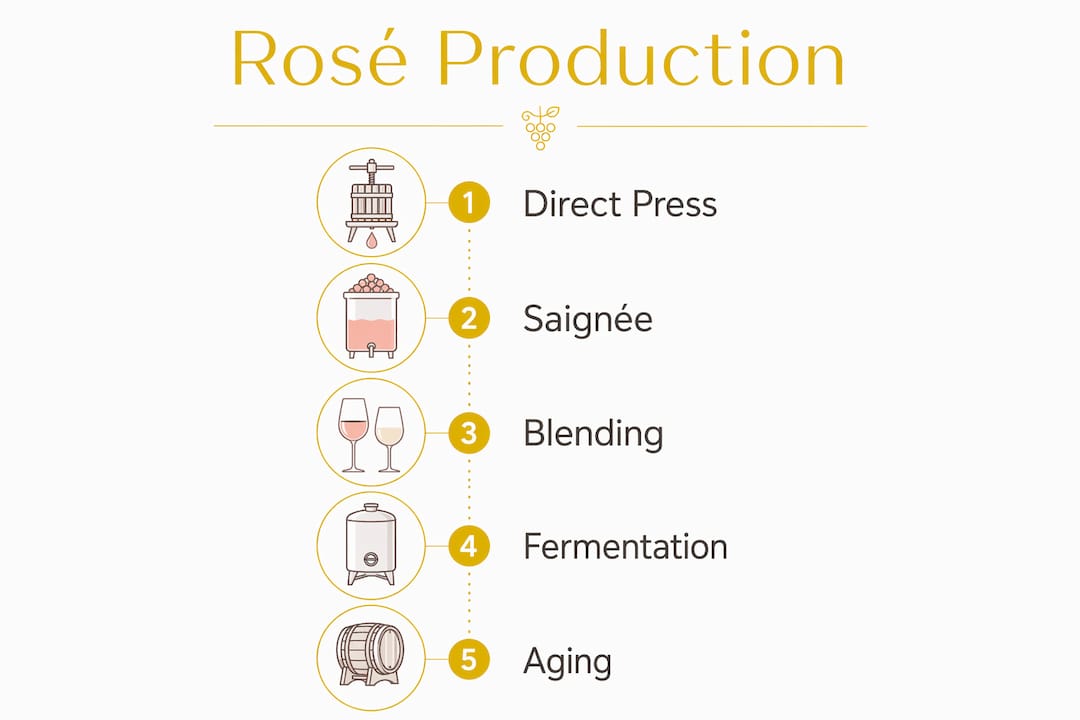
The production method is the strongest predictor of rosé style. Direct pressing yields light, dry wines; saignée produces deeper, more structured rosés. Understanding the difference helps you choose the right bottle for the right occasion.
The direct press method
Direct pressing, known in French as pressurage direct, works exactly as it sounds. Red grapes go straight into the press with minimal or no skin contact. The juice runs pale and clean. Pneumatic presses with carefully controlled pressure curves are standard in Provence, allowing winemakers to extract precise colour density without picking up excessive tannins or phenolics. The result is the signature pale, delicate style that defines Provençal rosé production.
The saignée method
Saignée, meaning “bleeding,” involves running off a portion of juice from a red wine fermentation after a short period of skin contact. The remaining juice continues as a red wine, while the bled-off portion becomes rosé. This method produces wines with deeper colour, more body, and more tannin. It is the dominant approach in Tavel, Bandol, and parts of Bordeaux.
Saignée rosé is often misunderstood as a secondary product, but quality producers in Bordeaux and Burgundy use it deliberately to create fuller-bodied rosés with real gastronomic character. The method suits wines intended for the dinner table rather than the aperitif hour.
The co - fermentation method.
This method is fairly straight forward and probably is some cases the best way to make excellent rosé.
This method consists of selecting the blend of your wine ahead of time and picking 2-3 different grape varieties. After pressing process has been done, then fermenting all 2-3 different grape varieties within the same tank, hence the name co-fermentation.
What the law says
- Direct press is the standard method for still rosé across France.
- Saignée is permitted and widely used in structured-rosé appellations.
- Blending finished red and white still wines to create rosé is prohibited under French wine law, except in Champagne.
- Champagne rosé may be produced by blending a small proportion of still Pinot Noir into the base wine before secondary fermentation.
Pro Tip: When buying rosé, check the appellation. A Tavel or Bandol on the label signals a saignée-influenced, structured wine. A Côtes de Provence signals a direct-press, lighter style. Cotes du Roussillon, has some hidden gem and award wining rosé wines. The appellation tells you more than the colour does.
What grape varieties define French rosé wines by region?
Grape variety shapes the aromatics, structure, and ageing potential of any rosé. French regions each rely on a distinct set of varieties, and knowing them helps you predict what is in the glass before you open the bottle.
The key varieties and their roles are:
- Grenache: The backbone of Provence, Tavel, and Rhône rosés. It contributes red-fruit aromatics, body, and alcohol. In Tavel, it must make up the majority of the blend.
- Cinsault: A natural partner for Grenache. Cinsault adds freshness, floral notes, and lower alcohol. It keeps Provence rosés light and lively.
- Syrah: Adds spice, depth, and a darker hue to blends. Used in small proportions in Provence and more prominently in Languedoc and Rhône rosés.
- Mourvèdre: The defining grape of Bandol rosé. It brings structure, dark-fruit character, and the tannin backbone that allows Bandol to age. Provençal blends use it in smaller amounts for complexity.
- Tibouren: A rare Provençal variety found mainly in the Côtes de Provence. It adds a distinctive herbal, saline quality that sets certain Provence rosés apart.
- Cabernet Franc: The dominant variety in Loire rosés, particularly Saumur Rosé and Rosé de Loire. It gives wines a bright, red-pepper and raspberry character with firm acidity.
- Cabernet Sauvignon: Used in Bordeaux Clairet and some Languedoc rosés. It adds structure and dark-fruit intensity.
The variety matters most when you are choosing a rosé for food. Grenache-dominant wines are generous and food-friendly. Mourvèdre-heavy wines like Bandol need a proper meal. Cinsault-led wines are the most versatile aperitif choice.
How to pair French rosé wines with food?
Matching rosé structure to the complexity of the meal is the golden rule for pairing. A pale Provençal rosé overwhelmed by a rich stew is just as mismatched as a structured Bandol served with a green salad.
Light Provençal rosés
These wines suit simple, fresh dishes where the wine can shine alongside the food rather than compete with it:
- Salads with goat’s cheese or grilled vegetables
- Seafood platters, oysters, and grilled fish
- Charcuterie and light starters
- Ratatouille and other Provençal vegetable dishes
The citrus and floral notes in a Côtes de Provence rosé mirror the brightness of these dishes. Serve at 8–10°C for maximum freshness.
Structured Tavel and Bandol rosés
These wines need more substantial food. Their body and tannin can handle:
- Grilled lamb, pork, and chicken
- Spiced North African dishes such as tagine and couscous
- Aged cheeses, particularly hard and semi-hard varieties
- Mediterranean stews and slow-cooked tomato-based dishes
A Bandol rosé served with a slow-roasted shoulder of lamb is one of the great food and wine combinations in French cuisine. For food and drink pairing guidance that goes beyond wine, the principle of matching weight to weight applies across the board.
Pro Tip: Do not serve structured rosés too cold. Tavel and Bandol are best at 10–12°C. Chilling them below 8°C mutes the very complexity you paid for.
You can also taste French rosé more deliberately by noting colour, aroma, and texture before you eat. That sequence trains your palate to match styles to dishes with confidence.
Key takeaways
French rosé is a category defined by production method and appellation, not by colour alone. Knowing the region tells you the style; knowing the style tells you the food match.
| Point | Details |
|---|---|
| Production method determines style | Direct press gives pale, light rosés; saignée gives deeper, structured wines. |
| Provence dominates production | Provence produces 40% of French rosé, almost all by direct press. |
| Tavel and Bandol age well | These structured rosés suit the dinner table and can develop over several years. |
| Grape variety predicts character | Grenache means fruit and body; Mourvèdre means structure; Cinsault means freshness. |
| Match wine weight to food weight | Light rosés suit salads and seafood; structured rosés suit grilled meats and spiced dishes. |
Why pale colour is the wrong way to judge French rosé
The assumption that paler means better is the most persistent myth in rosé. Pale colour in Provence rosé is a deliberate stylistic choice for freshness and drinkability. It is not a quality signal. Darker rosés like Tavel and Bandol are often more complex and more age-worthy. Judging a rosé by how pale it is makes about as much sense as judging a red wine by how light it looks.
I have tasted Provence rosés that were almost water-white and entirely forgettable, and Bandol rosés with a deep salmon hue that were genuinely extraordinary. The colour tells you the method and the region. It does not tell you whether the wine is good.
The most useful exercise for any serious rosé drinker is to taste Côtes de Provence, Bandol, and Tavel side by side. That single comparison dismantles every generalisation about rosé being a one-note category. You get three completely different wines, three different food matches, and three different reasons to open another bottle.
Rosé is also not a seasonal wine. The versatility of rosé year-round is well established. A structured Bandol rosé in december with a slow-cooked lamb dish is as appropriate as a chilled Provence rosé on a summer terrace. The wine does not know what month it is. You should not let the calendar decide what you drink.
Resfortes and the rosé wines of southern France
Resfortes produces wines from the Côtes du Roussillon, at the foothills of the Pyrenees where the terrain is rugged and the terroir is genuinely distinctive. The winery’s rosé is citrus-laced and refreshing, made with the same minimal-intervention philosophy that runs through the entire range.
Recommended
- Roussillon’s Rosé Renaissance: How the Region is Redefining the Pink W – Res Fortes
- Rosé All Year Round: Discovering the Versatility of Roussillon’s Pink – Res Fortes
- Explore French wine types: your guide to regions and terroirs – Res Fortes
- Top tips how to taste French rosé and enjoy like a pro – Res Fortes
What makes French rosé different from other rosés?
French rosé is governed by strict appellation rules set by the INAO, which control grape varieties, yields, and production methods by region. This produces a far wider range of styles than most countries offer, from the pale, delicate wines of Provence to the structured, age-worthy rosés of Tavel and Bandol.
Is French rosé always dry?
Most French rosé is dry, particularly from Provence, Tavel, and Bandol. The Loire Valley is the main exception, where Rosé d’Anjou and Cabernet d’Anjou can range from off-dry to medium-sweet.
Can French rosé be aged?
Bandol rosé, with its minimum 50% Mourvèdre requirement, is among the few rosés suited to bottle ageing of several years. Tavel also has genuine ageing potential. Most Provençal rosés are best drunk within one to two years of vintage.
What is the best temperature to serve French rosé?
Light Provençal rosés are best served at 8–10°C. Structured styles like Tavel and Bandol show more complexity at 10–12°C. Over-chilling any rosé suppresses its aromatics and texture.
What food goes best with French rosé?
Light rosés pair best with seafood, salads, and simple starters. Structured rosés from Tavel and Bandol suit grilled meats, spiced dishes, and aged cheeses. The rule is to match the weight of the wine to the weight of the dish.