
France offers more than 300 distinct appellations, and for any serious wine enthusiast, that breadth is both thrilling and completely overwhelming. Knowing whether to reach for a Burgundy Premier Cru, a Southern Rhône GSM blend, or a structured Côtes du Roussillon Villages requires more than a passing familiarity with a wine list. It demands a working knowledge of how France organises its wines, what each region genuinely delivers, and where the true value hides. This guide cuts through the noise, maps the major wine personalities across France, and turns a spotlight on the southern terroirs that collectors are increasingly paying close attention to.
Key Takeaways
| Point | Details |
|---|---|
| Terroir drives quality | French classification protects provenance but choosing the right region unlocks wine quality. |
| Explore outside the classics | Regions like Côtes du Roussillon offer collector-grade wines at superb value. |
| Sub-appellations matter | Villages within Roussillon reveal unique soils, ageing potential, and rare blends. |
| AOC vs. IGP has nuances | Strict AOC rules add credibility but flexible IGPs can provide exciting, modern wines. |
How French wines are classified: understanding AOC and beyond
Before you can make sense of what sits in your glass, you need to understand the system that governs it. France classifies wines primarily through the AOC/AOP system, with over 300 appellations defining geographic origin, grape varieties, permitted yields, and production methods to protect terroir-driven quality. AOC stands for Appellation d’Origine Contrôlée, and its EU equivalent is AOP (Appellation d’Origine Protégée). In practice, both terms refer to the same thing: a legally protected guarantee that a wine comes from a specific place and was made according to strict local rules.
Understanding the wine appellation guide helps collectors appreciate why two bottles from the same grape can taste entirely different simply because of where they were grown and how they were handled.
The AOC hierarchy in brief
France’s AOC structure runs from broad to highly specific, and the stricter the rules, the more defined the sense of place:
- Regional appellations — Large areas like Bordeaux or Bourgogne; the entry-level tier with moderate restrictions.
- Sub-regional appellations — Smaller zones within a region, such as the Médoc within Bordeaux.
- Village/Commune appellations — Tighter still, covering individual villages and their surrounding vineyards.
- Premier Cru — Designated individual vineyard sites of recognised quality, particularly prominent in Burgundy and Champagne.
- Grand Cru — The pinnacle; the AOC hierarchy’s top tier accounts for less than 2% of Burgundy’s production, with the strictest rules of any French classification.
Below AOC/AOP sits the IGP (Indication Géographique Protégée), which covers larger zones with fewer restrictions on grape varieties and winemaking methods. Many innovative producers actually choose IGP deliberately, preferring creative freedom over traditional constraints.
“The French system is not a quality ladder so much as a map of commitment to place. Moving up the hierarchy means accepting tighter rules in exchange for a more precisely defined terroir expression.”
| Classification | Scope | Flexibility | Example |
|---|---|---|---|
| Grand Cru AOC | Single vineyard | Very low | Chambertin, Montrachet |
| Premier Cru AOC | Designated site | Low | Volnay 1er Cru |
| Village AOC | Commune | Moderate | Gevrey-Chambertin |
| Regional AOC | Broad area | Moderate to high | Bourgogne Rouge |
| IGP | Large region | High | Pays d’Oc |
For collectors, this hierarchy matters enormously. The finest French boutique wineries often operate within tightly defined village or single-vineyard appellations, where every bottle reflects a commitment to a very specific patch of ground.
Major French wine regions and their signatures
With the classification system in mind, let us tour the main regions. Each has its own personality, shaped by climate, soil, and centuries of winemaking tradition.
The wine regions of France are famously diverse: Bordeaux builds structured blends around Cabernet Sauvignon and Merlot; Burgundy elevates single-variety wines from Pinot Noir and Chardonnay to their most nuanced possible expression; the Rhône Valley showcases GSM blends (Grenache, Syrah, Mourvèdre) in the south and powerful single-varietal Syrahs in the north. Alsace produces some of France’s finest aromatic whites, including Riesling and Gewurztraminer. Champagne, of course, is synonymous with fine sparkling wine. The Loire runs from crisp Muscadet near the Atlantic to Chinon’s Cabernet Franc and the honeyed richness of Vouvray. And Languedoc-Roussillon, stretching across the sun-baked south, offers an enormous volume of wine from a dizzying array of local and international wine grape varieties.
Regional styles at a glance
- Bordeaux: Left Bank favours Cabernet-dominant blends with tannin and longevity. Right Bank centres on Merlot for plushness and earlier drinkability.
- Burgundy: Terroir transparency is everything. Grand Cru Pinot Noir from the Côte de Nuits can age for decades and commands prices that reflect that.
- Northern Rhône: Single-vineyard Syrah from Hermitage or Côte-Rôtie rivals any red wine in the world for complexity and age-worthiness.
- Southern Rhône: Grenache-led blends from Châteauneuf-du-Pape offer warmth, spice, and power. Gigondas and Vacqueyras provide similar character at lower cost.
- Loire: Perhaps France’s most varied river, running from fresh, mineral Sancerre and Pouilly-Fumé through to structured Chinon reds and luscious Coteaux du Layon dessert wines.
- Alsace: Exclusively white and largely dry, though Vendanges Tardives and Sélection de Grains Nobles show extraordinary sweetness.
- Languedoc-Roussillon: A producer’s paradise of value and diversity, from garrigue-scented reds to fresh, citrus-laced rosés.
| Region | Key reds | Key whites | Hallmark style |
|---|---|---|---|
| Bordeaux | Cabernet Sauvignon, Merlot | Sauvignon Blanc, Sémillon | Structured, age-worthy blends |
| Burgundy | Pinot Noir | Chardonnay | Terroir-precise, elegant |
| Southern Rhône | Grenache, Syrah, Mourvèdre | Grenache Blanc, Clairette | Warm, spiced, generous |
| Languedoc-Roussillon | Carignan, Grenache, Syrah | Vermentino, Roussanne | Value, diversity, terroir |
For rosé lovers, the south is equally compelling. The types of rosé wine from Languedoc-Roussillon run from Provence-pale and delicate to deep, copper-toned, and richly flavoured. If you have only ever explored Provence rosé, the southern French alternatives offer real discovery.
Explore the top wine regions for tasting if you are planning a visit and want to match your palate to a destination.
Spotlight: Languedoc-Roussillon and treasures from Côtes du Roussillon
If Bordeaux and Burgundy are the headline acts, Languedoc-Roussillon is the artist you discover backstage and can never stop listening to. As France’s largest wine region by volume, accounting for roughly a third of total French production, it encompasses a remarkable range of AOCs including Corbières, Minervois, Saint-Chinian, and Faugères. Within this vast landscape, the Roussillon subset in the far south pushes up against the Pyrenees with some of the most dramatic and distinctive terroir in the entire country.
What makes Côtes du Roussillon so compelling for collectors? Villages reds rival Southern Rhône quality at significantly lower prices, with schist and granite soils delivering structured, garrigue-infused wines that reward patience in the cellar.
The Côtes du Roussillon’s nuances are worth understanding in detail before you start buying. Here is what defines this region:
- Soils: A complex patchwork of schist, granite, gneiss, and calcareous clay. Each soil type influences structure and flavour differently.
- Climate: Mediterranean warmth tempered by the Tramontane wind and altitude from the Pyrenees foothills, preserving freshness and aromatic intensity.
- Garrigue character: The wild herbs, lavender, rosemary, and thyme that carpet the hillsides express themselves in the wines as a signature aromatic signature.
- Old vines: Carignan and Grenache vines planted decades ago produce naturally low yields of concentrated, complex fruit that younger plantings simply cannot replicate.
- Value versus prestige: Wine appellation differences explain why the same quality can carry vastly different price tags in Roussillon compared to the Rhône.
“Roussillon is one of those places where the land does most of the winemaking. When soils are this varied and old vines this prevalent, the winemaker’s job is essentially to stay out of the way.”
Pro Tip: Look specifically for bottles labelled Côtes du Roussillon Villages rather than simply Côtes du Roussillon. The Villages designation requires lower yields and higher minimum alcohol levels, signalling greater concentration and age-worthiness.
Sub-appellations: the Roussillon Villages and terroir explained
Within the Côtes du Roussillon Villages framework, four named sub-appellations stand apart and represent some of the most serious, terroir-specific wines in the entire south of France.
The four key villages, each with a distinct geological personality, are highlighted by sub-appellation terroir research: Caramany on schist and purple schist soils delivering bold, tannic reds with a spiced core; Latour-de-France on schist and sand offering approachable yet structured wines with vibrant dark fruit; Lesquerde on granite and gneiss producing the most mineral, tight-grained expressions; and Tautavel on calcaire and gneiss, where Grenache and Carignan achieve exceptional concentration and ageing potential.
The schist and granite soils of these hillsides, combined with the Mediterranean climate and altitude influence from the Pyrenees, yield concentrated, aromatic wines where old vines are common markers of genuine quality.
| Village | Soil type | Key grape | Style profile |
|---|---|---|---|
| Caramany | Schist, purple schist | Grenache, Carignan | Bold, spiced, full tannin |
| Latour-de-France | Schist, sandy | Syrah, Grenache | Approachable, dark fruit |
| Lesquerde | Granite, gneiss | Grenache | Mineral, fine-grained |
| Tautavel | Calcaire, gneiss | Grenache, Carignan | Concentrated, age-worthy |
What to look for in collector-worthy bottles from these villages:
- Old vine declarations on the label (Vieilles Vignes): A strong indicator of lower yields and deeper concentration.
- Classical blends: Grenache with Syrah and Mourvèdre, or with old-vine Carignan for structure and complexity.
- Ageing potential: Well-made Tautavel and Lesquerde reds can develop beautifully over eight to fifteen years.
Pro Tip: If you enjoy structured, spice-driven whites as an aperitif or with food, explore the old-vine white blends emerging from Roussillon. Roussanne, Grenache Blanc, and Macabeu on schist produce something genuinely arresting. See how French white blends achieve their distinctive character.
How to choose the best French wines for your cellar
All this regional knowledge is only useful when it translates into better buying decisions. Here is a practical checklist for building a French wine selection that genuinely satisfies:
- Start with classification, then work inward. Identify the appellation tier first. A village-level AOC typically delivers more personality than a broad regional label, even from the same producer.
- Research the producer, not just the region. In France, who makes the wine matters as much as where. Seek out small, family-run domaines with consistent track records.
- Assess your drinking window. Not every cellar needs a ten-year wine. Decide upfront whether you want pleasure now or reward later, and choose appellations accordingly.
- Consider IGP wines for everyday drinking. AOC/AOP rules enforce terroir primacy through strict controls on yields and varieties, but innovative producers sometimes opt for IGP to work outside those boundaries. The result is often outstanding quality at very fair prices.
- Prioritise value regions alongside prestige. Côtes du Roussillon Villages and Gigondas sit alongside Châteauneuf-du-Pape and Pomerol as genuinely age-worthy reds. They simply cost considerably less.
- Match to food from the start. Think about what you actually cook and eat. Structured southern reds pair brilliantly with lamb, cassoulet, and charcuterie. Explore wine pairing recipes to match your cellar choices to your table.
- Buy in small mixed cases first. Before committing to a case of twelve, taste the wine. Curated mixed cases allow you to explore multiple styles, producers, and regions without overcommitting your budget.
For an overview of red wine varieties and how they translate across appellations, a structured reference guide is invaluable when you are comparing options before purchase.
Pro Tip: Vintage variation in the south of France is far less dramatic than in Burgundy or Champagne. The Mediterranean climate provides reliable sunshine and ripeness most years, meaning the producer matters more than the vintage when choosing Roussillon wines.
Why collectors shouldn’t overlook Côtes du Roussillon Villages
Here is an opinion worth defending: Côtes du Roussillon Villages represents the most compelling intersection of price, terroir clarity, and ageing potential currently available in France. This is not a consolation prize for those who cannot afford Burgundy. This is a genuinely undervalued category that rewards those who pay attention.
The comparison to the Southern Rhône is instructive. Châteauneuf-du-Pape commands premium prices partly because of its fame. But a Tautavel from a serious producer, built on gneiss soils from old-vine Carignan and Grenache, can match it for structure, garrigue character, and longevity. The old-vine Carignan blends from Tautavel’s gneiss soils in particular offer tannic structure and the potential for rancio hints in aged examples, a character more often associated with wines costing three times as much.
Climate change is also a factor that focused collectors should be thinking about now. Water scarcity is already challenging future yields in Roussillon, and producers who have invested in sustainable viticulture and deep-rooted old vines are best positioned to maintain quality. The smart move is to buy from these producers today, before the category gains the attention it deserves and prices correct upward.
There is also the question of sustainability and minimal intervention. The Côtes du Roussillon wine profile reveals a region where forward-thinking producers are embracing organic farming, careful canopy management, and low-intervention winemaking to preserve the purity that the landscape provides naturally. These are not mass-production wines. They are small-batch, thoughtfully crafted bottles that reflect exactly the kind of terroir integrity that makes French wine worth collecting in the first place.
Discover and buy top French wines online
For wine enthusiasts ready to explore what the Côtes du Roussillon genuinely offers, finding the right producer makes all the difference.
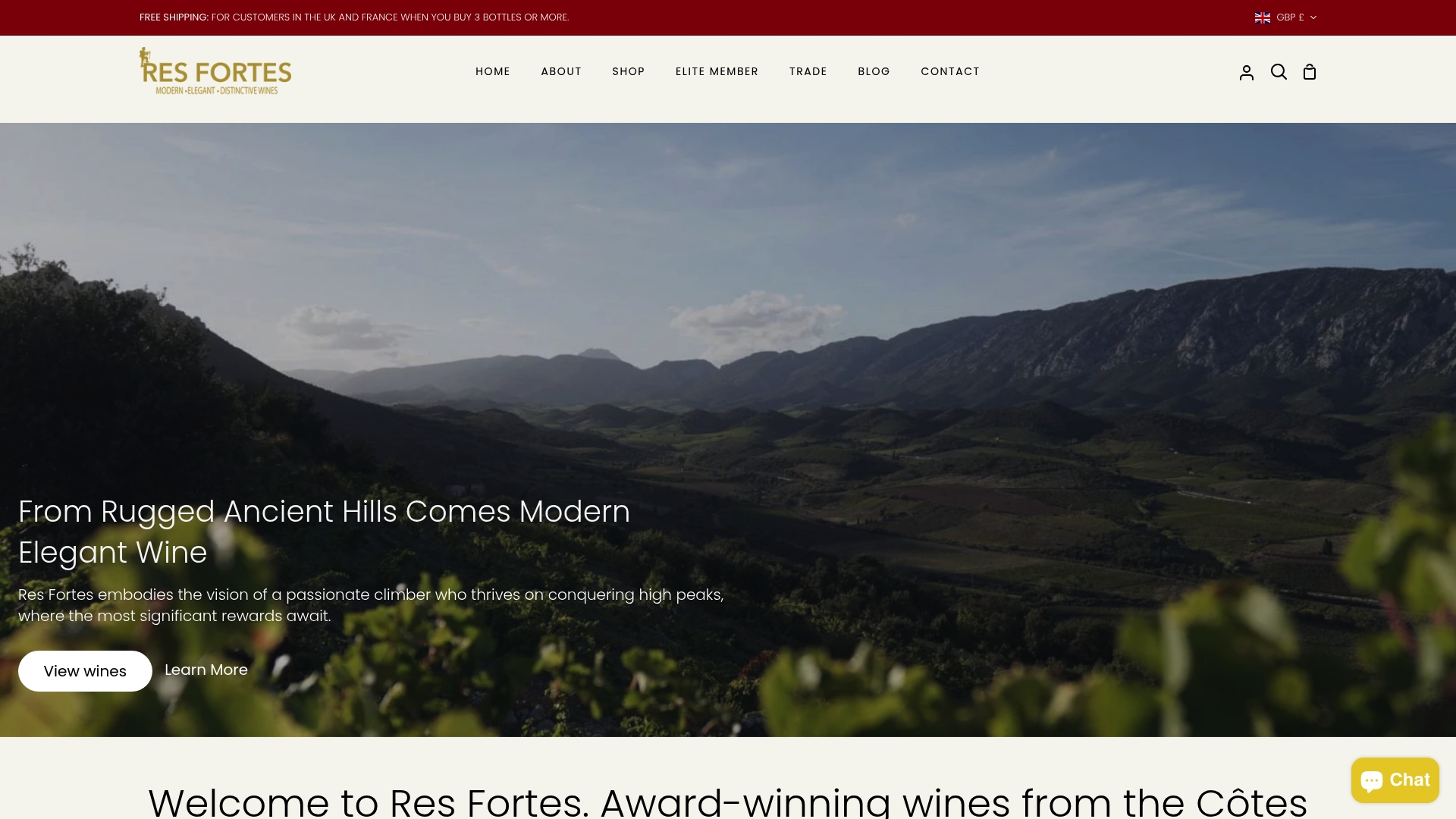
At Res Fortes, every wine in the range is crafted at the foothills of the Pyrenees, where the rugged terrain and diverse soils of Roussillon express themselves most forcefully. From the old-vine Grenache of The Brave to the elegant estate Syrah of Traveller and the citrus-forward Rosé, each bottle captures a precise sense of place. You can shop curated French wines as single bottles, mixed cases, or through the Elite Member programme for exclusive releases. Res Fortes also puts sustainability at the heart of what it does, and you can explore the sustainable vineyards behind each wine. Free shipping applies across the UK and France on orders of three bottles or more.
Frequently asked questions
How does terroir affect the taste of French wines?
Terroir shapes a wine’s character through soil composition, altitude, and climate, with Roussillon’s schist and granite soils and Pyrenees influence producing concentrated, aromatic wines with defined structure and freshness.
Which French wine regions offer the best value for collectors?
Languedoc-Roussillon, particularly Côtes du Roussillon Villages, stands out because Villages reds rival Southern Rhône quality with structured, garrigue-infused wines at markedly competitive prices.
What’s the difference between AOC/AOP and IGP wines in France?
AOC/AOP wines follow strict rules on yields, varieties, and methods, while IGP allows flexibility that some innovative producers actively seek to work outside traditional constraints.
Which grape varieties are traditional in Côtes du Roussillon wines?
Grenache, Syrah, Carignan, and Mourvèdre dominate, with the Villages sub-appellations of Caramany, Tautavel, Latour-de-France, and Lesquerde each expressing these varieties through their distinct granite, schist, and gneiss soils.