

Côtes du Roussillon Villages is the AOC reserved for the region’s finest red wines: concentrated, ageworthy blends built from Grenache, Carignan, Syrah and Mourvèdre. It sits a clear step above the generic Côtes du Roussillon designation, and five named villages: Caramany, Latour-de-France, Les Aspres, Lesquerde and Tautavel, mark out distinct pockets of terroir within it. Expect dark fruit, garrigue spice and structured tannins characteristic of wines designed to age well.
TL;DR:
- Wines from Lesquerde and Caramany are made on granite and gneiss, resulting in higher acidity and tannin structure suitable for aging over five to ten years.
- Wines labeled with Les Aspres tend to have softer tannins and earlier ripening, generally drinking well within three to five years.
- The 2023 homologation has tightened permitted grape varieties and geographic designations, making label reading more reliable for identifying wine style and origin.
- Old-vine Grenache and Mourvèdre generally produce more concentrated wines with longer aging potential, especially from higher-altitude or cooler sites.
- Higher critic scores on young vintages reflect potential, not necessarily immediate drinkability, so consider the drinking window and terroir instead of rating alone.
Appellation, geography and terroir
The AOP Côtes du Roussillon Villages is reserved exclusively for still red wines, produced within a delimited area of the Pyrénées-Orientales, and its rules permit five dénominations géographiques complémentaires: Caramany, Latour-de-France, Les Aspres, Lesquerde and Tautavel. The appellation occupies the hillier northern part of Roussillon, tracing the Agly and Têt river valleys towards the foothills of the Corbières, where altitude and orientation do much of the shaping. Wine-Searcher notes that this position places the appellation south of the Languedoc appellations Fitou and Corbières, with Les Aspres promoted to Villages status in 2017.
Soil is where the real character emerges. Lesquerde and Caramany sit on granite and gneiss, cooler, higher parcels that push acidity and tannin structure upward, favouring wines built for the cellar. Latour-de-France and Tautavel lean towards schist and argilo-calcaire, contributing mineral edges and firmer backbones, while Les Aspres’ terraced loams tend to soften tannin and ripen fruit earlier. A bottle labelled with one of these names is telling you something specific about where it grew, not just decorating the label. Learn more about how these subzones compare in our guide to Côtes du Roussillon wine types.
Grape varieties, permitted blends and winemaking choices
The cahier des charges homologated in July 2023 sets out the permitted varieties for the appellation: Grenache N, Carignan N, Mourvèdre N and Syrah N, with Lledoner Pelut N allowed as an accessory grape. Each plays a distinct role. Grenache brings ripe red fruit, warmth and body, often forming the backbone of the blend. Carignan, when the vines are old, adds structure and a savoury edge. Syrah contributes peppery lift and dark colour, while Mourvèdre deepens tannin and adds a wilder, gamey note that rewards patience.
Winemaking choices shape how these grapes show up in the glass. Some producers favour new French oak for texture and spice, others prefer larger demi-muids that round out tannin without imposing heavy vanilla notes. The choice tends to signal intent: newer, tighter oak points to a wine built for the cellar, while gentler vessels suit earlier drinking. The 2023 homologation also formalised recent additions to the appellation’s geographic denominations, which makes reading a label a more reliable exercise than it was a decade ago.
Tasting notes, vintage guidance and how to interpret critic scores
A glass of Côtes du Roussillon Villages tends to announce itself with black cherry and blackcurrant, followed by garrigue, dried herbs, cracked pepper and a baked-earth undertone that speaks of the Pyrenean foothills. Tannins are typically ripe rather than harsh, and concentration is a hallmark of the appellation rather than an exception.
Vintage matters more here than in many regions. Younger bottles, two to four years old, show primary fruit and firmer tannin, while wines given five years or more often unfold into softer, more savoury territory, with fruit receding behind spice and earth. For deeper vocabulary on how these flavours evolve, our piece on wine tastes explained is worth a look.
Critic scores are a useful shorthand, not a verdict. Keep these points in mind when using them to shop:
- A high score on a young vintage often reflects potential rather than immediate drinking pleasure.
- Scores rarely account for your own palate preferences around oak, tannin grip or fruit sweetness.
- Match the score to the price and the drinking window you actually plan to use, not the other way round.
Market price and buying options: a practical shopper’s checklist
Price bands in this appellation broadly track ambition. Entry-level bottlings tend to be straightforward and ready to drink on release. Mid-range wines, often carrying a named dénomination, show more concentration and oak integration. Premium bottlings, frequently old-vine Grenache or Syrah-led cuvées aged in select oak, command the highest prices and the longest cellaring potential.
Buyers have several routes in: specialist wine merchants, established online retailers, and direct purchase from the producer, the latter often bundled with membership perks and early access to limited releases.
Before buying, run through this checklist:
- Check the vintage and whether it suits your drinking window.
- Look for a named dénomination géographique, which signals a specific terroir rather than a broad blend.
- Read the critic notes alongside the price, not instead of it.
- Note the élevage detail, oak type and duration, since it hints at style and ageing potential.
- Confirm shipping terms and returns policy before committing to a case.
Pro Tip: Buy one bottle before committing to a case. A named dénomination on the label is worth tasting on its own before you judge the whole appellation by it.
Our insider tips for Roussillon wine lovers covers more ground on buying and cellaring in the region.
Producer spotlight: Res Fortes and contemporary Roussillon practice
A modern Côtes du Roussillon producer offers a useful window into how the appellation is approached. The winery is built on thoughtful vineyard selection, sustainable practice and minimal-intervention winemaking, aiming for purity and a genuine sense of place rather than heavy-handed cellar technique, as set out on its wines page.
The current range spans:
- Chaotic Chardonnay, a vibrant white outside the red-only Villages appellation.
- A refreshing, citrus-laced Rosé.
- An expressive White blend drawn from old vines.
- GMS, a Grenache-led red blend.
- Traveller, a premium estate Syrah.
- The Brave, the flagship bottling built on old-vine Grenache.
Res Fortes has drawn recognition from the drinks business, Wine Enthusiast, Fine Vintage and leading Vivino reviewers, accolades that sit alongside the appellation’s broader reputation for old-vine Grenache done with restraint rather than force.
Food pairing and serving tips
This is a wine built for the table, particularly Mediterranean and Catalan cooking. The tannin and spice call for something with fat and char to lean against.
- Grilled lamb, especially with rosemary or thyme, mirrors the garrigue notes directly.
- Slow beef stews and daubes match the wine’s structure and dark fruit.
- Cassoulet-style dishes stand up to the tannin without being overwhelmed.
- Aged sheep’s cheeses, particularly firmer ones, echo the wine’s savoury edge.
Serve young bottles slightly cooler, around 16 to 17 degrees Celsius, to keep the fruit lively. Mature bottles benefit from a gentle decant of thirty minutes to loosen sediment and let softer, more savoury aromas open before pouring.
The history behind the Villages designation
Roussillon’s winemaking roots reach back to Roman settlement in the region, but the modern appellation structure is a twentieth-century creation. Côtes du Roussillon was recognised as an AOC in 1977, with the more selective Villages designation carved out to recognise the hillier, better-sited communes capable of producing more concentrated reds.
The Villages tier has continued to evolve rather than stand still. Les Aspres, previously a separate designation, was folded into the Villages category in 2017, reflecting a broader effort to sharpen the appellation’s internal geography rather than leave it as one undifferentiated zone. The five dénominations géographiques complémentaires, Caramany, Latour-de-France, Les Aspres, Lesquerde and Tautavel, exist because INAO recognised that a Villages wine from granite-soiled Lesquerde tastes meaningfully different from one grown on the terraced loams of Les Aspres.
That recognition was formalised most recently in the cahier des charges homologated in July 2023, which tightened permitted varieties and production rules. For buyers, this history explains why a Villages label carries more specificity than the base Côtes du Roussillon designation: it is the product of decades of deliberate refinement, not a marketing tier invented after the fact. Understanding that lineage makes a bottle’s label read less like jargon and more like a small map of where, and how carefully, the wine was grown.

Ageing potential and recommended cellaring
Structure is the appellation’s calling card, and structure is what allows these wines to age. Bottles built on old-vine Carignan, granite-grown Grenache or a firm Mourvèdre backbone can comfortably hold five to ten years in a good cellar, sometimes longer for the most concentrated bottlings from Lesquerde or Tautavel.
Lighter, fruit-forward examples from warmer, lower-altitude sites are better suited to drinking within three to five years, before the fruit that defines them begins to fade. The general rule holds across the appellation: the firmer the tannin and the higher the altitude of the vineyard, the longer the wine rewards patience.
Cellar conditions matter as much as the wine itself. A stable temperature around 12 to 14 degrees Celsius, away from light and vibration, protects the slow tannin softening and aromatic development that make an aged bottle worth the wait. Store bottles on their side if using natural cork, to keep the seal moist and prevent premature oxidation.
If you are unsure whether a specific bottle is built for ageing or early drinking, the élevage detail on the back label is often the clearest signal: extended oak ageing and a named dénomination géographique both point towards a wine worth holding rather than opening tonight.
How it compares with neighbouring appellations
Côtes du Roussillon Villages sits within a crowded map of southern French appellations, and the differences are worth knowing before you buy. Base Côtes du Roussillon covers a wider area and lower bar for concentration, producing lighter, earlier-drinking reds, whites and rosés from a broader stretch of the region. Villages status, by contrast, is reserved for red wines only, from the hillier, better-sited communes.
Just north, Fitou and Corbières belong to Languedoc rather than Roussillon, and while they share some grape varieties, their soils and microclimates produce a different balance, often leaning slightly more rustic or garrigue-forward depending on the specific terroir. Collioure and Banyuls, further south along the coast, focus on different profiles entirely, with Banyuls known for fortified sweet wines rather than dry reds.
The clearest distinction within Roussillon itself is the dénomination géographique system. A Côtes du Roussillon Villages Lesquerde and a Côtes du Roussillon Villages Les Aspres are both Villages wines, but they come from different soils, different altitudes and, often, noticeably different tannin structures. Knowing this saves you from treating “Côtes du Roussillon Villages” as a single flavour when it is closer to five related but distinct expressions of the same red-grape philosophy.

What the appellation gets wrong in most write-ups
Most guides to this appellation treat the five dénominations géographiques complémentaires as trivia, a detail for the truly obsessive. That undersells them. The soil difference between Lesquerde’s granite and Les Aspres’ terraced loams is not a footnote. It is often the single biggest predictor of whether a bottle needs five years in a cellar or is ready on release.
The more common mistake is chasing critic scores as if they were a final answer. A score tells you a wine performed well against a taster’s own benchmark on a specific day. It says far less about whether that wine suits your dinner table tonight or your cellar in five years. Readers who prioritise the dénomination on the label, then use the score as a secondary check, tend to buy more consistently than those who do the reverse.
If there is one thing worth prioritising, it is patience with young bottles from the higher, cooler sites. The temptation is to open them early because the price already feels premium. The wines from Lesquerde and Caramany, in particular, are usually still finding their shape in year two or three.
— Moritz
Why Res Fortes suits readers of this guide
If this guide has left you wanting to taste the appellation rather than just read about it, Res Fortes offers a direct route in. The winery works in small batches from the foothills of the Pyrenees, favouring thoughtful vineyard selection and minimal intervention over heavy cellar technique, which means each bottle carries a clearer signature of where it grew.
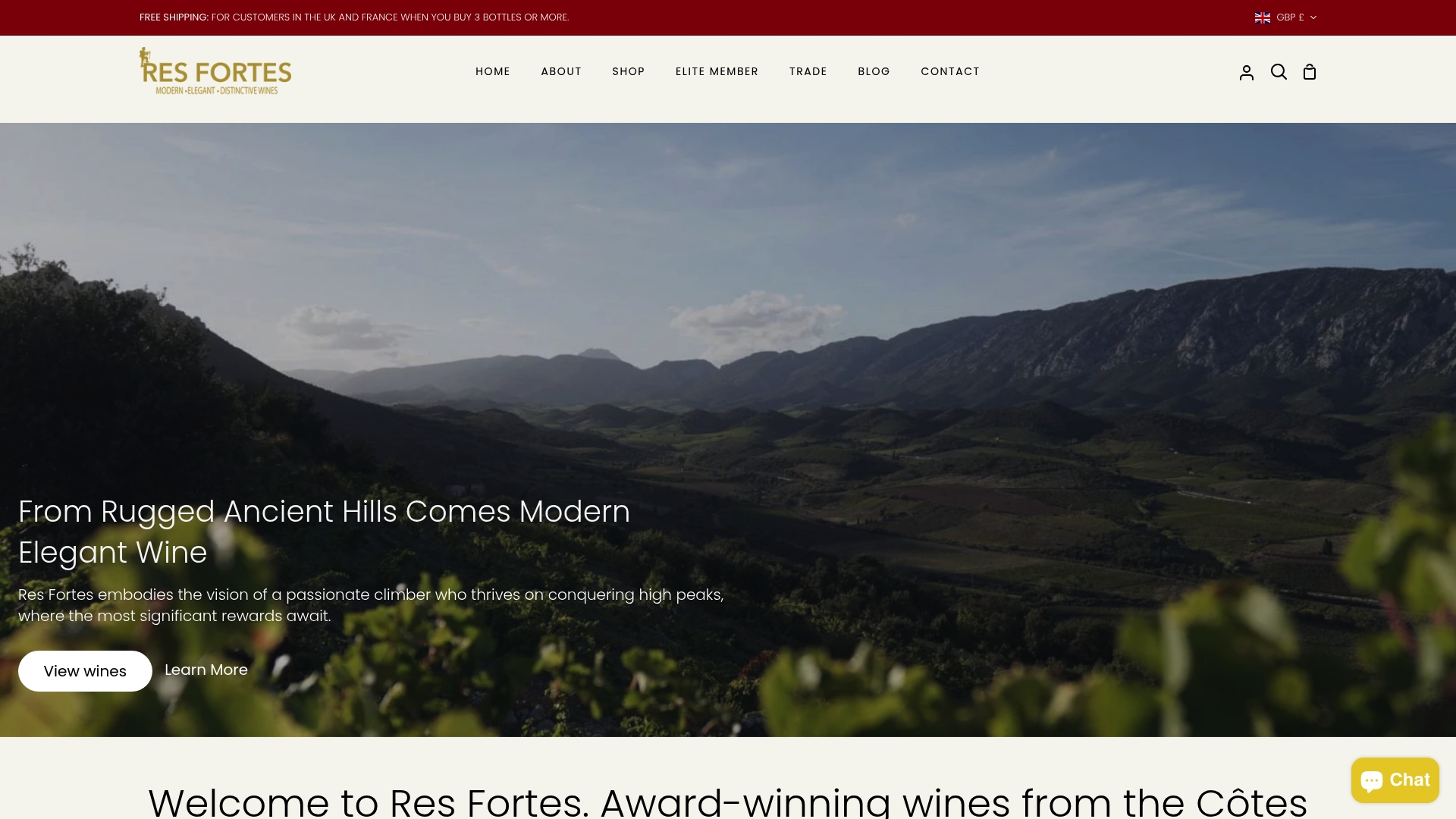
The range gives you a genuine spread to explore: the Grenache-led GMS and flagship Brave for readers drawn to old-vine structure, the estate Syrah Traveller for those wanting spice and depth, and the Rosé or Chaotic Chardonnay for lighter drinking alongside the reds. For regular access to limited releases, a membership programme offers a subscription route with exclusive access built in, alongside free shipping in some regions on three bottles or more. Browse the full range of wines to find your starting point, or explore the Elite Membership subscription for ongoing access to new releases.
Sources
- Côtes du Roussillon Villages | INAO
- Cahier des charges de l’appellation d’origine contrôlée « Côtes du Roussillon Villages »
- Côtes du Roussillon Villages - French Wine Region
FAQ
Where is the Roussillon wine region?
Roussillon sits in the far south of France, in the Pyrénées-Orientales department, bordering Spain and framed by the foothills of the Pyrenees. Its northern third, closer to the Corbières and Languedoc border, is where Côtes du Roussillon Villages is produced.
What is Roussillon known for in wine terms?
Roussillon is known for concentrated, sun-ripened reds built largely on Grenache, alongside fortified sweet wines from Banyuls and Maury. Côtes du Roussillon Villages represents the region’s benchmark for structured, ageworthy red blends.
What are some of the most famous wine villages in this appellation?
The five recognised dénominations géographiques complémentaires are Caramany, Latour-de-France, Les Aspres, Lesquerde and Tautavel, each tied to a distinct soil type. Lesquerde and Caramany, on granite and gneiss, tend to produce firmer, longer-ageing wines, while Les Aspres’ loams give softer, earlier-drinking reds.
What is the difference between Côtes du Roussillon and Côtes du Roussillon Villages?
Côtes du Roussillon is the broader appellation, covering red, white and rosé wines from a wider area at a lower bar for concentration. Côtes du Roussillon Villages is reserved for red wines only, from specific hillier communes recognised for producing riper, more structured fruit.
How should I choose between different examples of this wine?
Start with the dénomination on the label, since it tells you which soil and microclimate shaped the wine, then check the vintage and any élevage detail for oak ageing. Use critic notes as a secondary check against price and your own drinking window, rather than as the deciding factor.