

Discover the allure of single vineyard wines
There is something quietly radical about a wine that refuses to hide its origins. Demand for terroir-driven wines is rising sharply, as collectors and enthusiasts seek bottles that carry genuine transparency about where and how they were grown. Single vineyard wines offer exactly that: a direct conversation between soil, climate, vine, and glass. This article unpacks what truly sets these wines apart, why they matter to serious collectors, and how understanding their origins can transform the way you experience every pour.
Key Takeaways
| Point | Details |
|---|---|
| Terroir drives quality | Single vineyard wines reveal their unique environmental factors, making them highly prized for transparency and authenticity. |
| Purity versus harmony | Choosing between single vineyard and blended wines is a matter of personal taste, with both offering distinct experiences. |
| Collectors value provenance | Provenance and storytelling are as crucial as flavour for collectors seeking meaningful wine investments. |
| Ageing potential | Renowned single vineyard wines demonstrate long-term precision and stability, supporting their appeal for long-term cellaring. |
What defines a single vineyard wine?
A single vineyard wine is produced exclusively from grapes grown in one clearly defined plot of land, usually small in scale, sometimes no larger than a few hectares. Unlike regional wines that draw from a broad patchwork of sites, or blends that combine fruit from multiple sources, a single vineyard wine is rooted in one specific place. Every flavour in the bottle traces back to that precise location, its soil composition, its slope angle, its microclimate, and the particular clones of vine that have adapted there over decades.
This approach stands in deliberate contrast to blending. Varietals vs blends illustrates the core difference well: blends offer consistency and complexity through winemaker orchestration, while single vineyard wines emphasise an unadulterated expression of place. Neither approach is inherently superior. It ultimately depends on whether you prize purity of origin or the harmonious balance achieved through careful assemblage.
For collectors, the practical benefit of a single vineyard wine is legibility. You can trace a vintage back to one piece of ground. You can compare successive years and understand how that specific site responded to heat, drought, and rain. The vineyard impact on wine becomes the story running through every bottle in your cellar.
What should you look for on a label? Not every producer uses the phrase “single vineyard” even when the wine qualifies. Here are the key signals:
- The name of a specific lieu-dit (a named plot, a French term used widely in the south of France) appears prominently
- Production volumes are small, often in the hundreds rather than thousands of cases
- Detailed provenance notes appear on the back label or the producer’s website
- The vineyards and sustainability practices are clearly documented, signalling a producer with genuine investment in that specific site
Pro Tip: When in doubt, contact the producer directly and ask which parcels contributed to the wine. Any serious single vineyard producer will answer in detail. If they cannot, treat the label with scepticism.
The role of terroir: Expression and transparency
Terroir is one of those wine terms that sounds mysterious but is actually quite practical. It refers to the complete natural environment in which a vine grows: soil type, drainage, elevation, exposure to sun and wind, and the surrounding ecosystem. In a single vineyard wine, these factors are not diluted by fruit from elsewhere. The wine you drink is a direct record of one growing season in one place.
This matters enormously for transparency. The rise of single vineyard wines reflects a broader cultural shift: consumers and collectors increasingly want to know exactly what they are buying, who grew it, and where. Smaller defined areas command both higher quality perception and higher prices, because the accountability is built in from the very start. There is nowhere to hide when the wine carries the name of a single field.
“A great vineyard site is not chosen, it is discovered. The vines tell you, year after year, that something particular is happening in that soil.” This philosophy, shared widely among growers in the Roussillon and Burgundy alike, captures why terroir transparency is so compelling.
Consider how environmental factors play out in practical terms. At the foothills of the Pyrenees, where Res Fortes sources its fruit, the soils shift dramatically from schist to granite to clay over very short distances. Altitude brings cooler nights that preserve natural acidity. The Tramontane wind dries the canopy and reduces disease pressure. All of this is captured in the glass when production is confined to a single, carefully chosen site. None of these nuances can survive dilution across a large appellation blend.
Key ways that terroir expresses itself in single vineyard wines:
- Soil structure dictates how much water the vine retains, influencing concentration and freshness simultaneously
- Altitude and orientation determine the length of the growing season and the intensity of ripening
- Wind patterns affect canopy health, skin thickness, and ultimately the aromatic profile of the wine
- Old vine root systems reach deep into the subsoil, drawing up minerals that younger vines simply cannot access
The vineyard quality impact of all these factors working in concert is why a single vineyard wine can taste like no other, even from a neighbouring plot just fifty metres away.
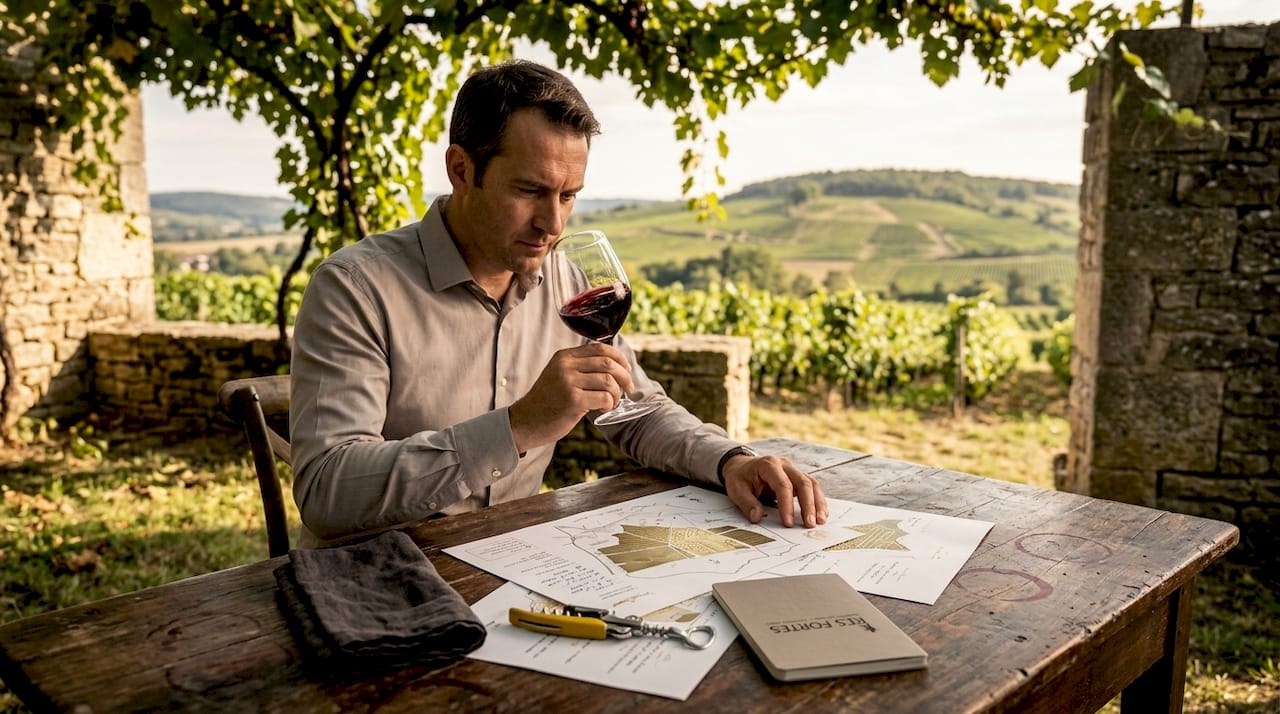
Pro Tip: When tasting single vineyard wines side by side from different sites within the same appellation, resist the urge to rank them. Instead, ask what each wine is telling you about its specific location. That shift in perspective changes everything.
Single vineyard versus blends: Is purity worth the price?
The honest answer is: it depends on what you value, and why you are buying. Both styles have genuine strengths that deserve respect.
Blends, whether regional appellations or winemaker-driven assemblages, allow for a degree of consistency that single vineyard wines cannot always guarantee. A difficult vintage at one site may devastate a single vineyard bottling, while the blending option allows the winemaker to compensate by increasing the proportion of fruit from a more sheltered plot. This is not cheating. It is craft. Blends and varietals can both achieve extraordinary complexity; the route is simply different.
For collectors, the considerations break down like this:
- Rarity: Single vineyard wines are produced in smaller quantities, which supports both scarcity value and resale desirability over time.
- Consistency: Blends tend to deliver a more predictable style across vintages, which suits collectors building a cellar for drinking rather than investment.
- Price: Single vineyard bottlings typically carry a premium. Whether that premium is justified depends entirely on the quality of the site and the rigour of the producer.
- Ageing potential: The finest single vineyard wines, where site selection was exceptional, can age with extraordinary precision. Their tighter structure and mineral focus often reward long cellaring.
- Discovery: For enthusiasts who enjoy French white blends, exploring how the same grape variety expresses itself across different single vineyards is one of the most intellectually rewarding pursuits in wine.
| Factor | Single vineyard | Blend |
|---|---|---|
| Terroir transparency | Very high | Low to moderate |
| Vintage variation | Pronounced | Moderate, controlled |
| Production volume | Small | Large to very large |
| Collector rarity | High | Variable |
| Consistency across years | Variable | High |
| Price per bottle | Premium | Accessible to premium |
| Ageing potential | High (site dependent) | High (blend dependent) |
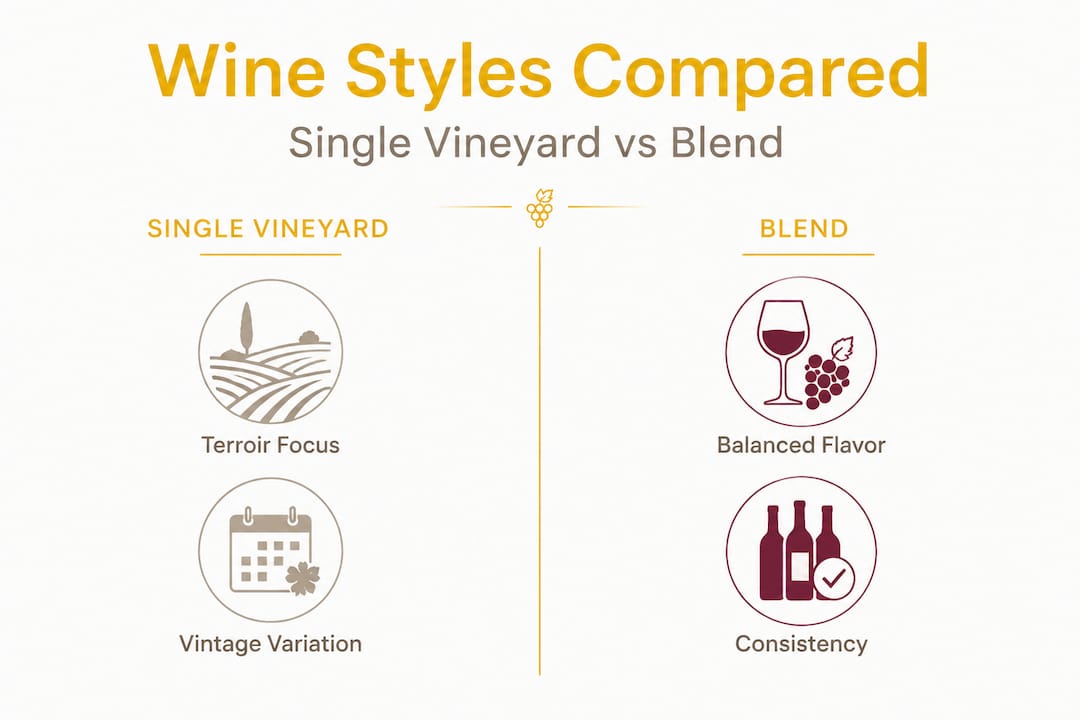
The table above is not a verdict. It is a framework. Serious collectors often maintain both styles in their cellars, using blends for accessible drinking and single vineyard bottles for vertical exploration and long-term investment.
Celebrated single vineyard wines: Precision and ageing potential
Some wines make the strongest argument for single vineyard provenance simply by enduring. The Rippon estate in Central Otago, New Zealand, is one such example. Rippon Pinot Noir 1991 to 2021 has been praised specifically for the precision it demonstrates across vertical tastings spanning three decades. The wines do not merely age: they evolve in ways that clearly reflect the particular character of that lakeside, schist-rich site. Each vintage year is distinct, yet the thread of place remains unmistakable from one decade to the next.
“The best single vineyard wines do not simply taste good young. They transform in the bottle over years, each stage of evolution bearing the unmistakable fingerprint of their origin.”
This precision is not accidental. It is the product of minimal intervention, low yields, and an absolute commitment to one piece of ground. Producers who understand their site over many years learn exactly how to work with it rather than against it. That accumulated knowledge is what you pay for when you purchase a great single vineyard wine.
| Wine | Region | Key variety | Notable ageing range |
|---|---|---|---|
| Rippon Mature Vine Pinot Noir | Central Otago, NZ | Pinot Noir | 10 to 25 years |
| Res Fortes The Brave | Côtes du Roussillon, France | Old-vine Grenache | 8 to 20 years |
| La Romanée (Bouchard) | Burgundy, France | Pinot Noir | 15 to 30 years |
| Penfolds Grange | Barossa Valley, Australia | Shiraz | 20 to 40 years |
| Res Fortes Traveller | Côtes du Roussillon, France | Syrah | 6 to 15 years |
Closer to home, Res Fortes demonstrates the same commitment to site fidelity in the Roussillon. The Brave, the flagship of the range, draws exclusively from old-vine Grenache in carefully selected parcels at altitude. It has earned accolades from Wine Enthusiast and the drinks business precisely because it delivers what French boutique wineries do best: precision without pretension, and character that deepens rather than fades with time. The Res Fortes wine selection illustrates how a clearly articulated single site philosophy can produce wines worthy of serious cellaring even outside the most famous appellations.
The overlooked truth: Why single vineyard wines are never just about taste
Here is something the wine trade rarely says plainly: the most important thing a single vineyard wine gives you is not flavour. It is connection.
When you open a bottle that was grown on one identifiable hillside, tended by people who know every vine by sight, and made with as little interference as possible, you are holding something that functions as both a sensory experience and a form of correspondence. The wine is a letter from a specific place in a specific year. That is genuinely rare in a world of scaled-up production and carefully managed consistency.
Collectors often tell us they love the story as much as the liquid. That is not sentimentality. That is an entirely rational response to provenance. When a wine can only come from one place, it cannot be replicated. No amount of technical skill will recreate a Res Fortes Brave from another hillside in another region. The boutique winery stories behind these bottles are inseparable from their value.
The uncomfortable truth that most wine writing ignores is this: hype and prestige are not the same as provenance. Some wines command extraordinary prices because of their postcodes, not because their terroir is genuinely superior. A rigorous single vineyard wine from a less famous region, made by a grower with real skin in the game, will often deliver more authentic place expression than a celebrated label from a prestigious appellation that sources across dozens of unnamed sites. Prioritise producers who are willing to name their vineyard, explain their soils, and stand behind the specific decisions they made that year. That transparency is the real marker of quality.
Experience single vineyard excellence with Res Fortes
If reading this has sharpened your curiosity about what a genuinely site-specific wine can offer, then Res Fortes is the natural next step. Founded on the belief that the most rewarding wines come from the most demanding places, Res Fortes works exclusively with carefully selected vineyards at the foothills of the Pyrenees, where altitude, ancient soils, and the Tramontane wind conspire to produce wines of remarkable purity and character.
From the flagship The Brave, an old-vine Grenache celebrated by Wine Enthusiast and the drinks business, to the elegant Traveller Syrah and the vibrant Chaotic Chardonnay, every bottle in the range carries genuine single-site conviction. You can explore the full range, shop individual bottles or curated mixed cases, and join the Elite Member programme for exclusive releases. Free shipping is available across the UK and France on orders of three bottles or more. Checkout is available in GBP or EUR. Start your journey with Res Fortes wines today.
Frequently asked questions
What makes single vineyard wines more valuable to collectors?
Single vineyard wines offer unique character, provenance, and accountability that regional blends cannot match. Their scarcity and terroir transparency underpin both their price and their long-term appeal among serious collectors.
Can single vineyard wines age better than blends?
Many single vineyard wines show extraordinary ageing potential precisely because their structure and mineral identity come from one coherent source. Wines like Rippon Pinot Noir have demonstrated consistent precision across vertical tastings spanning several decades.
Is terroir the only reason collectors choose single vineyard wines?
Terroir is central, but it is not the whole story. Collectors are also drawn to the narrative, authenticity, and human connection behind a bottle. As noted in discussions of purity versus harmony, the choice reflects personal values as much as palate preference.
How can I identify authentic single vineyard wines?
Look for a clearly named vineyard or lieu-dit on the label, small production volumes, and detailed provenance notes from the producer. Producers like Res Fortes are transparent about their sites and can answer specific questions about each bottling.
Recommended
- Vineyard sites and their true impact on wine quality – Res Fortes
- Discover what makes French boutique wineries unique – Res Fortes
- Why French white blends excel: Aroma, balance, and discovery – Res Fortes
- Vineyards & Sustainability - Res Fortes
- Hochwertige Weine wählen: Mehr Genuss und Wert für Feinschmecker