
GMS stands for Grenache, Mourvèdre, and Syrah — the three grape varieties at the heart of southern France’s most characterful red blends. You may also see it written as GSM; the letter order is purely stylistic, not a different recipe. These three varieties have grown together across the Rhône Valley and Roussillon for centuries, and their combination produces wines of a complexity that none of the three achieves alone.
- Grenache brings ripe red fruit, warmth, and a plush, generous palate
- Mourvèdre adds savoury depth, firm tannin, and the structure needed for ageing
- Syrah contributes darker fruit, black pepper, and a spine of acidity
One quick note for UK readers: GMS is also the acronym for General Medical Services — the NHS GP contract negotiated between NHS England and the BMA. In a wine context, the two could not be more different, so the setting always makes the meaning clear.
What does each grape bring to a GMS blend?
Grenache, Syrah, and Mourvèdre each play a distinct role, and understanding this division makes tasting far more rewarding.
Grenache is almost always the dominant partner. It ripens easily in warm, dry climates, producing wines with strawberry, raspberry, and kirsch aromas, a silky texture, and naturally higher alcohol. Without it, a GMS would feel austere. With it, the wine opens generously from the first pour.
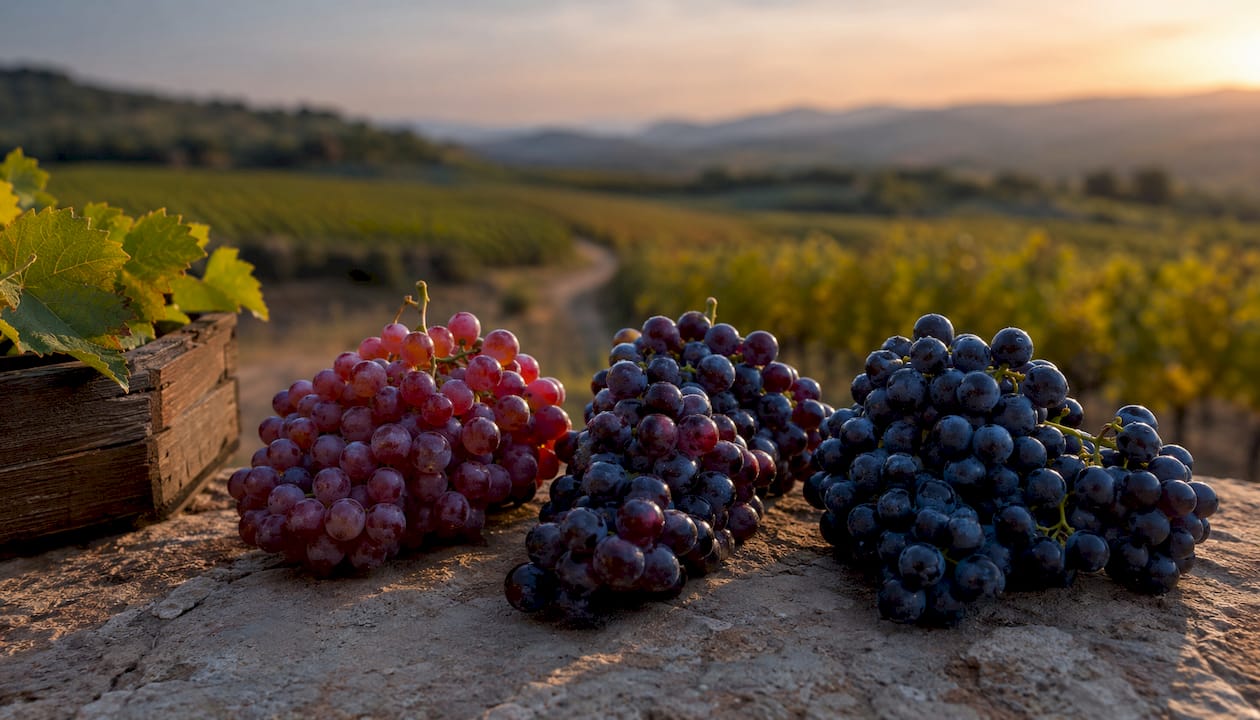
Syrah is the structural backbone. It brings violet, blackberry, and that distinctive cracked-black-pepper note, along with firmer tannins and a brighter acidity that keeps Grenache’s richness in check. Even at 20–30% of a blend, Syrah reshapes the wine’s whole character.
Mourvèdre is the most demanding of the three, needing heat and well-drained soils to ripen fully. When it does, it delivers leather, garrigue, olive, and a savoury, almost meaty depth that gives the wine its grip and its capacity to age. Winemakers adjust all three proportions vintage by vintage, responding to how each variety performed in that particular growing season.
Where do classic GMS styles come from?
The blend is rooted in southern France, where it underpins some of the country’s most celebrated appellations. Châteauneuf-du-Pape, Gigondas, and the broader Côtes du Rhône are its spiritual home, though Roussillon — where Resfortes works — produces equally compelling expressions at the rugged foothills of the Pyrenees.
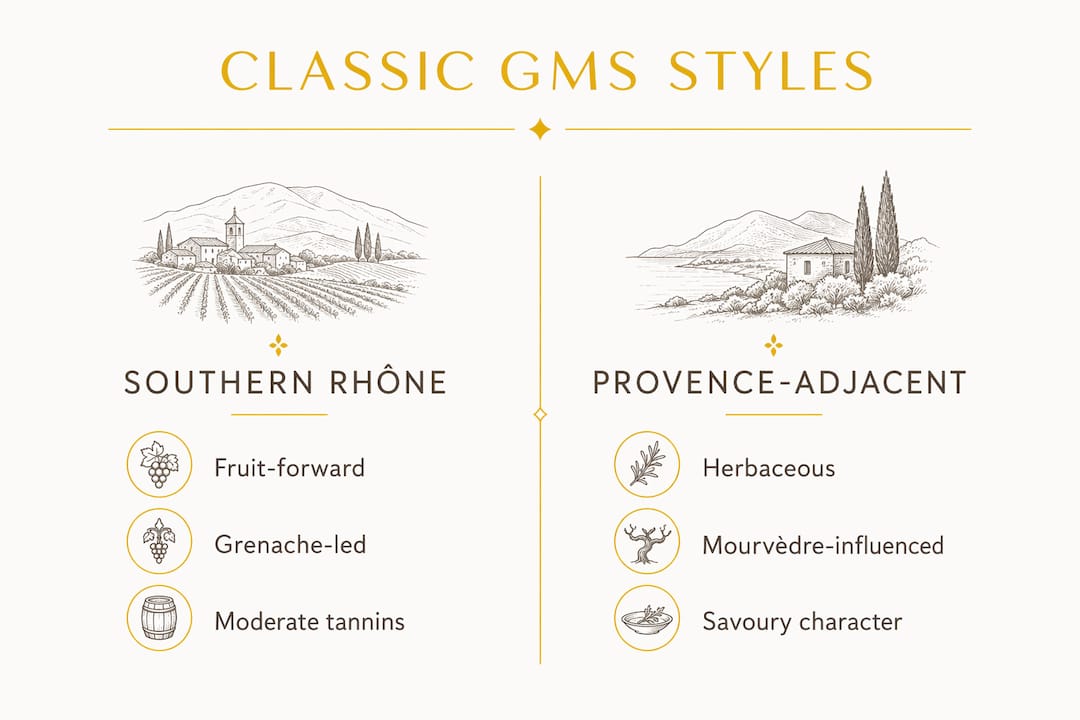
The style you encounter depends largely on which grape leads the blend. Vineyard and climate choices determine whether Grenache dominates for a lighter, fruitier result, or whether Syrah and Mourvèdre take greater prominence for something darker and more structured.
| Region | Typical style | Common proportion range |
|---|---|---|
| Côtes du Rhône / Gigondas | Fruit-forward, medium body | 60–70% Grenache, 20–30% Syrah, 10% Mourvèdre |
| Châteauneuf-du-Pape | Rich, complex, age-worthy | 60–80% Grenache, with Syrah and Mourvèdre making up the remainder in varying proportions |
| Côtes du Roussillon | Structured, terroir-driven | Near-equal thirds or 60/30/10 splits |
Pro Tip: Provence-adjacent styles often show more Mourvèdre influence, lending a distinctly savoury, herb-tinged character that pairs beautifully with the region’s cuisine.
How to taste and compare GMS blends
Tasting GMS side by side is the single most effective way to understand how proportions shift a wine’s personality. Labels rarely state exact percentages, so your palate becomes the primary instrument.
- Appearance: Pour into a clean, medium-large red wine glass. Note the colour depth — deeper ruby often signals more Syrah or Mourvèdre.
- Aroma: Swirl and nose. Identify the primary fruit (red berries = Grenache, dark fruit = Syrah), then look for pepper, leather, or garrigue beneath.
- Palate structure: Sip and assess tannin firmness, acidity, and alcohol warmth. Grenache-led wines feel rounder; Mourvèdre-heavy ones grip the gums.
- Finish: Note length and any savoury or spiced aftertaste. Record your impressions immediately.
For side-by-side comparison, use identical glassware, taste from lightest to heaviest, and consider a short decant (20–30 minutes) for younger examples.
Pro Tip: Mourvèdre reveals itself slowly. Return to the glass after 15 minutes and you will often find the leather and olive notes have opened considerably — a sign of a well-structured blend with genuine ageing potential.
How to buy GMS in the UK
The first challenge is finding the blend on a label. Most French wines are named by appellation rather than grape variety, so a Côtes du Rhône or Côtes du Roussillon will rarely announce itself as a GMS. Producer tasting notes and back-label descriptions are your best guide.
- Look for AOC or IGP designation — it confirms the wine’s regional origin and production standards
- Check the vintage: warmer years favour Grenache ripeness; cooler ones may push Syrah or Mourvèdre forward
- Seek out critic scores or awards (Wine Enthusiast, the drinks business, Vivino ratings) as independent quality signals
- Read the producer’s tasting notes for mentions of red fruit, pepper, or garrigue — these confirm the GMS character even when grapes are unlisted
Resfortes produces a Grenache-led red blend from the Côtes du Roussillon that exemplifies the style: fruit-forward, terroir-driven, and crafted with minimal intervention to preserve the character of the Pyrenean foothills. UK buyers can order directly with free shipping on three bottles or more.
Pro Tip: When buying online, filter by appellation rather than grape variety — search “Côtes du Roussillon” or “Côtes du Rhône” and then read tasting notes for the GMS hallmarks.
What food pairs well with GMS?
The blend’s versatility is one of its great strengths. The right pairing depends on which grape leads.
- Grenache-forward GMS: roasted Mediterranean vegetables, herb-crusted chicken, lamb chops with rosemary
- Syrah-forward GMS: grilled ribeye, pepper-crusted steak, merguez sausages, smoked brisket
- Mourvèdre-rich GMS: slow-braised game, Provençal daube, spiced lamb tagine, hearty lentil stews
For versatile everyday pairings, charcuterie boards, tomato-based pasta, and anything from the barbecue all work beautifully. Explore food and wine pairing ideas for more inspiration alongside southern French reds.
Serve GMS at 14–17°C in a medium-large red wine glass that allows the aromatics to gather and evolve.
How long does a GMS age, and how should you store it?
Ageing potential varies considerably by style. Grenache-led examples are generally at their best within 3–7 years of vintage, when the fruit is vibrant and the tannins are still supple. Blends with higher Syrah or Mourvèdre content can reward cellaring for 7–15 years or more in good vintages.
- Store bottles horizontally at a steady 12–16°C
- Maintain moderate humidity to preserve the cork
- Keep bottles away from direct light and sources of vibration
- Decant younger GMS for 20–30 minutes to soften tannins and open aromatics
Vintage variation matters more with GMS than with many single-variety wines. A hot, dry year in Roussillon can push alcohol and concentration; a cooler vintage may produce a leaner, more Syrah-driven profile. Checking producer vintage notes before opening a bottle you have cellared is always worthwhile.
Common confusions about the GMS acronym
A few points that regularly trip up UK wine enthusiasts:
- GSM and GMS are the same blend. The letter order is interchangeable and usually reflects which grape the producer wishes to foreground, not a different composition.
- In the UK, GMS also stands for General Medical Services — the NHS GP contract. Context resolves any ambiguity instantly.
- French labels rarely name the grapes. A wine labelled “Côtes du Rhône” or “Côtes du Roussillon” may be a classic GMS; the producer’s notes will confirm it. Understanding wine blending conventions helps decode what is in the bottle.
Key takeaways
GMS (Grenache, Mourvèdre, Syrah) is the foundational red blend of southern France, where Grenache leads with fruit, Syrah adds structure and pepper, and Mourvèdre provides savoury depth and ageing grip.
| Point | Details |
|---|---|
| GMS definition | Grenache, Mourvèdre, and Syrah — a classic southern French red blend, also written GSM. |
| Grape roles | Grenache = fruit and warmth; Syrah = pepper and structure; Mourvèdre = savoury depth and tannin. |
| Proportion ranges | Typically a majority of Grenache with Syrah and Mourvèdre sharing the remainder; no fixed legal ratio. |
| Buying in the UK | Look for AOC/IGP labels, producer tasting notes, and critic scores — proportions are rarely stated. |
| Resfortes | A Grenache-led Côtes du Roussillon GMS with free UK shipping on three bottles or more. |
Note: in the UK, GMS also stands for General Medical Services — the NHS GP contract. In a wine context, the meaning is always the blend.
Why Grenache deserves to lead
There is a tendency among wine enthusiasts to prize complexity above all else, which often means reaching for the most Mourvèdre-heavy or Syrah-dominant bottle on the shelf. The logic is understandable: structure and savouriness read as sophistication. But a Grenache-led GMS done well is arguably the harder achievement. Grenache is transparent — it shows terroir, vintage, and winemaking decisions with unforgiving clarity. A mediocre site or a careless harvest cannot be hidden behind Mourvèdre’s tannin or Syrah’s pepper.
The best Grenache-forward blends from Roussillon and the southern Rhône carry a warmth and generosity that is genuinely difficult to replicate elsewhere. They are wines for the table, for conversation, for the kind of evening that stretches longer than planned. Resfortes understands this. The decision to let Grenache lead is not a concession to accessibility — it is a statement about place and craft.
Resfortes GMS: order direct for UK delivery
Resfortes crafts a Grenache-led red wine from the Côtes du Roussillon that brings the GMS tradition to life with a distinctly modern sensibility. Grown at the foothills of the Pyrenees, the blend is shaped by rugged terroir, sustainable viticulture, and a minimal-intervention approach that lets the fruit speak clearly. Accolades from Wine Enthusiast, the drinks business, and Fine Vintage confirm the quality.
UK buyers can order single bottles or curated mixed cases directly from Resfortes, with free shipping on three bottles or more. Browse the full range and find your ideal GMS at resfortes.com/pages/wines.
Useful sources
- Sommy Wine Coach — Wine blends explained: clear breakdown of GSM grape roles and blending rationale
- The Wine Pair Podcast — GSM wines demystified: accessible audio guide on how proportions change a blend’s character
- Lyons Vineyard — What is a GSM?: practical notes on blending trials and style variation
- Winemaking Talk — GSM blend percentages: real-world proportion examples from producers and home winemakers
- Resfortes — red wines: Resfortes’ Grenache-led Côtes du Roussillon range with tasting notes and awards
Recommended
What does GMS stand for in wine?
GMS stands for Grenache, Mourvèdre, and Syrah — a classic red blend from southern France. The same blend is also written GSM; both refer to identical varieties.
Is GMS the same as GSM?
Yes. GSM and GMS are interchangeable acronyms for the same Grenache, Mourvèdre, and Syrah blend. The letter order reflects stylistic preference, not a different composition.
How do I find a GMS wine on a UK label?
Res Fortes produces a Grenache-led GMS from the Côtes du Roussillon, available to order online with free UK shipping on three bottles or more at resfortes.com.
Where can I buy a Grenache-led GMS in the UK?
French wines are labelled by appellation rather than grape variety, so look for Côtes du Rhône, Côtes du Roussillon, or Gigondas, then read the producer’s tasting notes for red fruit, pepper, and garrigue — the hallmarks of a GMS blend.