
French rosé is one of the most misunderstood wine categories on the planet. Most people assume it sits somewhere between red and white. Light, easy, unchallenging. The reality is that knowing how to taste French rosé properly opens the door to a genuinely complex world of fruit, mineral tension, herbal lift, and regional character that casual sipping simply misses. From the pale, bone-dry styles of Provence to the structured depth of Bandol, French rosé rewards the drinker who approaches it with method and curiosity. This guide gives you both.

Key takeaways
| Point | Details |
|---|---|
| Preparation matters enormously | Use the right glass and serve at 10–13°C to get accurate aromas and flavour expression. |
| Follow the five S’s method | See, swirl, smell, sip, and savour in sequence to evaluate French rosé systematically. |
| Region shapes everything | Provence, Bandol, Languedoc, and the Loire each produce distinctly different rosé styles worth comparing. |
| Typicity over personal preference | Judge rosé by how well it reflects its region and grape variety, not just whether you like it. |
| Practise with varied bottles | Tasting several rosés side by side builds vocabulary, confidence, and genuine palate sensitivity. |
How to taste French rosé: setting up for success
Before you put the glass to your nose, the conditions you create will determine how much you actually perceive. This is not fussiness. It is the difference between detecting a wine’s full character and missing half of it.
Glassware: Choose a tulip-shaped or ISO tasting glass. The narrowing rim concentrates aromas without trapping alcohol, which makes a real difference with lighter rosé styles. Avoid wide, flat champagne coupes, which dissipate aromatics almost instantly.
Serving temperature: Provençal rosé is best served between 10 and 13°C. Fuller styles such as Bandol benefit from the warmer end of that range, while lighter, more delicate rosés from the Loire or Côtes de Provence show better closer to 10°C. Too cold and the wine shuts down aromatically. Too warm and the alcohol overwhelms everything else.
Your environment: Taste in a room free from strong cooking smells, perfume, or candles. Natural light or neutral white light helps you assess colour accurately. A white tablecloth or sheet of white paper beneath the glass makes the colour assessment far more revealing.
Grape variety context: Before you begin, it pays to know what you are tasting. Grenache produces softer, rounder rosés with red fruit and spice. Cinsault brings delicacy and floral lift. Mourvèdre adds structure and savoury depth. Grape blends directly shape the weight, acidity, and finish you will detect in the glass.
| Grape variety | Typical contribution to rosé |
|---|---|
| Grenache | Red cherry, raspberry, soft texture, gentle spice |
| Cinsault | Pale colour, floral aromas, light body, citrus notes |
| Mourvèdre | Deeper colour, savoury herbs, tannin grip, longer finish |
| Syrah | Dark berry, pepper, structured mid-palate |
Pro Tip: Chill the glass itself for one minute before pouring. It stabilises the serving temperature without requiring extra time in the fridge and prevents the wine warming too quickly during assessment.
The five S’s: a step-by-step tasting method
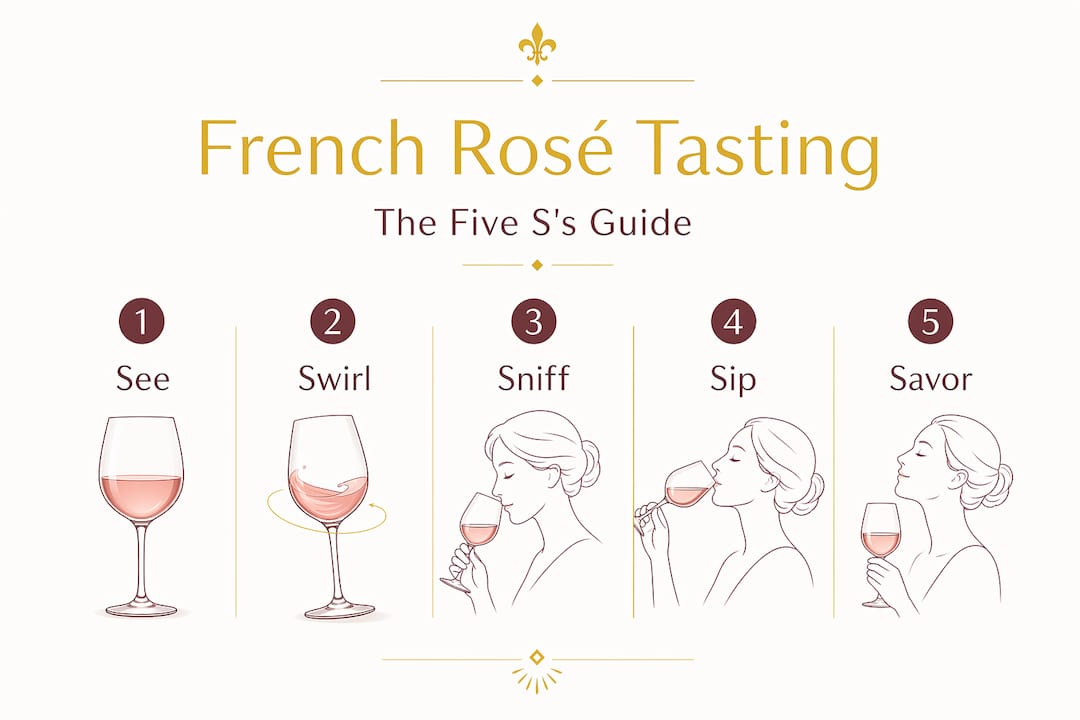
The five S’s tasting method gives you a repeatable structure that works for every bottle, every region, every style. Here is how to apply it specifically to French rosé.
-
See. Hold the glass against a white background and tilt it slightly away from you. Examine the colour for five seconds. Pale salmon suggests Cinsault dominance and a delicate style. Deeper copper or onion-skin tones indicate Grenache or Mourvèdre. Clarity matters too. A vibrant, clear wine signals careful winemaking. Haze can indicate either filtering choices or a fault.
-
Swirl. Swirl the glass gently for about ten seconds using a circular motion on a flat surface. This releases volatile aromatic compounds and draws oxygen into the wine. Do not grip the bowl with your palm. Heat from your hand will distort the aromas before you have even smelled them.
-
Smell. This is where many tasters go wrong. Short, gentle sniffs are far more effective than plunging your nose deep into the glass. Hold the glass a centimetre from your nostril and take three or four quick inhales. You are identifying primary aromas: fresh strawberry, citrus zest, white peach, dried herbs, or crushed stone. Pause for ten seconds and return for a second round of sniffs. On the second pass, you will often detect secondary layers including cream, floral notes, or a faint salinity that was invisible at first.
-
Swirl again, then re-smell. This step separates average tasters from attentive ones. Re-swirling after the first sniff warms the wine slightly and unlocks new aromatic layers. What started as a simple strawberry note often reveals citrus blossom or stone-fruit depth on this second pass. Give the glass another fifteen-second swirl and return to step three.
-
Sip. Take a small sip and let the wine coat your entire mouth before swallowing. Notice the acidity first. Does it make you salivate at the sides of your tongue? That sharpness indicates freshness and food-friendliness. Assess the texture next. Is it lean and crisp, or does it feel round and slightly creamy? Note any tannin grip at the back of the palate, which is most present in Bandol rosé.
-
Savour. The finish is the measure of quality. Count how many seconds the flavour persists after you swallow. A short finish of three to five seconds is common in entry-level rosé. A quality French rosé from a good terroir will hold flavour for ten seconds or more, often evolving from fruit to herb to mineral across that time. Do not rush this step. Patience here is the whole point.
Pro Tip: Before your tasting session, eat a small piece of plain white bread or a water cracker. This cleanses the palate of residual flavours and gives you a neutral baseline to work from.
French rosé regions: styles and how to compare them
Tasting by appellation is one of the most effective ways to break out of generic rosé thinking. Here is what to expect from the main regions.
Provence is the heartland of French rosé and sets the benchmark for measured acidity and crisp, layered freshness. Côtes de Provence produces the classic pale, delicate style, with notes of grapefruit, white peach, and crushed herbs. Coteaux d’Aix-en-Provence tends toward a slightly rounder texture. Bandol is the outlier: Mourvèdre-dominant, deeper in colour, more savoury and structured, with a distinctive phenolic grip on the finish.

Rhône Valley rosés, particularly from Tavel, lean fuller-bodied with more red fruit, higher alcohol, and a richer mouthfeel. Tavel is the only French appellation producing exclusively rosé, which gives it a singular focus and consistent identity.
Roussillon offers tremendous variety. The region’s warm, dry climate produces rosés with generous fruit and good concentration. This is also where you find some of the most interesting experimental blends, including varieties like Carignan and Grenache Gris.
Loire Valley produces some of the most underrated rosés in France. Rosé d’Anjou is slightly off-dry and aromatic. Rosé de Loire is drier and more mineral-driven. Both are worth including in a comparative tasting.
When tasting side by side, start with the lightest and most delicate style and move to the fullest. Begin with a Côtes de Provence, progress to a Languedoc example, and finish with a Bandol. This sequence lets each wine speak clearly without your palate being overwhelmed by weight early on. You can explore different rosé styles to build a well-rounded comparison set before you sit down to taste.
Avoiding common tasting mistakes
Even experienced drinkers make these errors when approaching French rosé. Recognising them early saves you from drawing false conclusions about what is in your glass.
-
Serving temperature mistakes. Pulling a bottle straight from a domestic fridge and pouring immediately is a common shortcut that costs you complexity. Most domestic fridges run at 4 to 6°C. Let the bottle sit at room temperature for eight to ten minutes before pouring lighter styles, and up to fifteen minutes for fuller ones.
-
Smelling too aggressively. Burying your nose in the glass causes olfactory fatigue within seconds, triggered by the alcohol concentration directly above the wine surface. Short sniffs from above the rim deliver far more detail.
-
Rushing the finish. Swallowing quickly and moving on is the single biggest missed opportunity in rosé tasting. The finish tells you most about quality, balance, and whether the wine genuinely reflects its terroir.
-
Judging against white wine or red wine expectations. French rosé is its own category with its own logic. Expecting it to behave like a light red or a heavy white produces confusion. Approach it on its own terms.
-
Ignoring palate fatigue. If you are tasting more than four or five wines in a session, cleanse your palate with water and plain bread between each wine. After six glasses without a break, your ability to detect subtle differences drops significantly.
Pro Tip: Keep a simple tasting notebook. Write three words for each wine: one aroma, one texture, one finish note. Over time, this builds a personal vocabulary far more useful than generic descriptions copied from a label.
Reading what’s in your glass
Once you have moved through the five S’s, the final skill is interpreting what you found. Describe using finish-driven vocabulary rather than forcing a generic note list. Instead of “fruity”, ask yourself: is the fruit fresh and citrus-edged, or does it lean toward riper stone-fruit? Instead of “dry”, ask: does the dryness feel crisp and mineral, or lean and slightly austere?
Quality indicators to look for in French rosé:
- Aromatic complexity: More than two distinct aroma groups (fruit, floral, herb, mineral) suggests a wine made from well-grown fruit in a quality terroir.
- Acidity and freshness: Bright acidity that balances the fruit without overwhelming it is the signature of great Provençal rosé.
- Finish length: Ten seconds or more of evolving flavour after the swallow indicates genuine quality.
- Typicity: How well a wine matches its regional expectations is a key quality marker used by professional panels. A Bandol that tastes like a generic pale rosé has lost its identity, regardless of how pleasant it might be.
Understanding what to pair with rosé also deepens your tasting experience. Provençal rosé alongside grilled fish or charcuterie is not just a food-pairing suggestion. Tasting the wine with and without food shows you how acidity and texture function dynamically, which sharpens your sensory reading of both.
My honest take on tasting French rosé
I spent years approaching rosé the way most people do. Pour it cold, drink it in the sun, and leave the analysis to more serious wines. The moment that changed things was sitting down with five Provence rosés from different appellations lined up in a row.
The differences were not subtle. The Bandol had weight, grip, and a savoury finish that lingered for twenty seconds. The Côtes de Provence next to it was pale, delicate, and mineral-driven in a completely different register. Neither was better. Both were expressions of place, grape, and craft that deserved attention.
What I have learned since is that the method matters less than the curiosity behind it. The five S’s work because they slow you down long enough to actually notice what is there. Most of us drink. Very few of us taste. And the gap between those two experiences is where all the pleasure lives.
My recommendation is to start with just two bottles from different regions side by side. You do not need a formal tasting setup. You need twenty minutes, decent glasses, and genuine attention. The vocabulary will come. The preferences will sharpen. And rosé will never feel like a compromise choice again.
— Moritz
Discover French rosé at Resfortes
Resfortes produces its award-winning rosé in the Côtes du Roussillon, at the foot of the Pyrenees, where the rugged terroir and minimal-intervention approach create a wine that repays exactly the kind of careful attention this guide describes. Pale, citrus-laced, and built on the bright acidity that defines great southern French rosé, it is a genuinely satisfying bottle for both casual enjoyment and focused tasting practice. Browse the full wine range to find bottles suited to your next tasting session, from the Resfortes Rosé to structured reds worth exploring alongside it. Resfortes also offers curated mixed cases and free UK and France shipping on three bottles or more. For trade buyers, the professional trade platform gives direct access to the range. Learn more about the vineyard sustainability principles that underpin every bottle.
FAQ
What is the best temperature to serve French rosé?
Serve most French rosé between 10 and 13°C. Lighter Provençal styles show best at the cooler end, while fuller wines like Bandol benefit from slightly warmer service around 12 to 13°C.
How do I avoid olfactory fatigue when tasting rosé?
Take short, gentle sniffs from just above the glass rim rather than burying your nose inside it. Pause between wines, drink water, and eat a plain cracker to reset your palate between samples.
What flavours should I expect in French rosé?
French rosé typically shows red fruits such as strawberry and raspberry, citrus zest, white peach, dried herbs, and mineral notes. Provence rosé specifically is known for crisp acidity and layered freshness rather than sweetness.
How do I tell if a French rosé is good quality?
Look for aromatic complexity across more than two scent groups, bright acidity that balances the fruit, and a finish that persists for ten seconds or more. Typicity, how accurately a wine reflects its region, is also a strong quality indicator.
What is the best way to compare French rosé styles?
Line up bottles from different regions and taste from lightest to fullest. Start with a Côtes de Provence, then move to a Languedoc example, and finish with a Bandol. This sequence gives your palate room to detect the contrast in weight, acidity, and finish without early fatigue.