

Six wine tasting tips to sharpen your palate fast
Six habits separate a confident taster from someone who just sips and shrugs: use the five S’s (see, swirl, sniff, sip, savour), serve at the right temperature, pour a third of a glass, taste light to heavy, write three short notes per wine, and limit yourself to a small number of wines per sitting. The WSET systematic approach formalises this exact sequence, and it works whether you’re sampling a crisp Rosé on the terrace or something bolder from the foothills of the Pyrenees. Approachable bottles from Resfortes make good practice wine precisely because their character is clear and honest, nothing hiding behind heavy oak or over-extraction. If you want to taste an older vintage without committing to a full bottle, a preservation tool like Coravin lets you pour a glass and leave the rest intact for weeks.
Pro Tip: The two mistakes that ruin most first tastings are serving wine too warm or too cold, and pouring too generously. Fill the glass no more than a third full and let reds sit ten minutes out of a cool room before drinking.
Key Takeaways
Consistent wine tasting improves fastest when you follow the five S’s, control temperature, and keep short written notes after every glass.
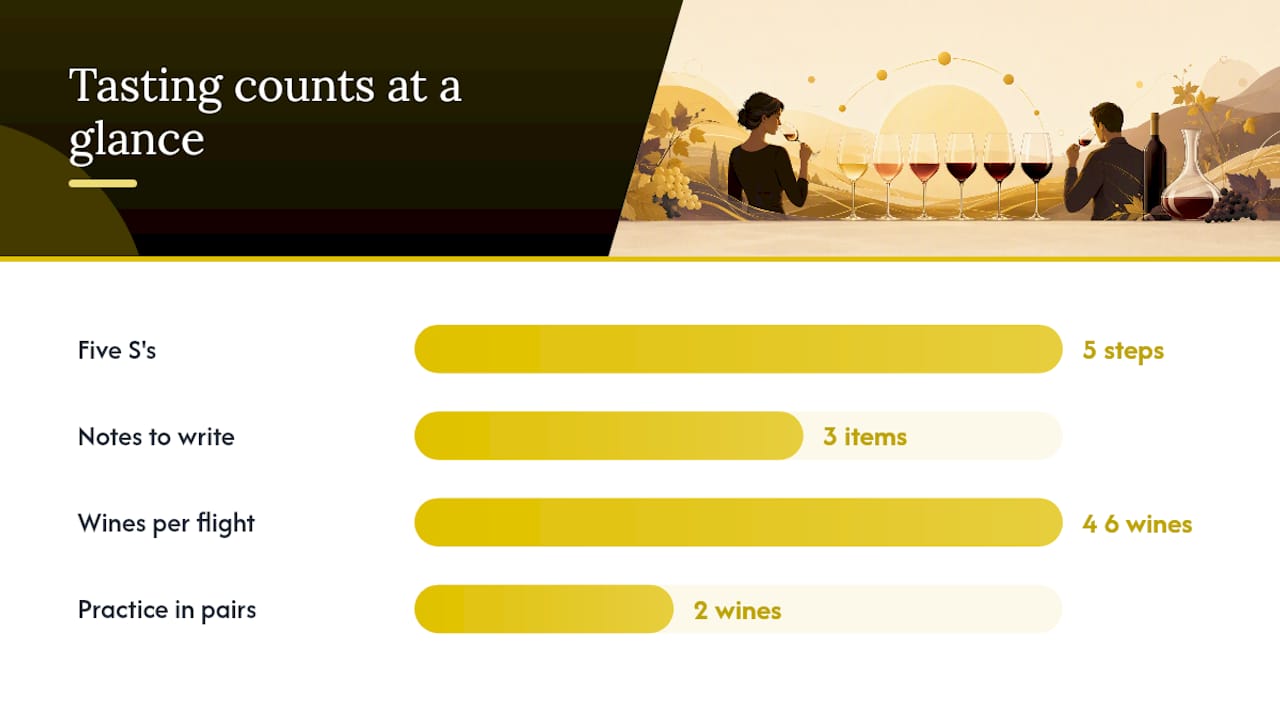
| Point | Details |
|---|---|
| Use the five S’s | See, swirl, sniff, sip, savour, in that order, every time you taste. |
| Fix your temperature | Serve reds around their ideal temperature, and whites at 8–13°C depending on style. |
| Limit your flight | Taste no more than four to six wines per sitting to avoid palate fatigue. |
| Write three notes | Record appearance, aroma, and palate in a few words, plus a verdict. |
| Practise in pairs | Compare two wines with one variable changed to learn faster than tasting alone. |
Wine tasting tips: the five-step process explained
The fastest, most reliable way to evaluate any glass is the five-step sequence sommeliers use: see, swirl, sniff, sip, savour. The whole routine takes about a minute once you’re used to it, and each step answers a different question about the wine in front of you.
See. Tilt the glass at 45 degrees against a white background and look at the rim. Pale, watery edges suggest a lighter wine or younger age; deep, opaque colour to the rim often signals more concentration or youth in a red. Clarity should be bright, not hazy. This single glance tells you roughly what you’re about to taste before it touches your lips.
Swirl. Keep the glass on the table and rotate the base rather than lifting it, unless you trust your wrist. Swirling increases the surface area of the wine, which pushes volatile aroma compounds into the air above the glass. You’ll see “legs” (or “tears”) streak down the inside afterwards. They indicate alcohol and sugar content, not quality, so don’t read too much into a wine with dramatic legs.
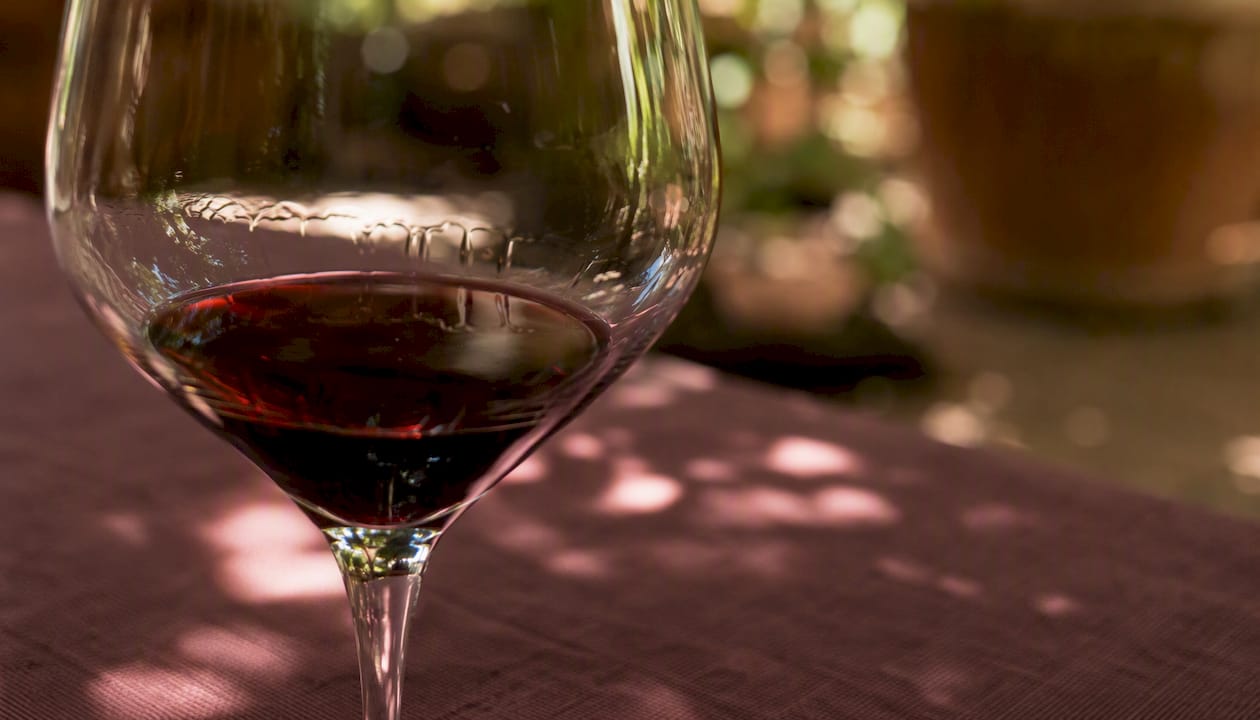
Smell. Take two or three short sniffs rather than one long inhale. Your olfactory system adapts within seconds, so brief pauses between sniffs actually pick up more. Aromas fall into three families: primary (fruit, flowers, straight from the grape), secondary (from fermentation, think yeast or butter), and tertiary (from age, like leather or dried fig). Useful descriptors to prime your nose: blackcurrant, cherry, citrus peel, wet stone, vanilla, toast, forest floor, honey.
Sip. Draw a small amount of air across the wine in your mouth. This retronasal trick pushes aroma up into your nasal cavity and doubles what you can perceive. Notice sweetness on the tip of the tongue, acidity as a mouth-watering tingle on the sides, tannin as a drying grip on your gums, and alcohol as warmth in the throat. Together these build the wine’s body and structure.
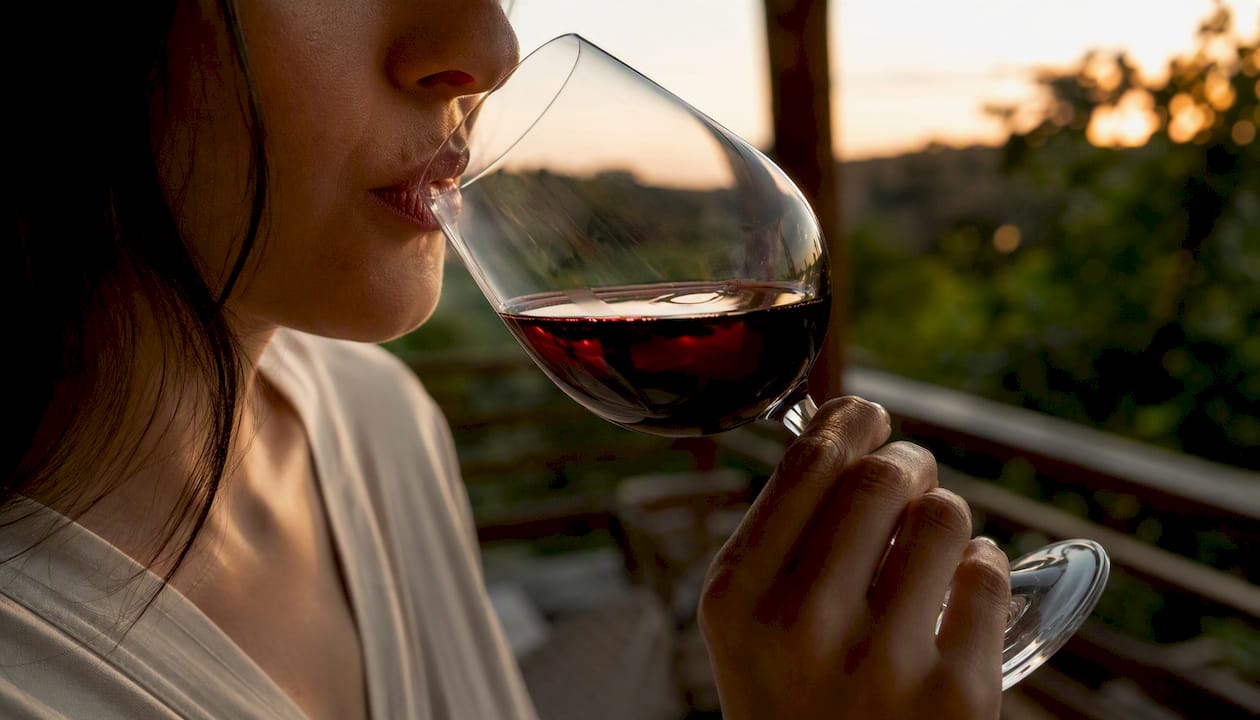
Savour. Swallow or spit, then count how long the flavour lingers. A short finish fades within a few seconds; a long, complex one can hold for over a minute, shifting character as it goes. Length and balance are two of the clearest signals of quality a beginner can learn to trust.
How do you prepare for a wine tasting?
Three things make or break a home tasting: neutral glassware, correct serving temperature, and a room that doesn’t smell of anything but the wine. Get those right and you’re most of the way to a useful session.
Before you pour, gather a small kit:
- Tulip-shaped glasses, rinsed and odour-free
- Still water and plain crackers or bread to reset your palate
- A spittoon or bowl if you’re tasting more than two or three wines
- A note sheet, spreadsheet, or app open and ready
Temperature is the variable most home tasters get wrong, and it’s also the one that matters most:
Pour to about a third full. That headspace gives you room to swirl without spilling and lets aromas concentrate above the wine rather than escaping flat across a full glass.
Pro Tip: If a red has come straight from a cool cellar, ten minutes at room temperature does the job. If a white is fridge cold, warm the glass gently in your hands rather than leaving the bottle out, so you don’t overshoot. Rinsing glasses and skipping the scented candles genuinely changes what you can smell.
What should you do at a wine tasting?
Three rules cover most of what trips up beginners. Taste from light to heavy so a bold red doesn’t flatten your palate before the delicate white gets a fair hearing. Limit yourself to four to six wines per sitting, since palate fatigue sets in fast and a seventh glass rarely tells you anything new. Cover the labels if you’re practising blind tasting, because knowing the price or region beforehand quietly biases what you expect to taste.
Two myths are worth dropping straight away. Prominent legs don’t mean a better wine, just higher alcohol or sugar. And older isn’t automatically superior. Plenty of wines are built to be enjoyed young, and an aged bottle past its peak tastes tired rather than special.
At a group tasting, line wines up in a flight and taste them in the same order each time so comparisons stay fair. Spit if you’re working through more than three or four wines, especially at an organised tasting event, since alcohol dulls your senses within twenty minutes. Between wines, a sip of water and a plain cracker resets your palate. Strong perfume, spicy food, and cigarettes in the room will interfere with everyone’s sense of smell, not just your own.
How do you write useful wine tasting notes?
Keep your notes to the WSET-style structure of appearance, nose, palate, and conclusion, but resist the urge to write an essay. Three short observations per wine plus one summary line is enough to build real recognition over time.
A simple tasting-sheet template covers:
- Wine name and date
- Appearance (colour, clarity, one word)
- Three aroma notes
- Three palate notes (sweetness, acidity, tannin or body)
- Finish length (short, medium, long)
- Verdict or score out of 5
For keeping records over months, an app like CellarTracker works well, or a plain spreadsheet if you prefer full control over the columns. BBC Good Food’s guidance makes the same point: consistency matters more than complexity.
Pro Tip: Follow the two-bottle rule when you’re learning: buy one bottle to drink now and a second, similar wine to age a year or two. Tasting the pair side by side later teaches you more about development than any tasting note ever will.
What do common wine tasting terms actually mean?
Keep this list handy while tasting or reading someone else’s notes.
- Tannin: the drying, gripping sensation on your gums, mostly from grape skins and oak.
- Acidity: the tartness that makes your mouth water, giving a wine freshness.
- Body: how light or heavy the wine feels in the mouth, often linked to alcohol and extract.
- Finish/length: how long flavour lingers after swallowing.
- Bouquet: the complex aromas that develop with age, as opposed to fresh fruit smells.
- Terroir: the combination of soil, climate, and site that shapes a wine’s character.
- Legs: the streaks on the glass after swirling, indicating alcohol and sugar.
- Oxidised: a fault where a wine tastes flat and sherry-like from too much air exposure.
- Cork taint: a musty, wet-cardboard fault from a compound called TCA.
- Reductive: a fault smelling of struck match or boiled egg from too little oxygen.
- Primary, secondary, tertiary aromas: smells from the grape, from fermentation, and from age, respectively.
How can you practise wine tasting at home?
Three small exercises done over two weeks will move you further than a single big tasting session ever could.
- Single-varietal comparison. Buy two Sauvignon Blancs from different regions and taste them side by side, noting how climate shifts the fruit character.
- Temperature test. Taste the same red at fridge temperature, then again ten minutes later at room temperature, and write down what changes.
- Blind pairing. Cover two labels, one oaked and one unoaked Chardonnay, and guess which is which before checking.
Widely available bottles that illustrate style differences well include a light Pinot Noir, an approachable Grenache-led red such as The Brave, or a citrus-driven white blend. Spend ten to fifteen minutes per session, keep your notes, and repeat each exercise across different weeks so the differences settle into memory rather than staying a one-off impression.
Pro Tip: Run a two-glass comparative flight at home by changing only one variable at a time, region, vintage, or oak treatment, and describe the difference in a single sentence before moving on. If you’re tasting alongside food, pairing basics add another useful layer to compare.
A brief note from Moritz
Curiosity beats perfection every time you pull a cork. Nobody nails tannin recognition on their first glass, and that’s fine. Resfortes exists partly so beginners have something honest and well made to practise on, not something to feel intimidated by.
Sources
- How to Taste Wine Like a Sommelier: 5 Steps | Sommo
- Wine tasting techniques for beginners and experts - Winemaker’s Friend
- How to Taste Wine So It Actually Makes Sense — The Modern Wine Edit
FAQ
What are the five S’s for wine tasting?
See, swirl, sniff, sip, and savour, the sequence sommeliers use to assess appearance, aroma, structure, and finish in roughly a minute.
What is the 20 minute wine rule?
It refers to letting a wine sit and breathe, or chilling/warming to the correct temperature, for about 20 minutes before tasting so it shows its true character rather than being served straight from storage.
What are you supposed to do at a wine tasting?
Taste from light to heavy, limit yourself to four to six wines, take short notes on each, and use a spittoon if you’re working through several glasses.
What is the 75-85-95 rule for wine?
Definitions vary and there’s no single agreed standard for this rule; treat any percentage-based scoring you encounter as one taster’s personal shorthand rather than an industry benchmark.