
Southern French wine is one of the most misunderstood categories in the world of wine. Ask most people what is southern French wine and they will picture a simple, sun-drenched rosé or a straightforward fruity red. The reality is far more layered. From the vast vineyards of Languedoc-Roussillon to the celebrated appellations of the Southern Rhône and Provence, this region produces an extraordinary spectrum of styles, grape varieties, and quality levels that rival anything France has to offer.
Key takeaways
| Point | Details |
|---|---|
| Vast regional diversity | Southern France spans several major wine regions, each with distinct climates, soils, and grape varieties. |
| GSM is the signature red blend | Grenache, Syrah, and Mourvèdre form the backbone of most great southern French reds, offering fruit, structure, and ageing potential. |
| Appellation tiers signal quality | AOC and IGP designations, with tiered systems in Languedoc and the Southern Rhône, tell you a great deal about yield control and winemaking standards. |
| Terroir includes human practice | Southern French terroir is not just soil and climate. It formally includes the human traditions and techniques that shape each wine’s character. |
| Rosé is more than a summer drink | Provence rosé is evolving into a serious gastronomic category, crafted with the same care as premium reds and whites. |
What is southern French wine, and where does it come from?
Southern France is not one wine region. It is a collection of distinct territories, each shaped by geography, local culture, and centuries of viticulture. The four principal zones are Languedoc-Roussillon, the Southern Rhône, Provence, and South West France. Each produces wines with a recognisable character, yet no two are interchangeable.
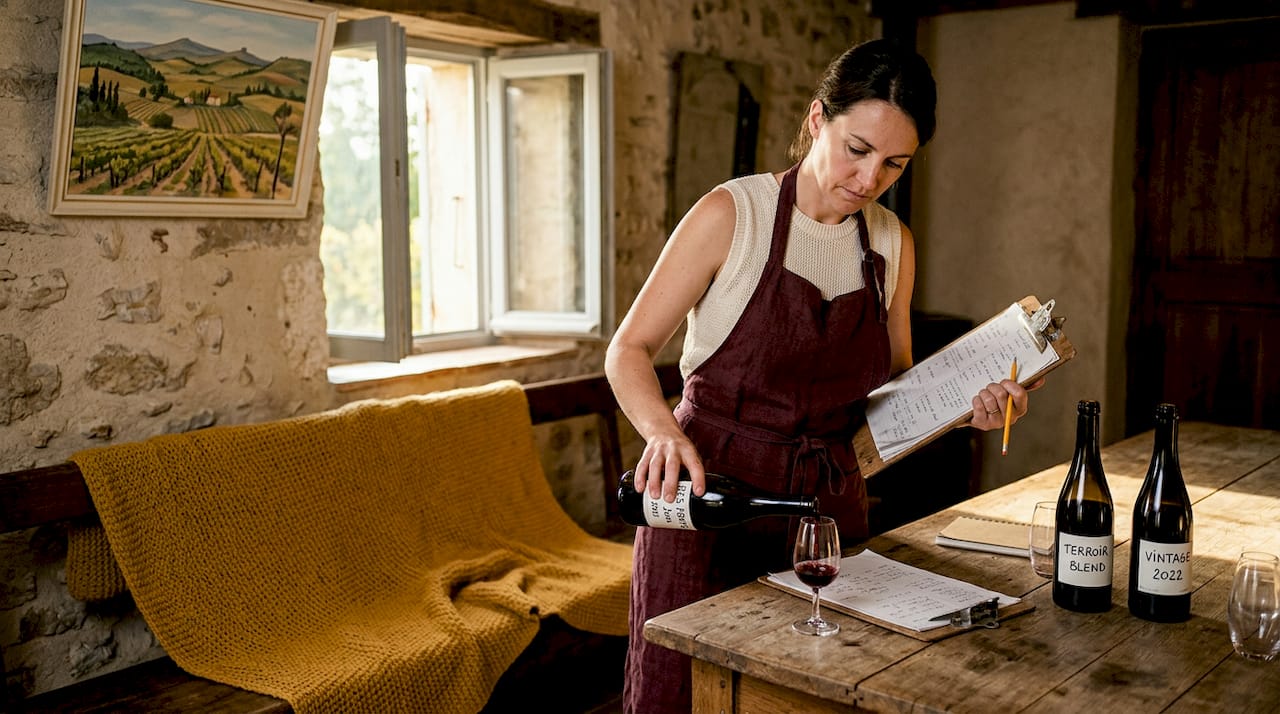
The climate across the south is predominantly Mediterranean: long, hot summers, dry autumns, and mild winters. But it is not a uniform heat. The Mistral wind, which funnels down the Rhône Valley with considerable force, reduces disease pressure and moderates summer temperatures, influencing how grapes ripen and ultimately how wines taste. Without the Mistral, the Southern Rhône would produce heavier, more oxidative styles than it does today.
The scale of production here is staggering. Languedoc-Roussillon alone covers between 230,000 and 300,000 hectares of vineyard and accounts for over a third of all French wine production. To put that in perspective, the entire Bordeaux region covers roughly 110,000 hectares. This is not a niche corner of France. It is the engine room of French wine.
| Region | Key characteristic | Main styles |
|---|---|---|
| Languedoc-Roussillon | Largest wine region in France | Red, white, rosé, fortified |
| Southern Rhône | Grenache-dominant blends, Mistral influence | Red, white, rosé |
| Provence | Pale rosé capital of the world | Rosé, white, red |
| South West France | Atlantic influence, indigenous varieties | Red, white, sweet |
Understanding French wine regions properly means accepting that the south is not a single flavour profile. It is a mosaic.
The grapes behind southern French wine
If there is one thing that separates serious southern French wine from the rest, it is the grape varieties. The south grows both indigenous and internationally recognised varieties, often blended together in ways that took centuries of trial and error to perfect.
Red grapes of the south:
- Grenache is the most widely planted red variety. It gives ripe red fruit, warmth, and roundness but benefits from blending to add structure.
- Syrah contributes dark fruit, pepper, and firm tannins. It is the backbone of structure in most GSM blends.
- Mourvèdre ripens late and needs heat to fully express itself. It adds density, savoury notes, and extraordinary ageing potential.
- Carignan was long dismissed as a bulk grape. Old-vine Carignan from Languedoc, however, yields intensely mineral wines with real depth and complexity.
- Cinsault is lighter in body and colour, often used in rosé production for its freshness and floral character.
White and rosé grapes:
- Piquepoul Blanc produces crisp, high-acid whites ideal for seafood.
- Clairette and Bourboulenc add weight and texture to white blends.
- Roussanne and Marsanne, more associated with the Northern Rhône, appear in the south as well, producing rich, complex whites that age beautifully.
The GSM blend of Grenache, Syrah, and Mourvèdre has become so well-regarded globally that it is now replicated in warm-climate wine regions from Australia to California. Its success lies in the way each grape compensates for the others’ weaknesses: Grenache provides approachable fruit and alcohol, Syrah gives structure and spice, and Mourvèdre brings ageing complexity. After five to ten years in bottle, Mourvèdre develops tertiary notes of leather and forest floor that transform the wine entirely.
One aromatic element unique to the south is garrigue: the wild herb scrubland of rosemary, thyme, and lavender that covers the hillsides between vineyards. The garrigue aromatics measurably influence the sensory profile of Southern Rhône wines, appearing as a herbal, earthy undertone that no northern French wine can replicate.
Pro Tip: When tasting a southern French red, take a moment before swirling. The first nose, undisturbed, often reveals the garrigue character most clearly. It fades quickly with aeration as the fruit opens up.
How the appellation system works here
France’s appellation system can seem opaque, but it is worth understanding because it directly affects what you are buying. The two core designations are AOC (Appellation d’Origine Contrôlée) and IGP (Indication Géographique Protégée). AOC wines face the strictest regulations on grape varieties, yields, and winemaking methods. IGP wines allow more flexibility, which is why some of France’s most creative producers choose this category deliberately.
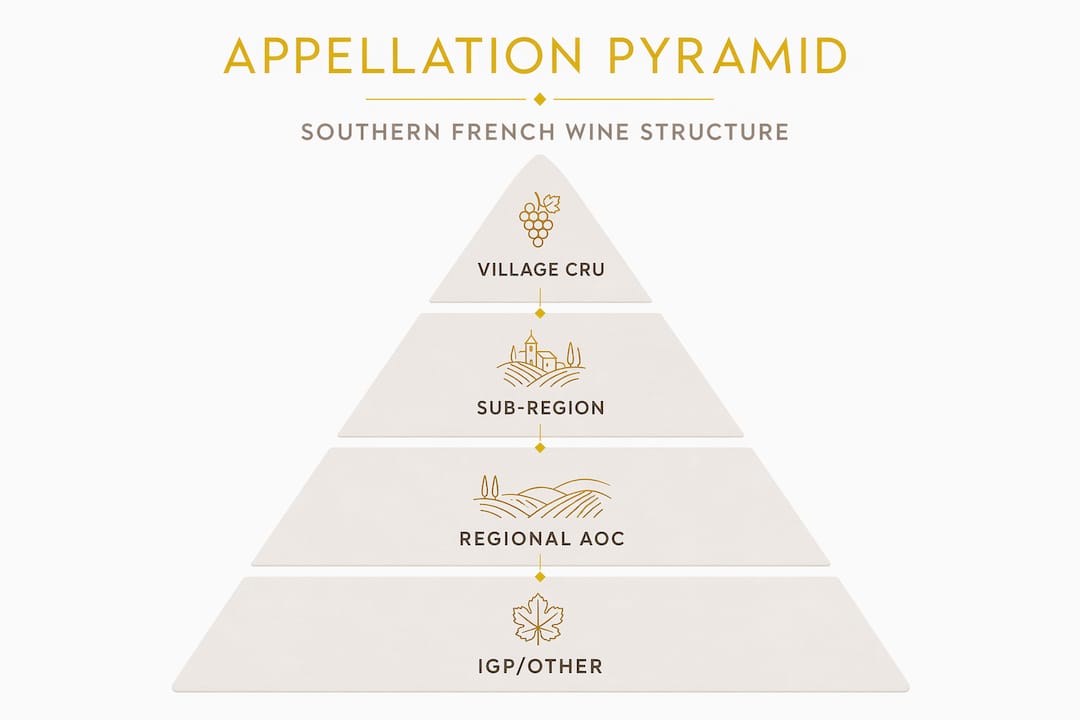
Languedoc operates on a three-tier pyramid. At the base sits the broad regional AOC, covering the entire Languedoc area. Above that are the Grands Vins du Languedoc, covering specific sub-zones. At the top sit the crus: named appellations like Pic Saint-Loup, Faugères, and Saint-Chinian. At this top tier, maximum yields are capped at 45 hl/ha and wines must pass sensory testing before release. That is not a rubber-stamp process. Panels actually reject wines that do not meet the aromatic and structural standards for the appellation.
The Southern Rhône operates similarly. The base level, Côtes du Rhône, covers broad production across the region. Above that, Côtes du Rhône Villages applies tighter rules for specific communes. At the pinnacle sit the prestigious crus including Châteauneuf-du-Pape, Gigondas, and Vacqueyras, each with specific yield limits and minimum alcohol requirements. The Southern Rhône as a whole produces around 3.3 million hectolitres annually, with a mandated minimum of 11% ABV across the classification.
| Appellation level | Example (Languedoc) | Example (Southern Rhône) | Key control |
|---|---|---|---|
| Regional | Languedoc AOC | Côtes du Rhône | Broad rules, larger yields |
| Villages/sub-zone | Grands Vins du Languedoc | Côtes du Rhône Villages | Tighter grape and yield rules |
| Cru | Pic Saint-Loup, Faugères | Châteauneuf-du-Pape | Strictest yields, sensory panel |
The differences between Languedoc and Roussillon are particularly worth understanding if you are choosing between bottles. Roussillon sits closer to the Spanish border, experiences a more arid climate, and has its own AOC structures with a distinct identity.
Pro Tip: When you see a specific village or cru name on a southern French label rather than just a regional appellation, you are almost always looking at a wine with stricter yield control and more individual character. The more specific the geography, the more the wine tells you about its exact place of origin.
Terroir and cultural identity in the south
The word terroir gets used loosely in wine conversation. But the INAO, France’s official wine authority, defines it with precision. Terroir formally encompasses a geographic space, a human community, and the physical and biological environment working together. Human practice is not a footnote. It is a core component.
In southern France, this definition comes alive in ways that are hard to find elsewhere. Generations of growers in the Languedoc have trained vines using the gobelet (bush vine) method, a low, free-standing form that shades the grape clusters from excessive sun and forces roots deep into poor, rocky soils. These practices are not arbitrary. They evolved over centuries as the most effective response to a hot, dry climate, and they leave a measurable imprint on the wine’s texture and mineral quality.
“Wine is never just the product of a place. It is the product of a people learning, over centuries, how to express that place in a glass.”
The garrigue is another dimension of this cultural identity. The wild herb scrubland does not just perfume the air around vineyards. Its root systems interact with vine roots in complex ways, and local winemakers have long understood that vineyards surrounded by garrigue produce wines with more aromatic complexity than those planted in monoculture. This is what is southern French terroir at its most tangible.
Provence rosé deserves particular attention here. For years, consumers treated it as a simple, seasonal drink. That perception is shifting. Provence rosé is now crafted with premium techniques including cold maceration, whole-cluster pressing, and extended lees ageing, producing wines with genuine gastronomic ambition. If you have not revisited Provence rosé recently with food, you are likely working from an outdated impression.
How to taste and select southern French wines
Knowing the theory is one thing. Choosing well at a wine shop or restaurant requires a different kind of knowledge. Here is a practical framework for approaching southern French wine with confidence.
- Start with the label geography. A cru-level appellation tells you the wine faced stricter production rules. A regional AOC is a broader proposition. Neither is wrong, but they serve different purposes and price points.
- Look for grape variety clues. IGP wines from the Languedoc often name the grape on the label, which is unusual in French wine culture. A bottle labelled Pays d’Oc Grenache tells you exactly what you are getting. An AOC bottle from Pic Saint-Loup will not name the grape but will follow strict blending rules.
- Match the style to the food. Southern French reds, particularly Grenache-led blends, pair naturally with lamb, game, and dishes flavoured with herbs. White wines from Roussanne and Marsanne hold up well to richer fish, poultry, and hard cheeses. For food and wine matching ideas, the wine pairing recipes at Resfortes offer practical inspiration built around these regional styles.
- Do not overlook the whites. Most wine drinkers associate the south with reds and rosé. The region’s whites, particularly old-vine blends from Roussillon and Rhône whites from Roussanne and Clairette, are genuinely undervalued and often outstanding value.
- Give aged wines a chance. A five-year-old GSM from a serious Languedoc producer can deliver complexity that rivals wines twice the price from more fashionable regions. The ageing potential of Mourvèdre-heavy blends in particular is frequently underestimated.
Pro Tip: If you are new to the region, explore premium rosé from Provence and a Grenache-led red from the Southern Rhône side by side. The contrast in weight, texture, and aromatics will give you an instant sense of the south’s stylistic range.
My honest take on southern French wine
I have tasted wines from dozens of producers across the Languedoc and the Roussillon, and the thing that strikes me every time is how often this region is still treated as the cheap alternative rather than the genuine article. That is a mistake rooted in history, not in quality.
What I have come to understand is that the human element in southern French winemaking is where the real story lives. The soil maps and climate data are interesting, but when you sit with a grower in Côtes du Roussillon who has farmed the same hillside for forty years, you realise that human practice shapes wine character in ways that no amount of analysis fully captures. The choices made in the vineyard, the decision to keep old vines instead of replanting, the refusal to chase yield at the expense of concentration, these are what separate memorable bottles from forgettable ones.
My strong view is that the best value in French wine right now sits in the top-tier appellations of the Languedoc and in the smaller producers of the Southern Rhône. Not the famous names. The boutique wineries operating with low yields, genuine convictions, and no need to market to the masses. Those are the bottles worth seeking out.
And please, go beyond rosé as a summer reflex. The south makes serious wine in every colour. Give it the attention it deserves.
— Moritz
Explore southern French wine with Resfortes
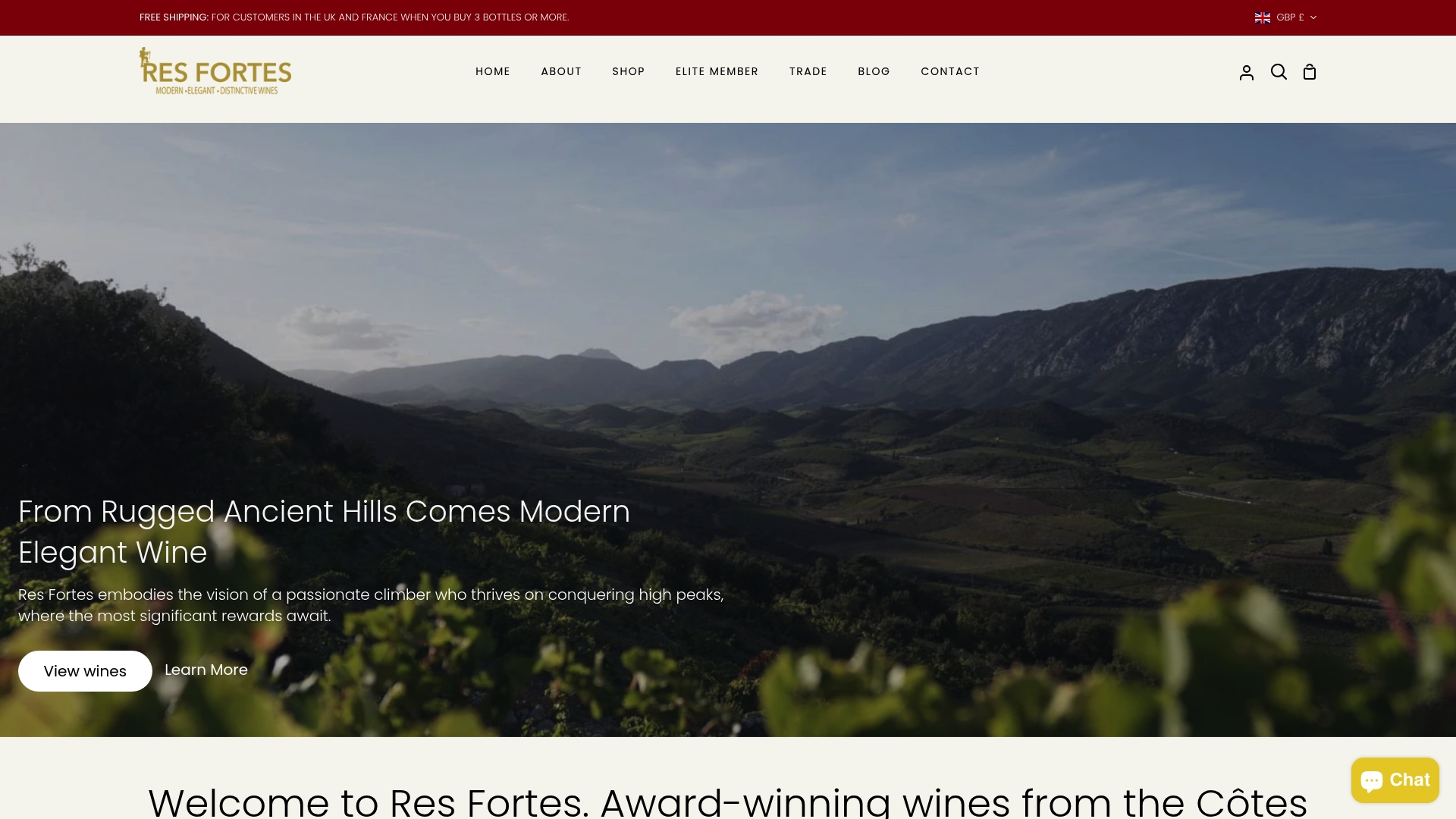
Resfortes brings exactly this kind of conviction to its wines. Crafted in the Côtes du Roussillon at the foothills of the Pyrenees, the range reflects what the south does best: old-vine Grenache with genuine depth, precise Syrah with real terroir character, and whites built for the table rather than the shelf. Whether you are starting your exploration or looking for a new favourite, the full Resfortes wine selection covers styles from the flagship The Brave to the citrus-laced Rosé. For those drawn to the region’s exceptional reds, the award-winning French reds collection is an ideal starting point. Free shipping is available in the UK and France on three bottles or more.
FAQ
What grapes are used in southern French wine?
The most common types of southern French grapes are Grenache, Syrah, and Mourvèdre for reds, plus Piquepoul Blanc, Clairette, Roussanne, and Marsanne for whites. Carignan and Cinsault also feature widely, particularly in Languedoc blends and rosé production.
What is southern French terroir?
Southern French terroir refers to the combination of geography, climate, soil, and human winemaking tradition that shapes each wine’s character. The INAO formally includes human practice in its definition, meaning local cultivation techniques and cultural knowledge are considered as fundamental as the physical environment.
How do I read a southern French wine label?
A named cru appellation such as Pic Saint-Loup or Châteauneuf-du-Pape signals stricter yield controls and higher quality standards. Regional AOC labels like Côtes du Rhône cover broader production with more flexibility. IGP wines from the Pays d’Oc often name the grape variety directly on the label, which is unusual for French wine.
What food pairs well with southern French red wines?
Southern French reds, especially Grenache-led GSM blends, pair well with lamb, game, grilled meats, and herb-seasoned dishes. The garrigue aromatics in many of these wines echo the flavours of rosemary and thyme, making them naturally complementary to Mediterranean-style cooking.
Is Provence rosé a serious wine?
Yes. Provence rosé has evolved well beyond its reputation as a casual summer drink. Modern producers use cold maceration, whole-cluster pressing, and lees ageing to craft wines with genuine gastronomic ambition, real texture, and the ability to complement serious food rather than simply refresh on a hot day.