

Rosé Food Pairing: 3 Bottle Test, Visual Cues and Cheat Sheet
Rosé is a bridge wine. Match the bottle’s style, pale and dry, medium, full bodied, sparkling or off dry, to the weight and acidity of your dish, and the pairing looks after itself. As a quick shortlist: pale, bone dry rosé wants shellfish or a sharp salad; a fuller, fruit driven rosé sits beautifully alongside grilled salmon or charcuterie; sparkling rosé exists for fried chicken and salty snacks.
TL;DR:
- Pale, bone dry rosés are best paired with seafood like oysters or light fish dishes, while fuller rosés suit grilled meats and hearty Mediterranean meals.
- Sparkling rosé effectively cuts through fat in fried foods and salty snacks, making it ideal for hot, greasy dishes and shellfish.
- Off dry rosés excel with spicy dishes such as Thai curry or chili tacos, as residual sugar tempers heat and acidity refreshes the palate.
- The wine’s acidity balances rich cheeses like goat’s cheese and feta, while its fruit notes complement berries and stone fruits in desserts.
- Reading the rosé’s color, dryness, acidity, and aroma helps guide food pairing choices, with temperature control crucial for optimal taste and pairing accuracy.
How to read a rosé’s style before you pour
Every rosé tells you what to serve with it before you even taste it, if you know where to look. Colour is the fastest clue. Pale, onion skin rosé has usually spent little time on its skins and tends toward a lean, citrus driven profile built for delicate food. Deeper pink or salmon tones point to longer skin contact, more body, and enough structure to sit next to something with real weight on the plate.
Dryness matters just as much as colour, though it is harder to judge by eye. Most rosé from southern France and Spain is bone dry, but a small residual sugar can turn a wine from “crisp aperitif” into “the only sensible answer to a chilli dish.” Check the back label or ask before buying if you are cooking anything spicy.
Acidity is rosé’s real engine. Bright acid cuts through fat, refreshes the palate between bites, and stops rich food from feeling heavy, the same job a squeeze of lemon does on a plate of fried fish. Combine that acid with rosé’s faint red fruit character, a whisper of strawberry or redcurrant, and you get a wine that behaves like a bridge between white and red: enough brightness for seafood, enough fruit for lighter meats.
Run through this checklist with any new bottle:
- Colour: paler usually means lighter body; deeper pink usually means more structure.
- Dryness: bone dry suits savoury food; off dry suits heat and spice.
- Acidity: high acid handles fat and salt; softer acid wants gentler flavours.
- Aroma: citrus and white flower points to seafood; red berry points to charcuterie and grilled meats.
Practical pairings organised by rosé style
Rosé style dictates the dish far more than most drinkers assume, which is why treating “rosé” as one category leads to disappointing pairings. Break it down by body and you get a genuinely useful map.
- Pale, bone dry rosés (Provence style). These wines behave almost like a crisp white, so lean on the same instincts you would use for a Sauvignon Blanc. Oysters, raw or lightly cooked shellfish, grilled white fish and a classic salade niçoise all work because the wine’s high acidity mirrors the citrus and salt already on the plate.
- Medium bodied rosado (Garnacha or Tempranillo led). Spain’s rosado wines carry a touch more fruit and weight, which makes them a natural partner for tapas, tomato heavy dishes, grilled fish, and a proper charcuterie board. The fruit softens the saltiness of cured meats without fighting it.
- Fuller, fruit driven rosés (Pinot Noir or Syrah led). These wines have enough backbone for grilled salmon, richer poultry like duck, and meaty Mediterranean dishes such as lamb kofte. Deeper colour rosés, often Grenache or Mourvèdre led styles from areas like Tavel, show more structure and suit heartier grills without feeling overwhelmed.
- Off dry rosé. Reserve this style for genuinely spicy food. A little residual sugar tames capsaicin heat while the acidity still refreshes the palate between mouthfuls, which is why it is the better call than a bone dry rosé with a Thai green curry or a chilli laced taco.
Each of these matches works for the same underlying reason: acidity balances fat, fruit echoes fruit, and rosé’s near absence of tannin means it never clashes with delicate textures the way a heavier red can.
Pro Tip: If you are unsure which style you have poured, taste it alongside a plain cracker before the meal starts. A wine that feels sharp and zippy on its own is pale and dry; one that feels rounder and more generous is the fuller style, and you can plan the rest of the table accordingly.
Which cheeses and charcuterie suit rosé best?
A cheese board is one of rosé’s easiest wins, provided you lean into acidity rather than fight it. Tangy, fresh cheeses are the safest bet because the wine’s acid balances their cream, while its fruit notes soften the earthier flavours underneath.
- Goat’s cheese: the classic match, since dry rosé’s acidity plays directly against chèvre’s tang.
- Brie or another soft, mild cheese: the wine’s brightness cuts through the richness without overpowering it.
- Feta: salty and briny, a natural partner for a crisp, pale rosé.
- Mild blue cheese: works best with a slightly fuller rosé that can stand up to its funk.
- Prosciutto, salami and tinned fish: salt and fat both respond well to rosé’s acid, especially with a medium bodied style.
When building a shared board, start pale and work toward richer items as the rosé itself opens up in the glass. Pour the lightest cheese first and save salami or blue cheese for later in the tasting, so the wine’s fruit has time to show itself against bolder flavours.
When should you reach for sparkling or off dry rosé?
Two special cases deserve their own rules. Sparkling rosé is the answer whenever grease is on the menu: its bubbles and acidity cut through fat in a way still wine simply cannot match.
- Fried chicken, chips, pork pies and salty canapés: sparkling rosé refreshes after every bite instead of feeling flattened by grease.
- Oysters and other briny shellfish: the same effervescence that tackles fried food also lifts delicate seafood.
- Spicy dishes like Thai green curry or chilli forward tacos: reach for off dry rosé, since a touch of residual sugar tempers the heat while acid keeps things lively.
- Avoid ultra dry, high acid rosé with genuinely hot chillies: the capsaicin will make the wine taste sharper and less pleasant than it is.
How should you serve rosé to get the pairing right?
Temperature changes how much a rosé’s acidity and fruit come through, so serving it wrong can undo good pairing choices. Pale, bone dry styles do best around 8 to 10°C, cold enough to stay crisp but not so cold that aroma disappears. Fuller rosés open up more at 10 to 12°C, letting their fruit show properly. Sparkling rosé wants to be colder still, closer to white wine chill, to keep the bubbles lively.
- Use a standard white or rosé glass for still wines; a flute or tulip glass suits sparkling rosé.
- Pour a small taste before the food arrives, then taste again after the first bite.
- If the wine tastes flatter after eating, the dish is too rich or too acidic for that bottle; if it tastes brighter, you have a genuine match.
Pro Tip: A wine that seems slightly too acidic on its own often turns out to be the better food partner. Rosé’s edge softens once it meets fat or salt, so don’t judge a bottle purely by how it tastes solo.
A quick cheat sheet for rosé and food
Screenshot this before your next shop or dinner plan. Colour is shorthand for body: pale means delicate, medium means versatile, deep means robust enough for a grill.
- Oysters → pale, bone dry rosé
- Prawns → pale to medium rosé with citrus notes
- Grilled salmon → fuller, fruit driven rosé
- Tomato and pizza → medium bodied rosado
- Roast chicken → medium to full rosé
- Charcuterie board → medium bodied rosado
- Goat’s cheese salad → pale, bone dry rosé
- Spicy Thai curry → off dry rosé
- BBQ pork ribs → lighter, fruity rosé rather than a heavy red
- Citrus dressed salads → pale rosé
- Fried chicken → sparkling rosé
- Strawberry dessert → off dry or lightly sweet rosé
For plating inspiration that makes any of these matches look as good as they taste, a few vibrant food presentation ideas are worth a look before your next dinner.
Applying the framework: a Res Fortes example
A citrus laced Rosé is a useful test case for this framework. Its bright, refreshing profile places it firmly in the pale, bone dry camp, the style built for food that leans on acidity and salt rather than richness. Following the checklist above, that points toward a handful of reliable matches: a salade niçoise, lightly grilled white fish, or a simple goat’s cheese starter, where the wine’s citrus edge can do its job against cream and salt.
Treat this as one illustrative example rather than an exhaustive list. The same principles that make Res Fortes’ Rosé work with those dishes apply to any pale, dry bottle you pick up, from Provence or otherwise.
Pairing rosé with dessert and fruit dishes
Dry rosé is not built for dessert, but off dry and lightly sweet styles handle fruit based puddings well. A strawberry tart, poached peaches, or a simple bowl of raspberries all echo the red fruit notes already present in most rosé, creating a match built on shared flavour rather than contrast.
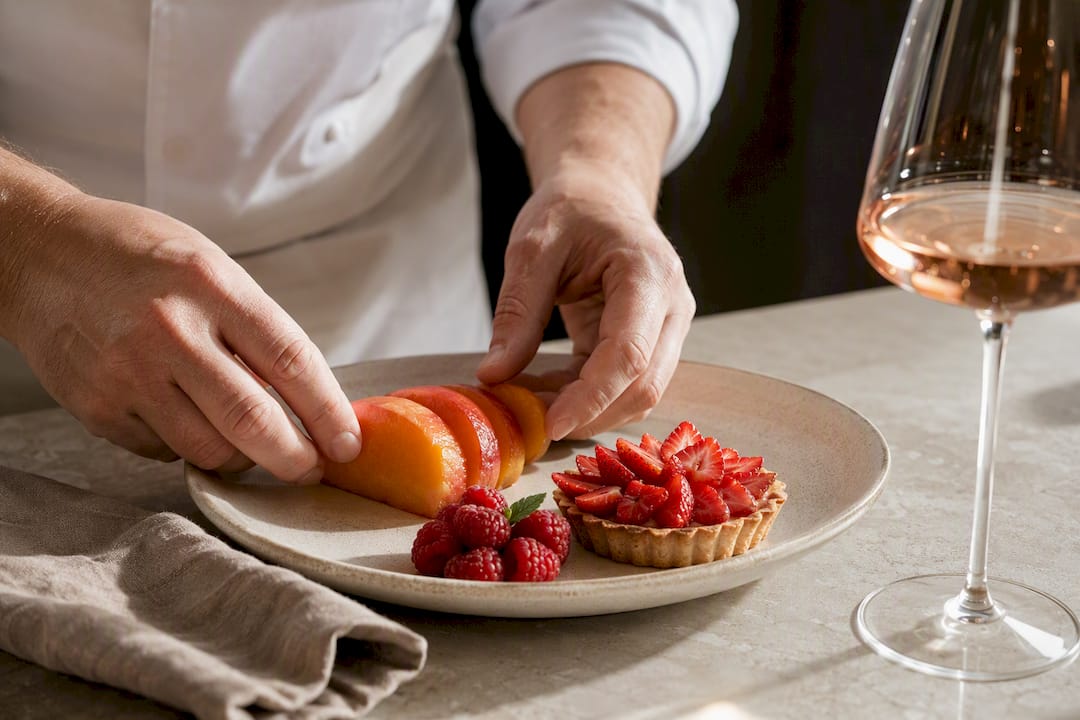
The key is sweetness balance. A bone dry rosé next to a sweet dessert will taste thin and sour by comparison, since the food’s sugar makes the wine’s acidity feel harsher than it is. An off dry rosé, or a lightly sweet sparkling rosé, closes that gap. Rosé also works well in cooking rather than just alongside it: rosé poached fruit and rosé based sauces show how the wine’s fruit and acidity translate directly into a dish, which is a useful hint for dessert pairing too.
Avoid pairing rosé with very dark chocolate or heavily spiced desserts, since both tend to overpower the wine’s fruit rather than complement it. Lighter fruit forward puddings, a summer berry pavlova, a peach galette, a bowl of cherries, are the safer territory. If you want to explore how different rosé styles echo these flavours in the glass itself, it is worth reading further on the types of rosé wine available before choosing a dessert bottle.
Do regional rosé styles change your pairing choices?
Where a rosé comes from shapes its body almost as much as the grape variety does, and that changes what belongs on the plate next to it. Provence rosé, typically pale and bone dry, is built around Mediterranean simplicity: olive oil, herbs, seafood, and salad. It rarely has the weight for a heavy meat dish.
Spanish rosado, often made from Garnacha or Tempranillo, tends to run a shade deeper and fruitier, which is why it slots so naturally next to tapas and tomato based cooking. Tavel and Bandol in the south of France go further still, producing some of the deepest, most structured rosé available, wines with genuine tannin and enough grip for lamb or a Mediterranean grill. New World rosé, particularly from warmer growing regions, frequently leans fuller and more fruit forward than its French counterparts, putting it closer to the “fuller bodied” category in the style breakdown above.
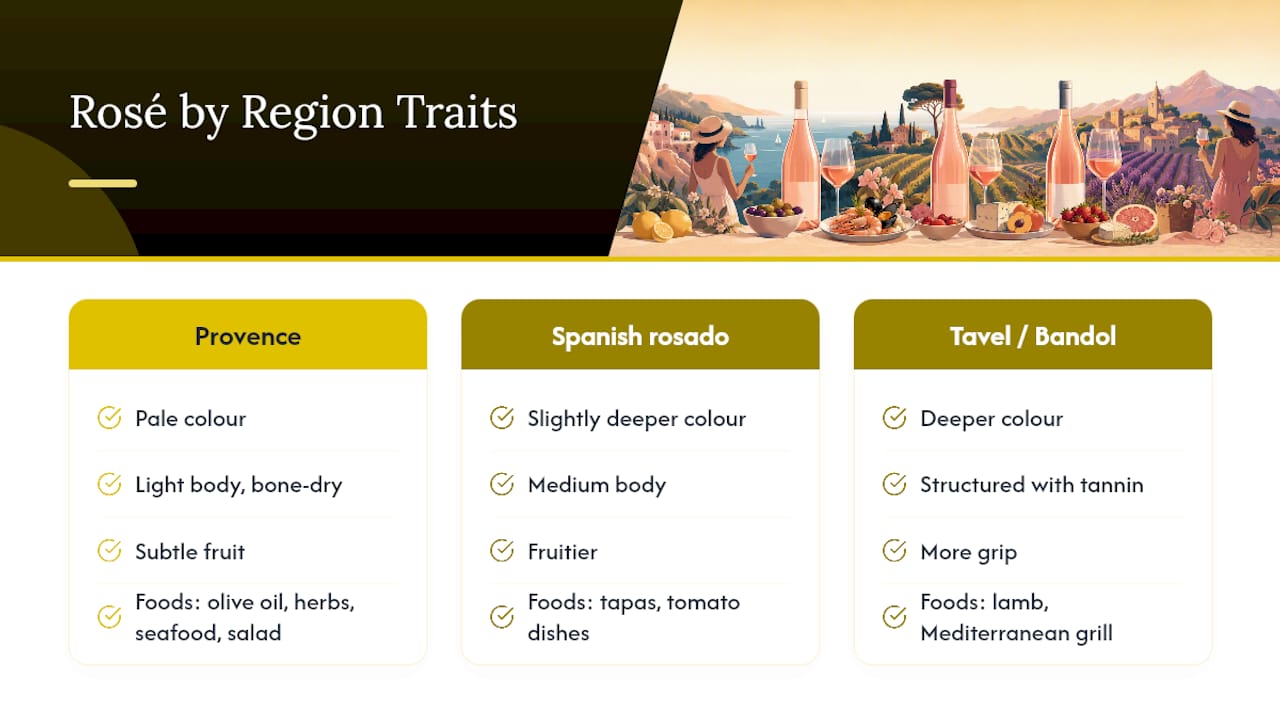
None of this means one region makes a “better” rosé for food. It means the label is a genuine clue. A bottle labelled Provence rosé is telling you to plan a lighter table; a bottle from Tavel is telling you it can handle something with real weight. Reading up on French rosé regions and their pairing habits before you shop saves a lot of guesswork at the till.
Seasonal and occasion based pairing ideas
Rosé earns its reputation as a summer wine, but the same style logic applies whatever the occasion. For a picnic or a garden lunch, pale, bone dry rosé alongside cold cuts, a simple salad, or a wedge of goat’s cheese needs almost no planning: chill the bottle, pack the basket, done.
Barbecues call for something with a little more fruit. A medium to fuller bodied rosé holds its own against grilled chicken, pork skewers, or a smoky vegetable spread far better than a delicate pale style would. For a celebratory occasion, a birthday, an engagement, a Sunday that simply feels worth marking, sparkling rosé earns its place, especially alongside canapés or a starter of fried food.
Autumn and winter meals are where rosé gets overlooked, often unfairly. A fuller, deeper coloured rosé can sit comfortably next to a roast chicken dinner or a hearty Mediterranean stew, offering a lighter alternative to red wine without losing weight. The dish should still guide the decision: match a heavier winter plate with a heavier rosé, and save the pale, zippy bottles for whenever the food itself turns light again, whatever the season on the calendar.
Trying the framework at your own table
The fastest way to understand rosé’s range is to open three bottles side by side: one pale and bone dry, one medium bodied, one fuller and fruit driven. Serve them alongside the same simple dish, perhaps a roast chicken or a tomato salad, and notice how the food shifts each wine’s character. Jot down which pairing brightened the food and which fell flat. Your own palate is the final judge here, not any rule in this guide.
— Moritz
Bring the framework home with Res Fortes
Res Fortes makes this easier for one simple reason: our Rosé is crafted specifically in the pale, bone dry, citrus driven style this guide points readers toward for seafood, salads and goat’s cheese, so you are not guessing which category a bottle falls into before you buy it.

Sourced from old vine plots in the Côtes du Roussillon and made with minimal intervention, the wine carries bright acidity and refreshing citrus character characteristic of pale rosé, making it versatile at the table. If you want to build the three bottle comparison mentioned above, our wine collection is a straightforward place to start, and if rosé quickly becomes a fixture on your table, the Elite Membership delivers exclusive releases so you always have a bottle on hand when the right dish comes along. Browse the range and pick a bottle for your next meal.
Sources
- Wine pairings for rosé: what kind of food goes best? | Matching Food & Wine
- Food Pairing Rosé Wine: Everything You Need to Know | WineTraveler
- Rose, Sparkling & Sweet Wine Pairing Guide | IWFS
- The best cheeses to pair with rosé wine | Forbes
FAQ
What pairs well with a rosé?
Pale, dry rosé pairs best with seafood, salads and goat’s cheese, while fuller, fruit driven rosé suits grilled salmon, charcuterie and richer poultry.
What food does rosé like?
Rosé generally favours food with some acidity or salt, fresh seafood, tomato dishes, cured meats and tangy cheese, because its own acidity and light fruit character balance those flavours.
What cheeses pair well with rosé wine?
Goat’s cheese, brie, feta and mild blue cheese all work well, since rosé’s acidity balances their cream and salt.
What fruits go well with rosé?
Strawberries, raspberries, peaches and cherries all echo rosé’s own red fruit notes, making them natural partners for off dry or lightly sweet styles.
Does Res Fortes make a rosé suitable for food pairing?
Yes, the Res Fortes Rosé is a citrus laced, pale style built for seafood, salads and goat’s cheese, and it is available through the wine collection.