
Evaluating Roussillon wines is defined as the structured sensory analysis of a region producing some of southern France’s most characterful and underrated bottles. Knowing how to evaluate Roussillon wines means reading their hallmark aromas, textures, and flavour profiles through a disciplined tasting approach combined with knowledge of terroir and grape varieties. Roussillon sits at the foothills of the Pyrenees, shaped by the Tramontane wind, schist soils, and a fierce Mediterranean sun. The region produces roughly 80% dry wines and 20% fortified Vin Doux Naturel, with dry whites growing fast as quality rises. Mastering the evaluation of these wines rewards you with access to genuine complexity at prices that still surprise.
How to evaluate Roussillon wines: key characteristics to look for
Roussillon wine characteristics divide clearly between the dry styles and the fortified Vin Doux Naturel category. Knowing which signals belong to which style is the first step in any credible assessment.
Dry reds are the region’s backbone. They typically show:
- Ripe dark fruit: blackberry, black cherry, and plum
- Garrigue herbs: thyme, rosemary, and wild lavender
- Leather, licorice, and warm spice on the mid-palate
- Alcohol levels frequently exceeding 14%, driven by the Mediterranean heat and low rainfall below 600mm per year
High alcohol is not a flaw here. It is a direct expression of the climate and, when balanced by the Tramontane wind’s drying effect, it sits within a wine of genuine structure.
Dry whites have grown from just 3% of production in the early 2000s to 11% by 2026. That shift reflects a deliberate quality push. Expect citrus zest, white blossom, and a saline mineral edge in the best examples, particularly from old-vine Grenache Blanc and Macabeu blends.
Rosés sit between the two, offering fresh red berry fruit, floral lift, and a clean, dry finish. They are often underestimated as evaluation subjects, but their balance of fruit and acidity tells you a great deal about the winemaker’s touch.
Pro Tip: When assessing a Roussillon red for the first time, note whether the fruit reads as fresh or cooked. Fresh dark fruit signals good vineyard management and careful winemaking. Cooked or jammy fruit often points to over-extraction or excessive heat during fermentation.
How do terroir and grape varieties shape Roussillon wines?
Roussillon’s terroir is not uniform. The region contains a striking range of soils, altitudes, and microclimates that directly affect what ends up in the glass.
| Terroir factor | Effect on wine style |
|---|---|
| Schist soils | Adds mineral tension and fine-grained tannins to reds |
| Granite soils | Produces lighter, more aromatic expressions of Grenache and Syrah |
| Clay-limestone | Delivers fuller body and richer fruit in Carignan and Mourvèdre |
| Altitude vineyards | Preserves acidity and adds floral, perfumed lift |
| Maritime proximity | Introduces saline minerality and freshness to whites and rosés |
Roussillon holds 17 authorised AOP grape varieties, and the blends produced from them vary considerably by sub-appellation. Village-level classifications such as Tautavel and Lesquerde signal distinct terroir character. Tautavel, sitting on limestone and schist at altitude, produces concentrated, spiced reds. Lesquerde, further inland, delivers wines with a darker, more mineral profile. These are not interchangeable, and treating them as such is the most common mistake enthusiasts make when assessing Roussillon wines.
Sustainability matters here too. 32% of Roussillon’s vineyards are certified organic. Many producers use concrete tanks and amphora ageing to preserve fruit purity without the overlay of new oak. When you taste a wine from one of these estates, the fruit reads cleaner and the terroir expression is more direct. That clarity is a quality signal in itself.
Pro Tip: Check the label for village-level designations before you pour. A Côtes du Roussillon Villages wine from Tautavel or Agly tells you immediately that you are tasting a wine shaped by a specific, documented terroir rather than a blended regional expression.
What step-by-step sensory technique should you use?
A structured approach to wine evaluation technique removes guesswork and builds a reliable sensory vocabulary over time. Apply the following sequence to every Roussillon wine you assess.
- Preparation. Use a clean, tulip-shaped glass. Serve dry reds at 14–16°C rather than room temperature. This cooler serving temperature reveals floral and saline notes that warmth suppresses. Serve whites at 10–12°C and fortified styles at 14°C.
- Appearance. Tilt the glass against a white background. Deep ruby to garnet in reds signals Grenache or Carignan dominance. Inky purple points to Syrah or Mourvèdre. A pale gold with green tints in whites suggests youth and freshness.
- Nose. Swirl gently, then smell without swirling first to catch the primary fruit. Swirl again to release secondary aromas. In Roussillon reds, look for dark fruit, garrigue, and leather. In whites, seek citrus, stone fruit, and that characteristic saline lift.
- Palate. Take a small sip and let it coat the whole mouth. Assess fruit intensity, acidity, tannin grip, and alcohol warmth. A well-made Roussillon red shows tannins that are firm but not harsh, with fruit that outlasts the alcohol sensation.
- Finish. Count the seconds the flavour persists after swallowing. A finish of 10 seconds or more is a reliable quality indicator. Garrigue, spice, and mineral notes on the finish are hallmarks of the best Roussillon reds.
- Balance. Ask whether any single element dominates. Alcohol, tannin, acidity, and fruit should each be present without one overwhelming the others.
Common pitfalls to avoid:
- Judging a Roussillon red as unbalanced purely because of high alcohol before checking the serving temperature
- Dismissing oxidative or earthy notes in older wines as faults rather than complexity
- Overlooking the texture of the mid-palate, where Roussillon’s best reds show a distinctive silky weight
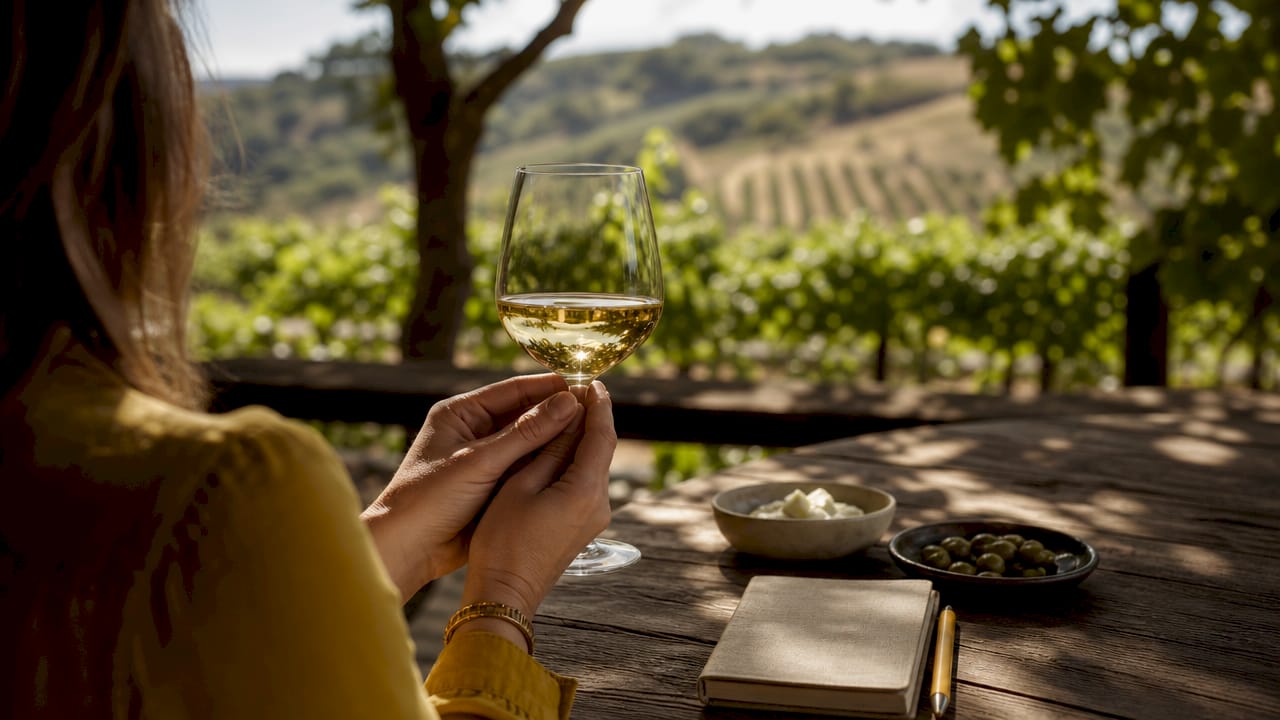
Pro Tip: Taste Roussillon wines alongside a small amount of food. A slice of aged sheep’s cheese or a few olives activates the salivary response and makes the wine’s acidity and tannin structure far easier to read.
For a deeper look at how these flavour profiles compare across the appellation, the Resfortes blog covers the nuances in detail.
How to assess fortified Vin Doux Naturel wines from Roussillon?
Vin Doux Naturel, or VDN, is Roussillon’s most distinctive contribution to the wine world. These wines are produced by mutage: adding neutral grape spirit to arrest fermentation and lock in natural grape sugar. The result is a wine that is sweet, fortified, and capable of extraordinary complexity with age.
The main styles you will encounter are:
- Fresh Muscat de Rivesaltes: pale gold, intensely floral, with orange blossom and fresh grape. Drink young and cold.
- Banyuls: made from a minimum 75% Grenache Noir, with Grand Cru requiring 30 months of ageing. Expect dried cherry, cocoa, and a long, warming finish.
- Rancio: aged in glass demijohns outdoors, exposed to heat and light. This deliberate oxidation creates flavours of coffee, dried fig, walnut, and tobacco. It is an acquired taste, but one of the most singular wine experiences France offers.
- Hors d’Age: the oldest category, with extended oxidative ageing producing profound complexity. Think dark chocolate, leather, and dried orange peel.
“The Rancio ageing process creates unique oxidative flavours that are entirely missed by those unfamiliar with traditional practices.” Roussillon Wine Region WineWiki
When evaluating VDN wines, do not apply the same framework you use for dry wines. Sweetness is expected and intentional. The quality markers are complexity of aroma, length of finish, and the integration of sweetness with the wine’s other elements. Serve Banyuls and Rancio styles slightly cool, around 14°C, alongside dark chocolate, blue cheese, or walnuts to appreciate their full range.
What evaluation mistakes should you avoid with Roussillon wines?
The most persistent error in evaluating Roussillon wines is treating the region as a monolithic hot-climate producer. Master sommeliers emphasise that altitude and maritime proximity create sophisticated, perfumed qualities in Syrah and Grenache that simply do not fit the sun-scorched stereotype.
Specific mistakes to avoid:
- Assuming high alcohol means poor balance before assessing the full palate
- Ignoring village-level distinctions and tasting all Côtes du Roussillon wines as equivalent
- Overlooking Carignan as a lesser grape when old-vine examples deliver extraordinary depth and freshness
- Skipping fortified styles entirely because they seem niche or difficult to pair
Sub-appellation exploration is the single most effective way to build a nuanced understanding of the region. Roussillon’s dry wines have only established a clear quality identity over the last 30 years. Tasting a flight that moves from a village-level Tautavel red to a Banyuls Grand Cru reveals the full range of what this region produces.
Pro Tip: Build a comparative tasting flight of three wines: a Côtes du Roussillon Villages red, a dry white from old-vine Grenache Blanc, and a Muscat de Rivesaltes. Tasting them in sequence makes the regional diversity immediately legible and trains your palate far faster than tasting one style at a time.
Key takeaways
Evaluating Roussillon wines rewards those who combine structured sensory technique with a clear understanding of the region’s terroir, grape varieties, and production styles.
| Point | Details |
|---|---|
| Serve reds cooler | Chill Roussillon reds to 14–16°C to reveal floral and saline notes hidden by warmth. |
| Read the label for village names | Tautavel and Lesquerde signal distinct terroir character and reliable quality benchmarks. |
| Assess VDN wines differently | Apply a separate framework for fortified styles: focus on complexity, sweetness integration, and finish length. |
| Avoid the hot-climate assumption | Altitude and maritime influence produce nuanced, perfumed wines that defy the sun-scorched stereotype. |
| Use comparative flights | Tasting across styles in one session builds regional understanding faster than single-bottle evaluation. |
Roussillon through fresh eyes: what I have learnt from tasting these wines seriously
Roussillon is the region I return to whenever I want to remind myself that price and reputation do not always align with quality. The wines here have been undervalued for decades, and that is slowly changing. What strikes me most is how quickly a taster’s perception shifts once they understand the role of altitude and the Tramontane wind. These are not blunt, heavy wines. The best Grenache and Syrah from the villages carry a perfumed lift that catches you off guard.
My honest advice for anyone building their evaluation skills here: start with the village-level reds and work outward. Tautavel is the most accessible entry point. Its wines are concentrated but structured, and they show you immediately that Roussillon can produce bottles with genuine ageing potential. From there, move to the whites. The old-vine Grenache Blanc and Macabeu blends are the region’s best-kept secret. They have a texture and a saline depth that most drinkers associate with far more expensive wines from elsewhere in France.
The fortified styles are where Roussillon becomes genuinely irreplaceable. A well-aged Banyuls Grand Cru or a Rancio served alongside a piece of aged Comté is one of the great wine experiences available at a reasonable price. Do not skip this category because it feels unfamiliar. Approach it with the same structured tasting method you use for dry wines, adjust your expectations for sweetness, and let the complexity speak for itself. Roussillon rewards patience and curiosity in equal measure.
— Moritz
Resfortes: quality Roussillon wines worth evaluating
Resfortes produces award-winning wines from the Côtes du Roussillon, crafted at the foothills of the Pyrenees with minimal intervention and a clear focus on terroir expression. The range gives you direct access to the styles this guide covers: old-vine Grenache in The Brave, estate Syrah in the Traveller, and the citrus-laced Rosé that shows what the region does with freshness.
Whether you are building your evaluation skills or sourcing wines for a professional context, Resfortes offers a curated path into the region’s best. Browse the full award-winning red wine selection to find bottles that put every tasting principle in this guide into practice. Trade buyers can access the full range and sourcing support through the professional wine trade page. Free shipping applies across the UK and France on three bottles or more.
FAQ
What are the main quality indicators in Roussillon red wines?
The key quality indicators are fresh dark fruit (not cooked or jammy), firm but integrated tannins, a finish of ten seconds or more, and the presence of garrigue and mineral notes. High alcohol is expected but should not dominate the palate.
What temperature should I serve Roussillon reds at?
Serve Roussillon reds at 14–16°C. This cooler temperature reveals floral and saline qualities that are masked when the wine is served too warm.
How is Vin Doux Naturel different from other sweet wines?
Vin Doux Naturel is produced by mutage, adding grape spirit to arrest fermentation and preserve natural sugar. Unlike late-harvest or botrytised wines, the sweetness comes from interrupted fermentation rather than concentrated grapes.
Which Roussillon sub-appellations signal the highest quality?
Côtes du Roussillon Villages wines from Tautavel, Lesquerde, and Agly consistently signal terroir-driven quality, with distinct mineral, spice, and freshness profiles that set them apart from broader regional blends.
How does Roussillon differ from Languedoc in wine style?
Roussillon sits further south and west, with stronger Tramontane wind influence, more schist soils, and a higher proportion of Grenache in its blends. For a direct comparison of the two regions, the Resfortes guide on Languedoc vs Roussillon covers the key differences clearly.