

13.5–15% ABV Grenache Blend Wine: 5 Buying Signals for Savvy Buyers
A Grenache blend pairs Grenache’s ripe red-fruit charm with firmer partners, most often Syrah and Mourvèdre, in the classic combination winemakers call GSM. Expect stewed strawberry, grilled plum and a peppery warmth, medium-to-full body, and an ABV that is often above typical red wine levels. Serve it at moderate cellar temperatures, often recommended around 13 to 15.5°C (55–60°F), and drink most bottles when they are young to capture freshness.
TL;DR:
- Most GSM blends use Grenache alongside Syrah and Mourvèdre, with proportions that vary by vintage and producer, often not matching the label’s expectation.
- Regionally, Southern Rhône wines tend to be dense and savory, while New World regions like South Australia produce riper, more alcohol-rich blends.
- Optimal serving temperature is between 13 and 15.5°C, and wines with higher ABV or from old vines may age better if cellared properly.
- Blends made from old-vine Grenache on rocky soils offer greater concentration, structure, and aging potential, especially in appellations like Châteauneuf-du-Pape and Priorat.
- Good quality Grenache blends feature restrained tannins and balance alcohol warmth, making them suitable for casual occasions like barbecues and hearty meals.
What makes a Grenache blend: Grenache’s role and common partners
Grenache rarely stands alone in a blending vat, and the reasons are written into the grape itself. It ripens generously, piling on sugar and alcohol, but its thin skins carry only moderate tannin and a tendency to oxidise if handled carelessly. Left by itself, Grenache can taste gorgeous in youth and tired within a couple of years. Blending is how winemakers in the Southern Rhône, the Roussillon foothills and beyond correct for that.
Syrah (Shiraz to Australian and South African producers) is usually the first partner reached for. It brings deep colour, dark spice and a firmer tannic backbone that gives Grenache’s fruit something to lean against. Mourvèdre, known as Mataro in parts of the New World, works differently: it contributes structure, a savoury, gamey depth, and a slower-ageing character that helps a blend hold its shape over years rather than months. Together, Grenache, Syrah and Mourvèdre form the GSM blend, the most recognisable Grenache-based formula on wine lists from Gigondas to McLaren Vale.
Other partners appear depending on region and ambition:
- Carignan adds acidity and a rustic edge, common in Languedoc blends built for everyday drinking.
- Tempranillo shows up in Spanish Garnacha blends, lending savoury red-fruit and firmer tannin.
- Cinsaut softens a blend and lifts aromatics, often used in rosé-leaning styles.
Here is the catch worth knowing before you buy: a bottle labelled “GSM” does not promise a fixed recipe. Proportions shift by vintage and by producer, and Grenache is not always the majority grape in the blend, despite lending its name to the shorthand. If the exact balance matters to you, particularly for cellaring decisions, check the technical sheet or back label rather than assuming.
Taste profiles and styles: reds, rosés and fortified expressions
Most Grenache blends taste the way the grape’s ripeness suggests: warm, generous and fruit-driven, but rarely simple. The reliable flavour anchors are stewed strawberry, grilled plum, dried herbs and a dusting of white pepper, sometimes joined by leather or dried fig as the wine picks up bottle age.
Statistic Callout: Grenache blends typically run 13.5% to over 15% ABV, among the higher alcohol ranges in mainstream red wine, and are best served at 13–15.5°C (55–60°F) to keep that warmth in check rather than letting it dominate the glass.
Body and tannin vary by blend partner and region, but a few patterns hold reliably across styles:
- Full-bodied red blends (Southern Rhône, Priorat) show soft-to-medium tannin, moderate acidity and a plush, almost velvety texture.
- Rosé expressions, particularly from Tavel and the wider Provence-influenced Mediterranean arc, lean savoury and structured rather than merely fruity, a style Roussillon producers have leaned into as rosé from the region gains its own identity.
- Fortified styles, most famously Banyuls on the French Mediterranean coast, take Grenache into raisined, port-like territory with dried fruit and cocoa notes.
Pairing follows the fruit and the weight. A full-bodied red GSM wants grilled lamb, cassoulet or a well-charred burger. Rosé versions handle grilled prawns, charcuterie boards or a simple tomato salad without being overwhelmed. Fortified Banyuls is built for dark chocolate or a wedge of blue cheese, sweet enough to stand up to both.
Key regions and how regional style affects a Grenache blend
Where the grapes grow changes the wine as much as the blend recipe does. Southern Rhône appellations, Châteauneuf-du-Pape chief among them, produce warm-climate, Grenache-led wines with savoury spice, dense fruit and real weight on the palate. These are the benchmark GSM wines most UK drinkers picture when the style comes up.
Languedoc-Roussillon and the broader Pays d’Oc sit a step down in price but rarely in charm, delivering fruit-forward, approachable blends that overdeliver against their cost. This is where old-vine plantings on schist and granite soils, at the foothills of the Pyrenees, tend to produce wines with more grip and mineral edge than their price tag suggests.
Spain tells a different story again. Priorat’s Garnacha, grown on the region’s distinctive black slate llicorella soils, shows firmer acidity and a mineral backbone that can rival Rhône examples for ageing potential. Navarra offers a gentler, fruitier take on the same grape.
New World regions push the style further into ripeness. Barossa Valley and McLaren Vale in South Australia produce riper, higher-alcohol GSM blends with jammier fruit and softer tannin, widely stocked in UK supermarkets and independents alike. Regional heat and vine age materially change how Grenache expresses itself: hot sites tend toward jammy, high-alcohol wines, while cooler, old-vine sites favour elegance and longer ageing.
A few label cues help you predict style before you open the bottle:
- “Vieilles vignes” or “old vines” signals lower yields and often greater concentration.
- Appellation name (Châteauneuf-du-Pape, Gigondas, Priorat) narrows the climate and soil profile considerably.
- Country of origin plus alcohol percentage gives a fast read on likely ripeness and weight.
How to choose and buy a Grenache blend: a practical checklist
Buying with confidence comes down to reading past the front label. Here is the order worth working through, whether you are stood in a shop or scrolling a website at midnight.
- Check the appellation and vintage first. These two details narrow down climate, likely body and expected drinking window faster than any tasting note on the label.
- Look for a percentage breakdown or explicit “GSM” wording. If it is missing, the blend could still be excellent, but you are buying on trust rather than information.
- Read the price as a signal, not just a cost. A jump from £12 to £25 often buys old-vine fruit, hand-harvesting, lower yields or estate bottling rather than marketing.
- Match ABV and vintage to your intentions. Wines around 13.5% ABV from a recent vintage are usually built for drinking within two to three years; higher-concentration, older-vine bottlings can reward a few more years in the cellar.
- Plan your service before you plan your dinner. Serve at 13–15.5°C, give younger bottles a brief decant to open up the fruit, and avoid leaving an opened bottle exposed to air for more than a day or two, since Grenache’s thin skins make it more prone to oxidation than sturdier grapes.
Pro Tip: If a bottle feels warm from transport or a sunny shelf, let it rest somewhere cool for an hour before serving. Grenache’s alcohol shows more on a warm pour, and a few degrees can be the difference between “hot” and “generous”.
For more detail on getting the temperature and decanting right, our full guide to serving red wine walks through the mechanics.
Res Fortes’ notes on crafting Grenache-led blends and GSM ratios
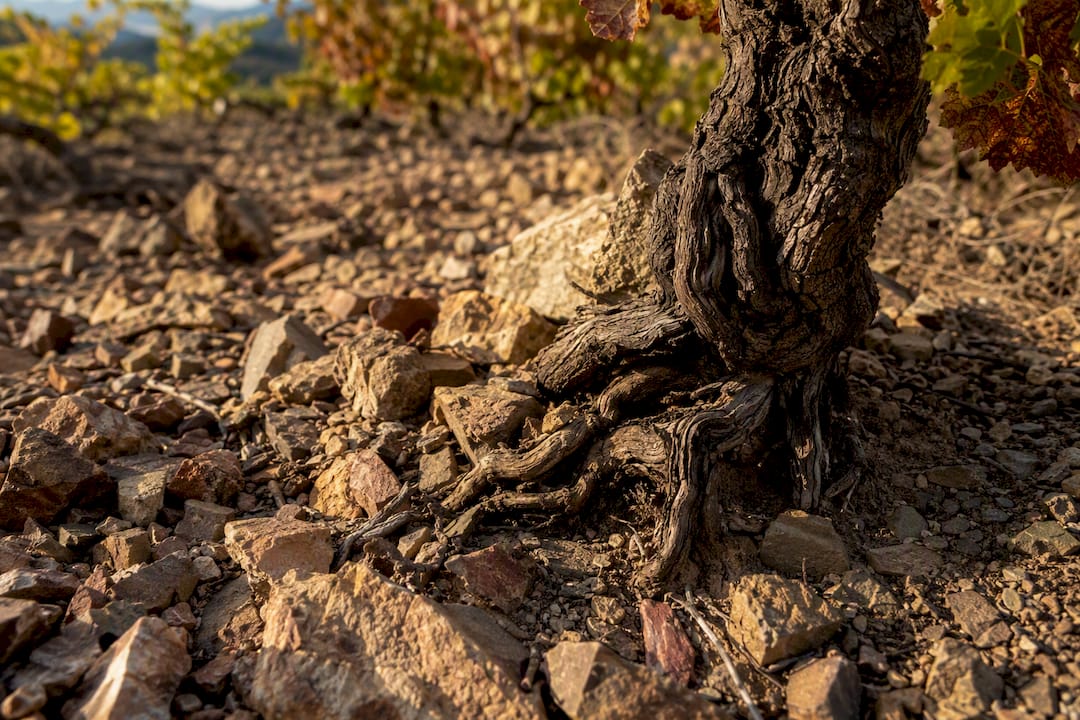
Grenache-led wines are often crafted from old-vine plots at the foothills of the Pyrenees, where poor, stony soils force lower yields and, in turn, more concentrated fruit. Vineyard selection can happen plot by plot, and winemaking often leans towards minimal intervention: gentle extraction, careful use of oak, and approaches that let the terroir speak rather than smoothing it into something generic.
The proportions matter more than the shorthand suggests. Our technical breakdown of GSM ratios and how they predict cellaring potential covers blends built around 13.5–15% GSM, and how shifting the Syrah or Mourvèdre share by even a few percentage points changes how a wine ages over five or ten years rather than two or three.
Two types of Grenache-led blends demonstrate this thinking directly:
- A flagship wine showcasing old-vine Grenache at its most expressive, praised by reviewers for capturing the grape’s purity without losing structure.
- A Grenache-led blend layering Syrah and Mourvèdre for a wine built with both immediate drinkability and a few years of cellaring in mind.
A tasting note from the table, not the tasting room
Grenache blends earn their keep at occasions that need a generous, unfussy red: a barbecue where the meat is charred and the evening is long, a roast lamb dinner, or a lively table where nobody wants to think too hard about what is in their glass.
What surprises people most is how well-judged tannin can make a wine feel lighter than its alcohol suggests. A clumsy, over-extracted Grenache blend tastes hot and flat; a well-made one, built on old vines and restrained winemaking, tastes generous instead of exhausting. That distinction is where the real skill in this blend lives, and it is worth tasting for directly rather than taking on faith from a back label.
— Moritz
Ready to try a Grenache-led blend from Res Fortes?
Consumers can find old-vine Grenache blends built for exactly the occasions covered above, rather than a supermarket shelf where vintage and vine age go unmentioned. It is possible to buy single bottles of flagship or GSM blends, build a mixed case to compare styles side by side, or join wine club programmes for early access to new releases.
Orders of three bottles or more may ship free within certain regions, and checkout may be available in multiple currencies depending on the ordering location. If you want to start with the flagship expression of old-vine Grenache discussed throughout this piece, browse the full range on our wines page and pick a bottle, or a case, to open this weekend.
Sources
FAQ
Is Grenache wine sweet or dry?
Grenache-based wines are typically dry, with the impression of sweetness coming from ripe fruit flavours like stewed strawberry rather than residual sugar. Fortified styles such as Banyuls are the exception, made deliberately sweeter through fortification.
What type of wine is Grenache?
Grenache is a red grape most often used in blends, producing medium-to-full bodied wines with moderate tannin and higher alcohol, commonly between 13.5% and over 15% ABV. It also makes rosé and, in Banyuls, fortified wine.
What kind of wine is Grenache similar to?
Grenache shares some fruit-forward, warm character with Zinfandel and southern Italian reds like Primitivo, though its blending role in GSM wines with Syrah and Mourvèdre gives it more structural range than either grape typically shows alone.
Is Grenache like Pinot Noir?
Not closely. Both can show red-fruit character, but Grenache runs warmer, fuller-bodied and higher in alcohol, while Pinot Noir is lighter, cooler-climate and more delicate in tannin and acidity. A Grenache-led blend such as Res Fortes’ GSM sits at the opposite end of the weight spectrum from a typical Pinot Noir.